Projects
|
FAQ
|
Announcements



#Adaptability to new environments, independence #Improved English skills, personal insights #Growth through new experiences
|
Breaking through the walls of my comfort zone and walking alone down a path I had never walked before gave me the strength to face and overcome, on my own, the anxiety and worry caused by an uncertain future that I will frequently experience while preparing for competitive exams in Korea.I feel I have grown from being someone who found comfort in belonging and settled for only familiar experiences, and I have gained the courage to confront the fears of the future as a member of society.
Doing exciting environmental conservation volunteer work in New Zealand’s nature with friends from around the world Review by gap-year participant Byeon Seo-jeong |
# I applied for the gap year project to take time to reflect on myself and rest.
I am currently a fourth-year student enrolled at a university in Seoul. Through Korea Gap Year, I participated in environmental volunteer activities in Wellington, New Zealand.
As the last step before I fully begin preparing for law school admissions after graduating from university I applied for the gap year project to give myself time to reflect on myself and rest.. Because I had spent the past three years at school studying without a break, I felt regret that when I looked back on my university life after graduation there would be no memorable experiences. For that reason, I decided to go on an exchange program during the January 2025 winter term; since the host university for that exchange was located in Australia, I figured that since I had come all the way to Oceania...Since I had come all the way to the Oceania continent, I wanted to accumulate special experiences and memories that I could only have here. So while looking for overseas volunteer opportunities, I found a New Zealand volunteer program on Korea Gap Year and applied.
Because it was my first time living abroad alone for such a long period, I had a lot of worries the day before departure and, to be honest, some regrets. I was very concerned that I might have wasted money and time and should have just stayed home and rested. However, before the New Zealand volunteer program started, I attended classes for a month at an Australian university as an exchange student, toured with classmates, lived in a dorm and made foreign friends — after that I felt like I was attending university in Australia too, which eased my mind. So after the exchange classes ended and before the volunteer program began, when I arrived alone in New Zealand I was able to quickly adapt to life there by touring around on my own and eating local food alone, among other things.
* Before taking a major life exam, I recommend New Zealand environmental conservation volunteer work to Ms. Byeon Seo-jeong so she can reflect on herself and gain special experiences!If you want a tailored plan on where and how to start changing, I strongly recommend 1:1 consulting with a gap year specialist!
A sure way to change my life: Gap Year 1:1 Consulting
# My true self discovered in a strange land.
My main goal was to live abroad alone, reflect on what kind of person I am, discover things I didn''t know about myself, and improve my English skills. Living abroad alone and sharing accommodation and meals with foreign friends made me clearly realize which parts of my everyday English were weak, andLiving with people I didn''t know at all and feeling my reactions and routines revealed to me allowed me to re-examine what kind of person I am.
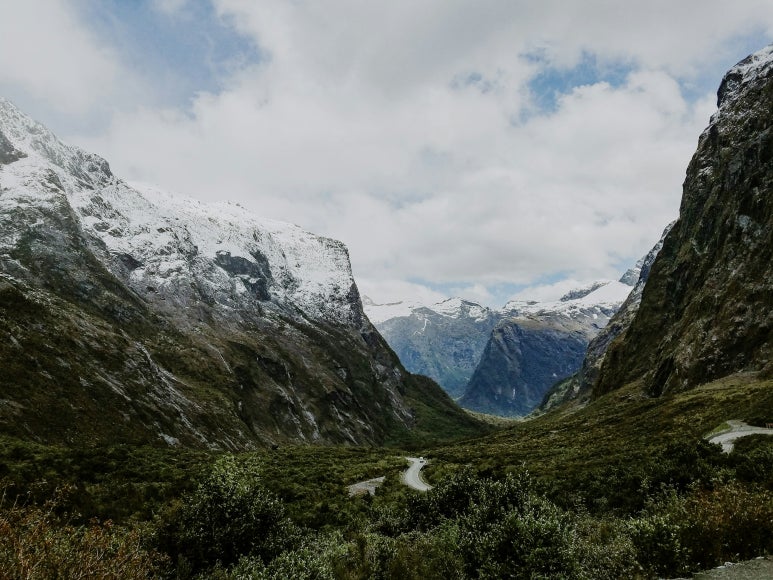
Also, because I was used to living in a large city in Korea,I wanted to take the time to look back at the environment and nature and enjoy the unspoiled scenery of New Zealand’s vast wilderness. Through the New Zealand environmental volunteer work, interacting with nature I felt a sense of connection, as if communicating with New Zealand’s land, and experienced self-efficacy in contributing to the environment.
# Gaining leisure in picture-like scenery and giving rest to my heart.
The New Zealand locals I met all respected their traditions and nature, and, valuing their country, were also kind to foreigners and tourists.It was not dangerous for a young East Asian woman to travel alone; rather, many people warmly struck up conversations. The staff at the volunteer organization alsounderstood my poor English, made eye contact and waited so I could finish saying what I wanted even if I spoke slowly, and always listened and cared to see if anything was uncomfortable.In particular, even though the staff had surely met and said goodbye to many foreign volunteers like me, when my program ended and it was time to part they were genuinely regretful and even gave me a handwritten letter.
New Zealand English differs greatly in expressions and intonation from the American English commonly taught in Korea, so I think it''s hard to understand unless you hear, speak, and experience it firsthand in the local environment.Because in New Zealand I was forced to listen, speak, read, and write only in English and live entirely in English, my English skills improved automatically.
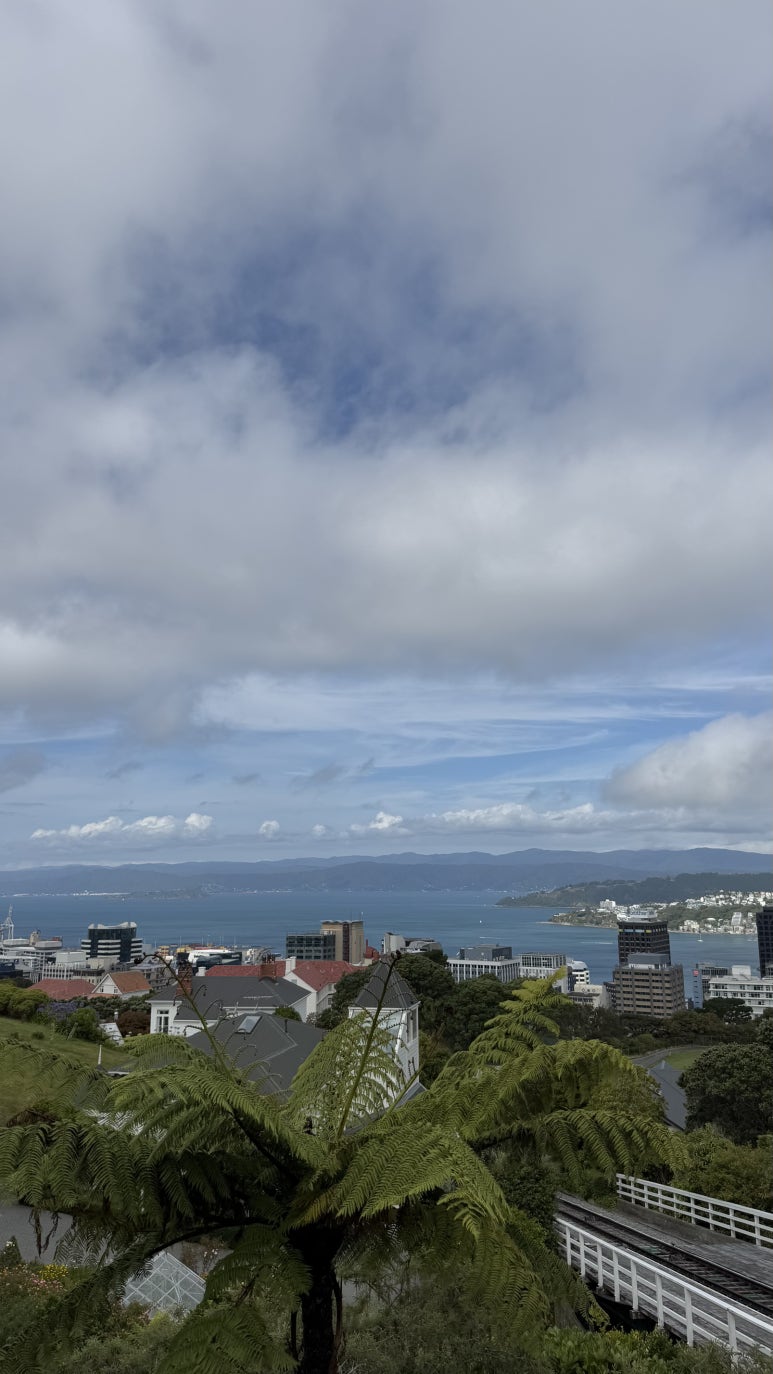
What I gained automatically from living in New Zealand wasn''t just English, but also a love of nature and the leisure to enjoy the surrounding scenery. Through the volunteer work, I became newly attentive to nature conservation and environmental changes.Also, unlike South Korea where you live among high-rise buildings and noisy city centers, you couldn''t find tall buildings in New Zealand,and when I looked around, every view was full of pretty detached houses that looked like they could appear in a painting and lush greenery; walking around made my distracting thoughts disappear and filled me with a sense of calm.
Precious connections in New Zealand that were warmer than even nature 😃
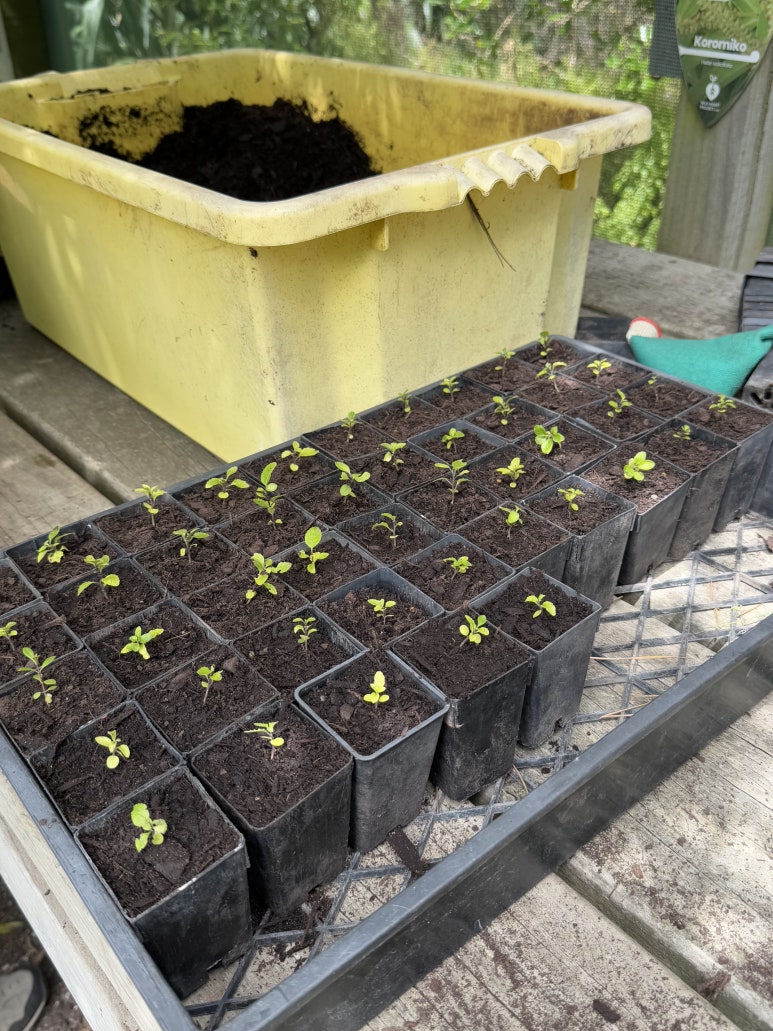
Among the people I met while volunteering in New Zealand, all of them remain precious memories, but the one I can''t forget most was a middle-aged woman named Kiri, who was the team leader and overall supervisor. She was Māori, and on the day I first arrived at the accommodation she took time out of her busy schedule to welcome me according to Māori tradition and have dinner with me. At the meal she told me about New Zealand and even taught me Māori directly; she felt like a warm mother while at the same time embodying the professionalism and consideration of a leader.
Another impressive team leader was a woman named Gemma with a British accent. She was warm and kind enough to write handwritten letters and also worked as a zookeeper at the Wellington Zoo right next to the accommodation. After volunteering together and getting to know the team, she warmly showed her kindness by readily giving us free admission coupons and inviting everyone to visit the zoo where she worked.
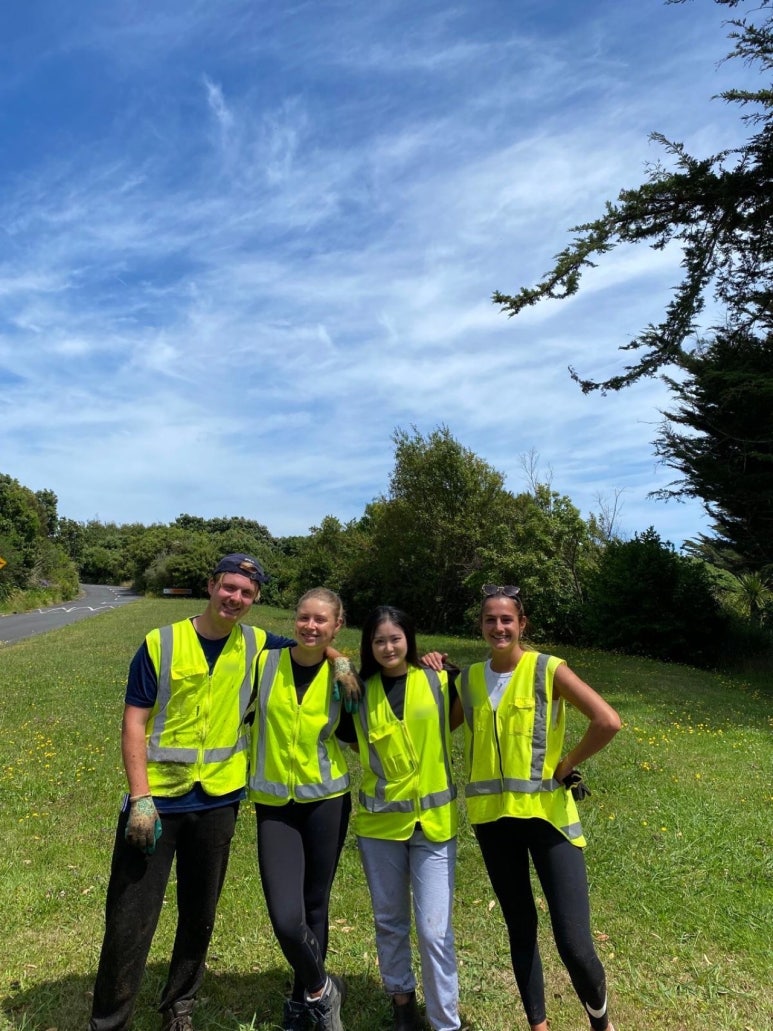
There were four volunteers in total who participated and shared accommodation with me; although we had different nationalities and backgrounds, our hearts were genuinely connected. Two of them were a Dutch couple who had come to New Zealand while traveling the world after graduating university, and another was a woman my age from France.
We all respected each other''s cultures, listened, and were willing to share, and during that period—long or short—we truly lived like friends and family. At first it felt awkward to make small talk each morning asking if we had slept well, but over time I got used to the small-talk culture and began asking morning greetings first, blending in and enjoying life in New Zealand together. For dinner we took turns cooking foods from our own countries; sitting around the table sharing the day felt like a real family. When it was my turn to cook, I made dried seaweed, spicy tuna with chili, soy-sauce chicken stir-fry, and egg fried rice; my roommates complimented it as really delicious and scraped their plates clean, which made me very proud.
It was a small wave, but that moment ultimately became the warmest memory.
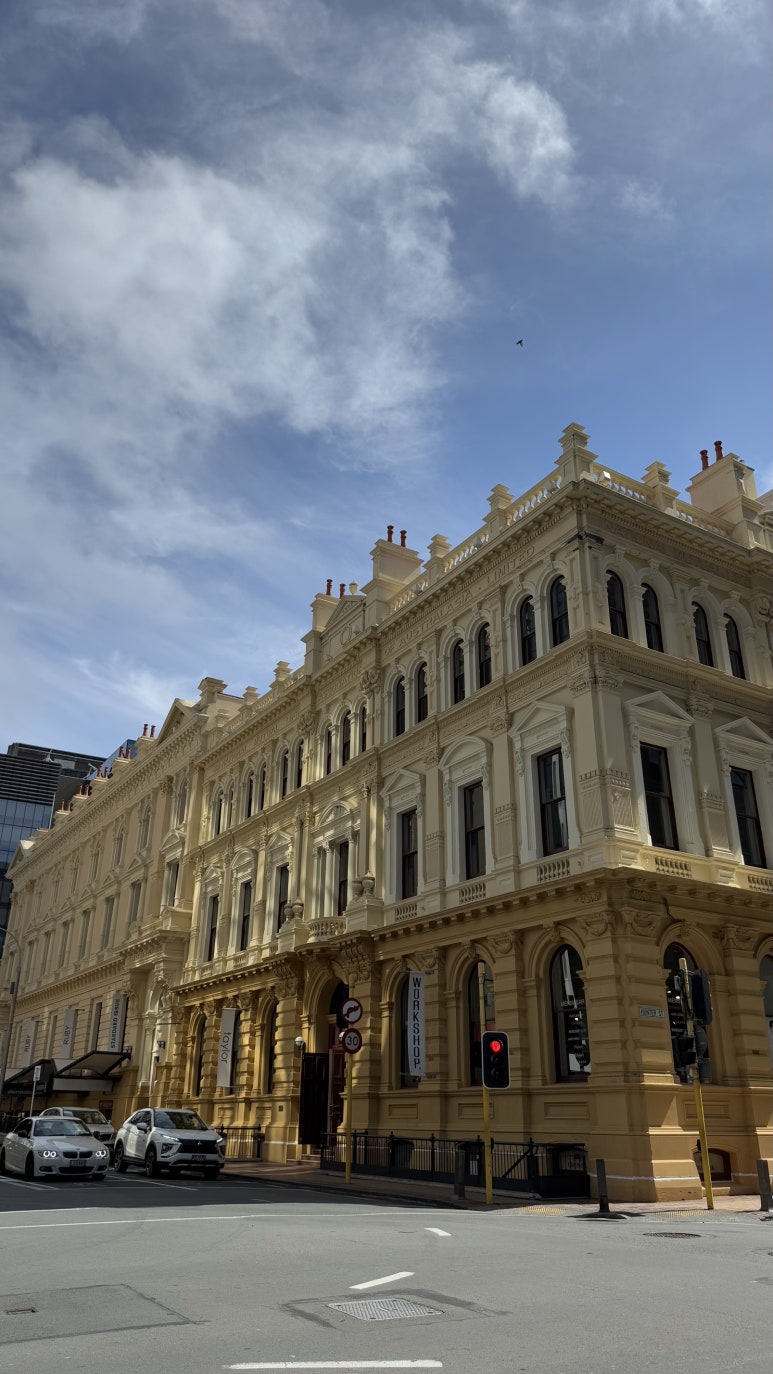
In fact, before participating in the environmental volunteer work, there was a small unexpected setback.At first I applied for the Auckland program, not the Wellington program, but the day before the volunteer work began all the Auckland applicants suddenly canceled and I received an email saying I was the only applicant left for Auckland. They also offered that if I wanted, I could go to Wellington where other volunteers were.
I was quite flustered and worried because all my original plans had fallen apart, but when I arrived at the Auckland office the next day the staff welcomed me warmly and told me I could choose what I wanted and to tell them where I wanted to stay.
I didn''t know anything about what Wellington was like, what the accommodation would be like, or who the people were, so I felt anxious and worried, but still—I ultimately decided to go to Wellington. Locally they helped me move there, and although airport pickup wasn''t normally provided, because it was a special situation Kiri personally came to pick me up as soon as I landed at Wellington Airport,and to ease my worries she talked to me a lot in the car on the way to the accommodation—introducing Wellington, explaining about the other volunteers, and asking about Korea—so I could relax.
Also, a difficulty I felt while volunteering was that it was hard to understand New Zealand-style English.The team leader or the person in charge at the volunteer site would explain the day''s activities in English and demonstrate, but they spoke quickly with strong intonation so I could only understand about half. Each time I would first ask my roommates if they had heard what had just been explained, and when I told them my English was lacking and I still had trouble understanding, the roommates who had understood would notice my confused expression and explain again more slowly, showing me a lot of consideration.When English is difficult and you don''t understand what''s being explained or feel uneasy because the situation is unfamiliar, it''s good to muster the courage to ask people around you first, and to restate or double-check what you''ve understood.
Advice I''d like to give to prospective gappers preparing for a New Zealand environmental volunteer gap year?
Until I arrived at the volunteer accommodation I imagined what days would unfold and what kind of people I would meet; I felt scared and even regretted not staying in Korea, but in the endWhen the volunteer work ended and I looked back, I had made so many memories that I felt reluctant to return to Korea.And especiallyI recommend that those who, like me, want to improve their English through overseas volunteer work gain firsthand experience by immersing themselves in the environment. Foreign languages like English improve with confidence and more exposure to different language situations, so hiding because you’re not good at English, intentionally avoiding conversation, or staying only in your accommodation will not help your English improve.
Once I realized that no one here knew the me from Korea, I was able to shed my previously withdrawn self in New Zealand, initiate small talk, make jokes in English, and relax.The cost to prepare for the program is not small, and because there are psychological costs, time costs while living abroad, and opportunity costs for things you could have done if you stayed in Korea, in return for that... I can confidently say that if you reach out first to the people around you and make an effort to experience the local culture to gain experiences and lessons, you too can gain a turning point in life in New Zealand like I did.
Warm, unforgettable everyday life in New Zealand and the calmness and resilience I learned there
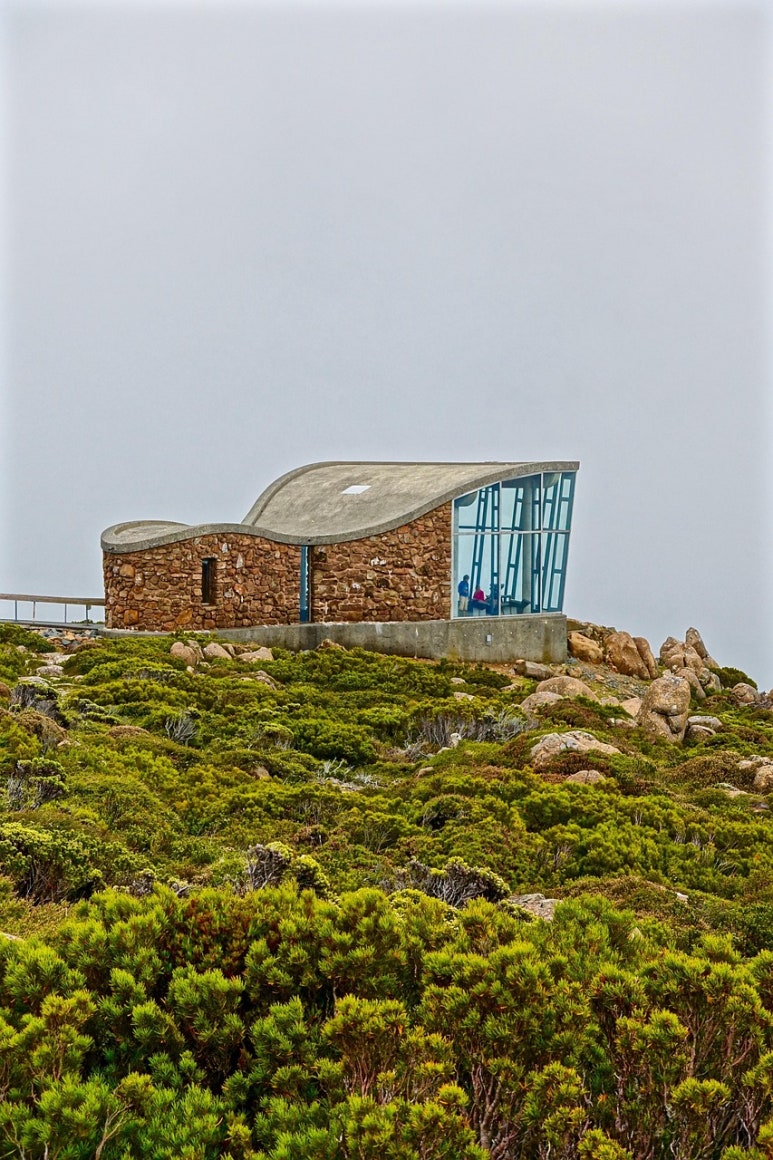
I had learned English only in Korea my whole life; I was even someone who taught English in Korea and had been proud of my skills, but the experience of living entirely in English locally helped me grow and made me reflect on my previously ignorant self. English studied theoretically at a desk by solving problems felt very different from practical, real-world English.In Korea I was a runner, but coming to New Zealand felt like relearning how to walk; nevertheless, realizing that no one in New Zealand knew me as a runner from Korea actually boosted my confidence, and by bumping into situations here and there with my limited English, my skills improved naturally. Also, although I had been an exchange student in Australia before participating in the New Zealand volunteer program, I had never stayed abroad alone for such a long period, so by taking full responsibility for all preparations without relying on anyone and adapting to an unfamiliar environment on my own, I felt I became stronger.
Breaking out of my comfort zone and walking a path I had never walked alone gave me the strength to endure and overcome the anxieties and worries caused by an uncertain future—feelings I will frequently encounter while preparing for exams in Korea. Having grown from the version of myself who found comfort in belonging and settled for what I already knew, I seem to have gained the courage to face future fears as a member of society.
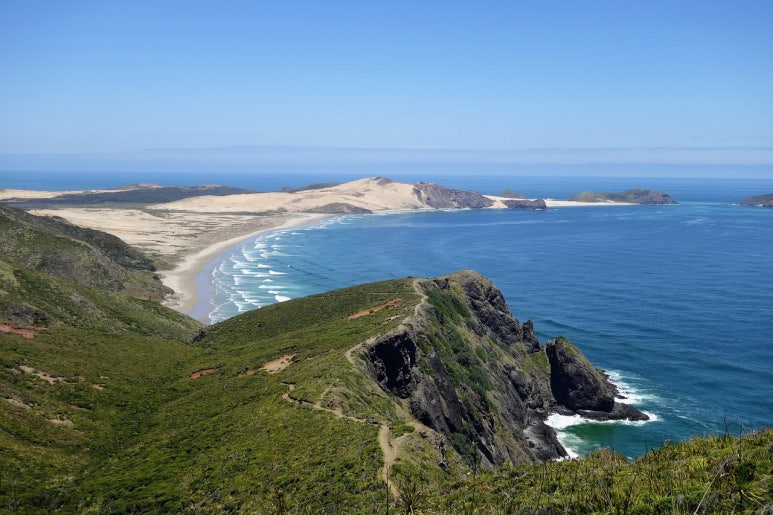
Usually when people think of traveling abroad they imagine Europe or the Americas, so New Zealand in Oceania isn’t visited as often. However, Through this experience I now confidently recommend New Zealand to friends who are considering destinations for overseas travel. When I first decided to volunteer and the day before departure came, I hesitated about everything, but as a result...This gap year project became a memory I will never forget.
It gave me the chance to step away from a busy, complicated routine and reflect on myself, and I learned a calm sense of leisure that isn’t frantically rushed. I experienced valuable growth that made me stronger inside. The memories of visiting New Zealand’s landscapes, which are so different from our country, planted lessons and thoughts I could never have experienced if I had grown up only in Korea. Through volunteering—contributing to nature and the planet and interacting with local people—I felt a connection between people and the Earth and a sense of self-efficacy, and I was able to build confidence for all the challenges I will face ahead.
If I have the chance, I’d definitely like to participate in a New Zealand volunteer program again after graduating; the volunteering in Wellington remains in my heart as a precious, warm memory. Independent travel in New Zealand, volunteering that contributes to nature, cooking dinner with my roommates, driving along the coast with the team leader and relaxing on the beach, wandering around the city alone on a day off to visit sights, the kind and considerate people of New Zealand, and the fresh air of majestic forests not found in Korea—all of these nourished me and helped me put down deep roots in life.I bid a wistful farewell to the unforgettable daily life in New Zealand.
What does a typical day of environmental conservation volunteering in New Zealand look like?
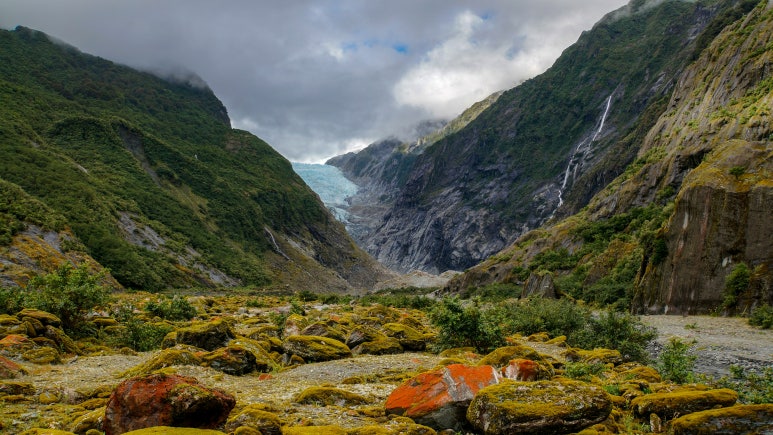
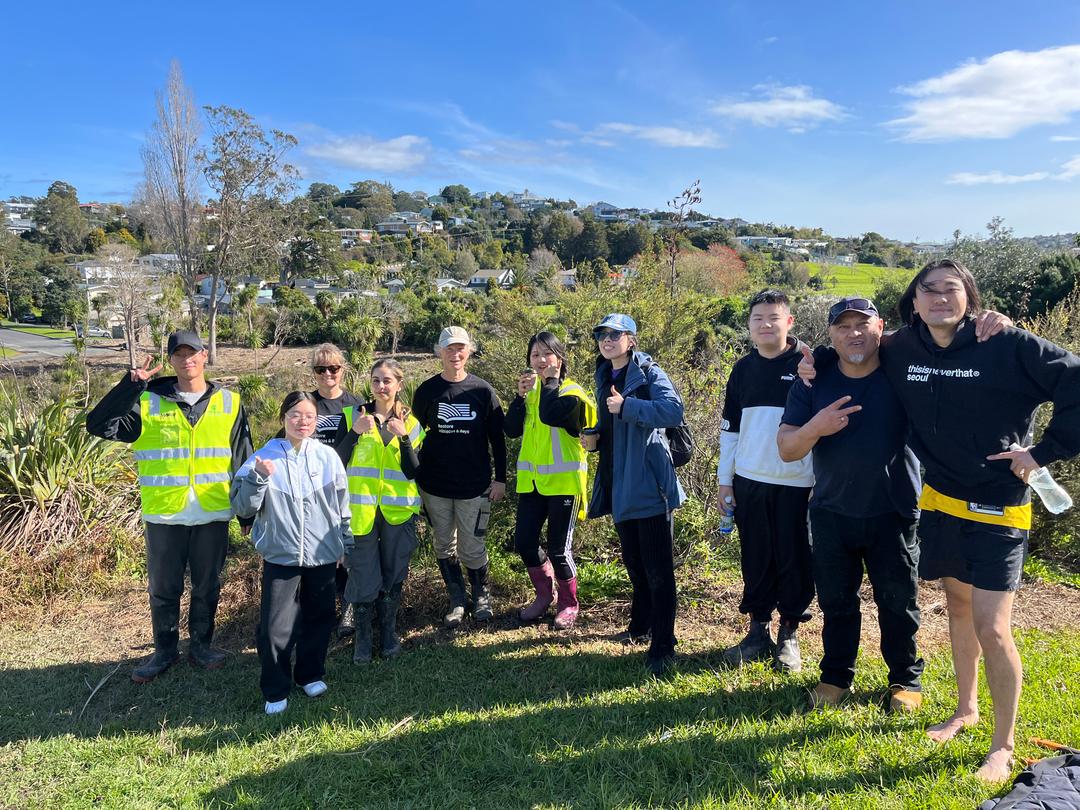
The volunteer schedule always varied depending on the local volunteer site.On early days we had to be on standby until around 8:00, and on late days we sometimes had to be on standby until 11:00. After packing and preparing the equipment needed for the activities, we would get on the prepared van and depart with the team leader and volunteers to that day''s volunteer site. When we arrived at the site, we could meet not only people who stayed and participated in volunteering long-term with us, but also various locals who applied for one-day volunteering through the organization''s website. I quickly made friends and exchanged contact information with a Japanese person who often joined the daily volunteer activities, haha. The volunteer tasks varied: pulling invasive species and weeds from sand dunes near forests or the sea, cutting and removing invasive vines in swampy areas (which wasn’t easy, unfortunately), pulling invasive plants at a dog kindergarten and transplanting seedlings of native plants, and more. However, the team leader didn’t watch over us all day; if you were tired you could rest as needed, so it didn’t feel overwhelmingly physically exhausting. Still, when working in places like swamps, even wearing boots your socks could get soaked with mud, and when pulling vines sunk into the ground swarms of moths would fly onto your clothes—so people who just want a clean cultural experience might find it quite difficult.
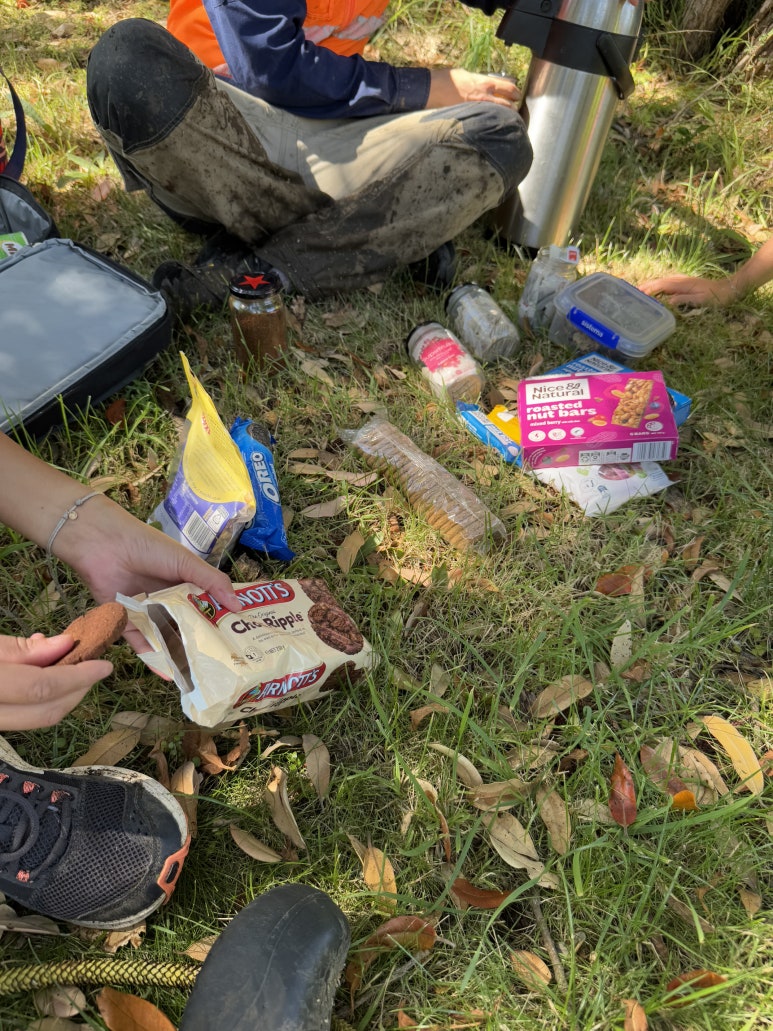
Around midday we always had a tea time; tea, coffee, snacks, jelly, energy bars, etc., were all provided by the team leader, and it was a time to sit around together, chat, and rest. So you could manage with light snacks even if you didn’t bring a full lunch. Because there were many people, the volunteer work didn’t require long hours; after tea we usually worked for about two more hours and then finished and returned to the accommodation. Usually everyone rode the van back together, but depending on the occasion we once all went to a nearby beach to relax after the volunteering, and another time we went grocery shopping together and then returned. We always arrived home by the afternoon, so if you wanted you could go out individually, but my accommodation was far from downtown so I was tired and lazy and didn’t go out after work. For reference, there are no volunteer activities on New Zealand public holidays — those days are just free time.
My personal tips for preparing for New Zealand environmental conservation volunteer work!
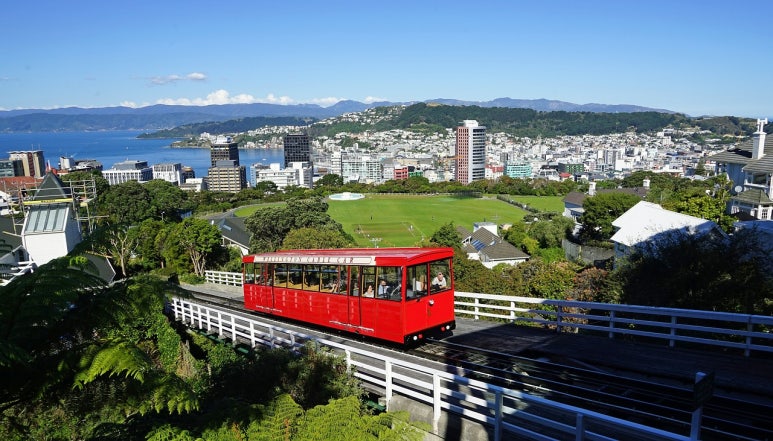
Because I had to prepare for both being an exchange student and for the volunteer work, to avoid confusion I made a list in advance of what to pack, deadlines to meet, and what to submit so I wouldn’t forget. I paid particular attention to the most important items: plane tickets, passport, and the online immigration form. I’d also heard that customs inspections for food are strict in Australia and New Zealand, so I wrote down in Korean and English what food and medications I packed in my suitcase and kept the note handy to show when needed.
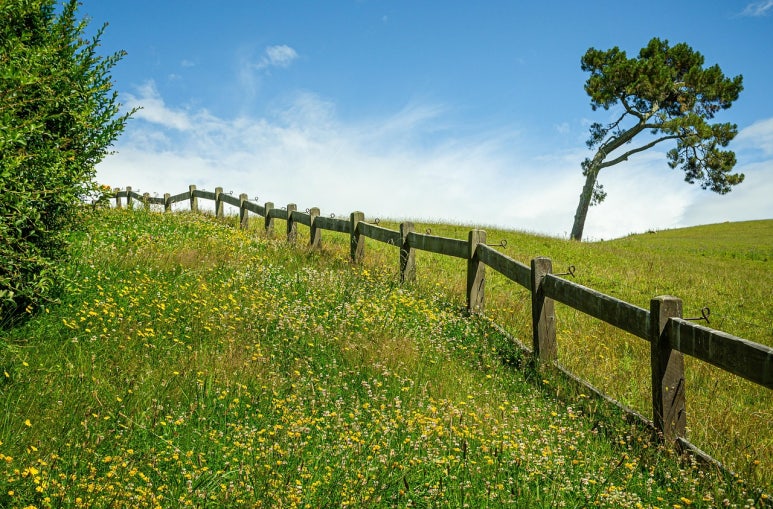
Since this volunteer program is nature conservation and involves a lot of physical work, on weekdays with volunteer activities I was usually too exhausted to go out after the work. Still, I strongly recommend taking time, even on those tired days, to go for a walk nearby and explore the town.
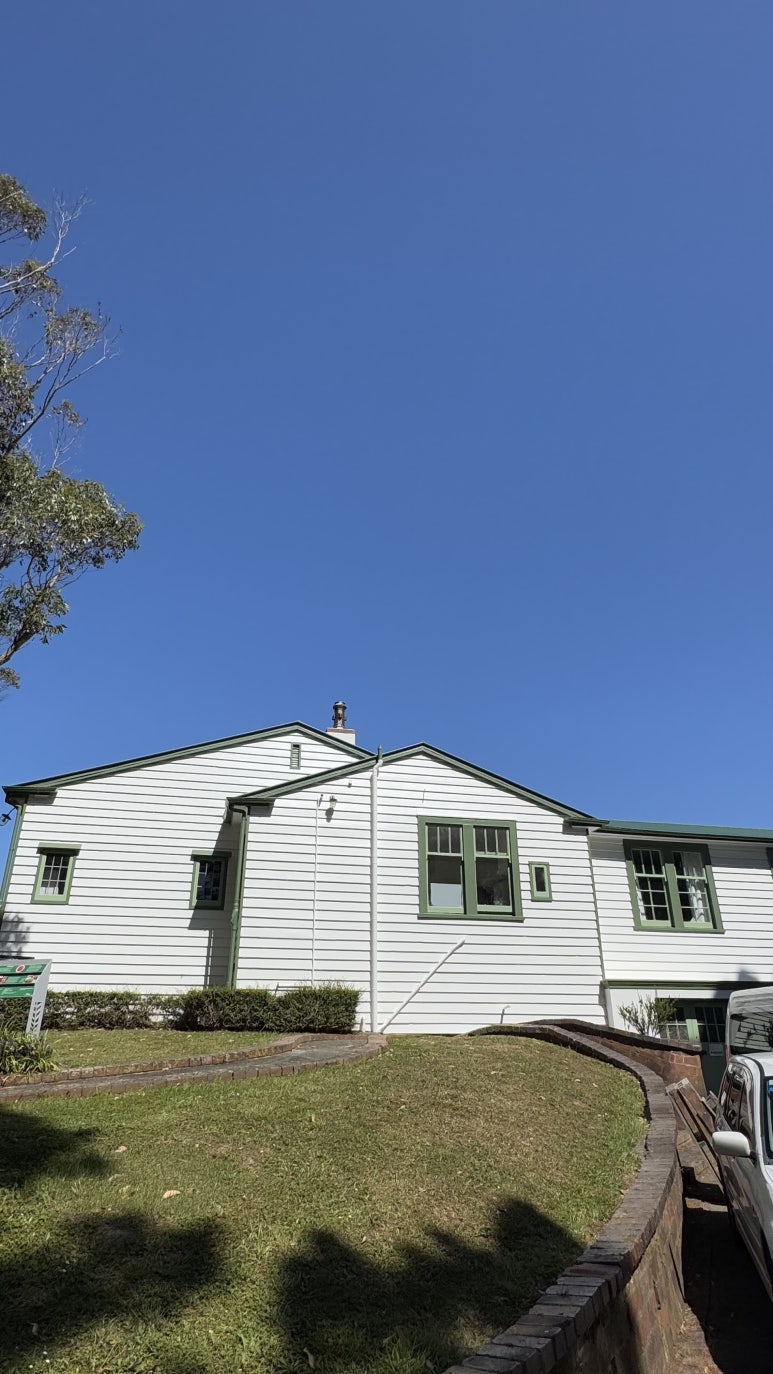
The Wellington accommodation was a converted birthplace of a historical New Zealand figure, located at the edge of a small forested village somewhat removed from the city. Behind the accommodation there is a path that leads into the woods. If you follow the little winding path you can quietly walk among majestic pine trees — it’s great for clearing your mind and calming your body and mind after a day of speaking in unfamiliar languages. If you keep walking you won’t find tourist attractions but rather a small residential village; simply strolling down its streets is quaint, and it was a delightful experience to look at the unique, storybook-like houses. My roommate from France loved the sea, so after volunteering she would often go alone to the nearby beach for a walk. I recommend taking a stroll around the peaceful, picturesque area where you can experience both mountains and sea.
Also, on New Zealand public holidays when there was no volunteering, I took the bus to visit Wellington Zoo. It’s not a typical closed-off zoo with fences; it’s nature-friendly, with walkways designed like forest paths, giving the feeling of strolling through the woods to explore the animals. It’s also child-friendly with lots to see and do, and there was so much to see even when I visited alone. I especially recommend seeing the cute otters, capybaras, and little penguins. There are kiwi birds too, but they’re nocturnal, so I couldn’t see them when I visited during the day — but I was still very happy!
My New Zealand environmental conservation volunteer gap year was!
Experience★★★★★
: It was a perfect experience.
Learning★★★★★
: I saw and heard many things and was led to reflect on myself.
Environment★★★★★
:As one would expect from the famed New Zealand, I could feel the pure green of nature with my whole body.
Safety★★★★★
: New Zealand is famous worldwide for its safety. The towns are much smaller and more peaceful than Australia, which ranks as a livable country, and people welcome outsiders.
Leisure ★★★★★
: The accommodation was far from town and the volunteer work was physically tiring, so unless it was a full rest day it was difficult to go out after volunteering.
Byeon Seo-jeongthat you participated in New Zealand environmental conservation volunteer project Want to know more?!
Click the banner belowPlease!
▼ ▼ ▼ ▼ ▼ ▼ ▼ ▼ ▼
|
Breaking through the walls of my comfort zone and walking alone down a path I had never walked before gave me the strength to face and overcome, on my own, the anxiety and worry caused by an uncertain future that I will frequently experience while preparing for competitive exams in Korea.I feel I have grown from being someone who found comfort in belonging and settled for only familiar experiences, and I have gained the courage to confront the fears of the future as a member of society.
Doing exciting environmental conservation volunteer work in New Zealand’s nature with friends from around the world Review by gap-year participant Byeon Seo-jeong |
# I applied for the gap year project to take time to reflect on myself and rest.
I am currently a fourth-year student enrolled at a university in Seoul. Through Korea Gap Year, I participated in environmental volunteer activities in Wellington, New Zealand.
As the last step before I fully begin preparing for law school admissions after graduating from university I applied for the gap year project to give myself time to reflect on myself and rest.. Because I had spent the past three years at school studying without a break, I felt regret that when I looked back on my university life after graduation there would be no memorable experiences. For that reason, I decided to go on an exchange program during the January 2025 winter term; since the host university for that exchange was located in Australia, I figured that since I had come all the way to Oceania...Since I had come all the way to the Oceania continent, I wanted to accumulate special experiences and memories that I could only have here. So while looking for overseas volunteer opportunities, I found a New Zealand volunteer program on Korea Gap Year and applied.
Because it was my first time living abroad alone for such a long period, I had a lot of worries the day before departure and, to be honest, some regrets. I was very concerned that I might have wasted money and time and should have just stayed home and rested. However, before the New Zealand volunteer program started, I attended classes for a month at an Australian university as an exchange student, toured with classmates, lived in a dorm and made foreign friends — after that I felt like I was attending university in Australia too, which eased my mind. So after the exchange classes ended and before the volunteer program began, when I arrived alone in New Zealand I was able to quickly adapt to life there by touring around on my own and eating local food alone, among other things.
* Before taking a major life exam, I recommend New Zealand environmental conservation volunteer work to Ms. Byeon Seo-jeong so she can reflect on herself and gain special experiences!If you want a tailored plan on where and how to start changing, I strongly recommend 1:1 consulting with a gap year specialist!
A sure way to change my life: Gap Year 1:1 Consulting
# My true self discovered in a strange land.
My main goal was to live abroad alone, reflect on what kind of person I am, discover things I didn''t know about myself, and improve my English skills. Living abroad alone and sharing accommodation and meals with foreign friends made me clearly realize which parts of my everyday English were weak, andLiving with people I didn''t know at all and feeling my reactions and routines revealed to me allowed me to re-examine what kind of person I am.
Also, because I was used to living in a large city in Korea,I wanted to take the time to look back at the environment and nature and enjoy the unspoiled scenery of New Zealand’s vast wilderness. Through the New Zealand environmental volunteer work, interacting with nature I felt a sense of connection, as if communicating with New Zealand’s land, and experienced self-efficacy in contributing to the environment.
# Gaining leisure in picture-like scenery and giving rest to my heart.
The New Zealand locals I met all respected their traditions and nature, and, valuing their country, were also kind to foreigners and tourists.It was not dangerous for a young East Asian woman to travel alone; rather, many people warmly struck up conversations. The staff at the volunteer organization alsounderstood my poor English, made eye contact and waited so I could finish saying what I wanted even if I spoke slowly, and always listened and cared to see if anything was uncomfortable.In particular, even though the staff had surely met and said goodbye to many foreign volunteers like me, when my program ended and it was time to part they were genuinely regretful and even gave me a handwritten letter.
New Zealand English differs greatly in expressions and intonation from the American English commonly taught in Korea, so I think it''s hard to understand unless you hear, speak, and experience it firsthand in the local environment.Because in New Zealand I was forced to listen, speak, read, and write only in English and live entirely in English, my English skills improved automatically.
What I gained automatically from living in New Zealand wasn''t just English, but also a love of nature and the leisure to enjoy the surrounding scenery. Through the volunteer work, I became newly attentive to nature conservation and environmental changes.Also, unlike South Korea where you live among high-rise buildings and noisy city centers, you couldn''t find tall buildings in New Zealand,and when I looked around, every view was full of pretty detached houses that looked like they could appear in a painting and lush greenery; walking around made my distracting thoughts disappear and filled me with a sense of calm.
Precious connections in New Zealand that were warmer than even nature 😃
Among the people I met while volunteering in New Zealand, all of them remain precious memories, but the one I can''t forget most was a middle-aged woman named Kiri, who was the team leader and overall supervisor. She was Māori, and on the day I first arrived at the accommodation she took time out of her busy schedule to welcome me according to Māori tradition and have dinner with me. At the meal she told me about New Zealand and even taught me Māori directly; she felt like a warm mother while at the same time embodying the professionalism and consideration of a leader.
Another impressive team leader was a woman named Gemma with a British accent. She was warm and kind enough to write handwritten letters and also worked as a zookeeper at the Wellington Zoo right next to the accommodation. After volunteering together and getting to know the team, she warmly showed her kindness by readily giving us free admission coupons and inviting everyone to visit the zoo where she worked.
There were four volunteers in total who participated and shared accommodation with me; although we had different nationalities and backgrounds, our hearts were genuinely connected. Two of them were a Dutch couple who had come to New Zealand while traveling the world after graduating university, and another was a woman my age from France.
We all respected each other''s cultures, listened, and were willing to share, and during that period—long or short—we truly lived like friends and family. At first it felt awkward to make small talk each morning asking if we had slept well, but over time I got used to the small-talk culture and began asking morning greetings first, blending in and enjoying life in New Zealand together. For dinner we took turns cooking foods from our own countries; sitting around the table sharing the day felt like a real family. When it was my turn to cook, I made dried seaweed, spicy tuna with chili, soy-sauce chicken stir-fry, and egg fried rice; my roommates complimented it as really delicious and scraped their plates clean, which made me very proud.
It was a small wave, but that moment ultimately became the warmest memory.
In fact, before participating in the environmental volunteer work, there was a small unexpected setback.At first I applied for the Auckland program, not the Wellington program, but the day before the volunteer work began all the Auckland applicants suddenly canceled and I received an email saying I was the only applicant left for Auckland. They also offered that if I wanted, I could go to Wellington where other volunteers were.
I was quite flustered and worried because all my original plans had fallen apart, but when I arrived at the Auckland office the next day the staff welcomed me warmly and told me I could choose what I wanted and to tell them where I wanted to stay.
I didn''t know anything about what Wellington was like, what the accommodation would be like, or who the people were, so I felt anxious and worried, but still—I ultimately decided to go to Wellington. Locally they helped me move there, and although airport pickup wasn''t normally provided, because it was a special situation Kiri personally came to pick me up as soon as I landed at Wellington Airport,and to ease my worries she talked to me a lot in the car on the way to the accommodation—introducing Wellington, explaining about the other volunteers, and asking about Korea—so I could relax.
Also, a difficulty I felt while volunteering was that it was hard to understand New Zealand-style English.The team leader or the person in charge at the volunteer site would explain the day''s activities in English and demonstrate, but they spoke quickly with strong intonation so I could only understand about half. Each time I would first ask my roommates if they had heard what had just been explained, and when I told them my English was lacking and I still had trouble understanding, the roommates who had understood would notice my confused expression and explain again more slowly, showing me a lot of consideration.When English is difficult and you don''t understand what''s being explained or feel uneasy because the situation is unfamiliar, it''s good to muster the courage to ask people around you first, and to restate or double-check what you''ve understood.
Advice I''d like to give to prospective gappers preparing for a New Zealand environmental volunteer gap year?
Until I arrived at the volunteer accommodation I imagined what days would unfold and what kind of people I would meet; I felt scared and even regretted not staying in Korea, but in the endWhen the volunteer work ended and I looked back, I had made so many memories that I felt reluctant to return to Korea.And especiallyI recommend that those who, like me, want to improve their English through overseas volunteer work gain firsthand experience by immersing themselves in the environment. Foreign languages like English improve with confidence and more exposure to different language situations, so hiding because you’re not good at English, intentionally avoiding conversation, or staying only in your accommodation will not help your English improve.
Once I realized that no one here knew the me from Korea, I was able to shed my previously withdrawn self in New Zealand, initiate small talk, make jokes in English, and relax.The cost to prepare for the program is not small, and because there are psychological costs, time costs while living abroad, and opportunity costs for things you could have done if you stayed in Korea, in return for that... I can confidently say that if you reach out first to the people around you and make an effort to experience the local culture to gain experiences and lessons, you too can gain a turning point in life in New Zealand like I did.
Warm, unforgettable everyday life in New Zealand and the calmness and resilience I learned there
I had learned English only in Korea my whole life; I was even someone who taught English in Korea and had been proud of my skills, but the experience of living entirely in English locally helped me grow and made me reflect on my previously ignorant self. English studied theoretically at a desk by solving problems felt very different from practical, real-world English.In Korea I was a runner, but coming to New Zealand felt like relearning how to walk; nevertheless, realizing that no one in New Zealand knew me as a runner from Korea actually boosted my confidence, and by bumping into situations here and there with my limited English, my skills improved naturally. Also, although I had been an exchange student in Australia before participating in the New Zealand volunteer program, I had never stayed abroad alone for such a long period, so by taking full responsibility for all preparations without relying on anyone and adapting to an unfamiliar environment on my own, I felt I became stronger.
Breaking out of my comfort zone and walking a path I had never walked alone gave me the strength to endure and overcome the anxieties and worries caused by an uncertain future—feelings I will frequently encounter while preparing for exams in Korea. Having grown from the version of myself who found comfort in belonging and settled for what I already knew, I seem to have gained the courage to face future fears as a member of society.
Usually when people think of traveling abroad they imagine Europe or the Americas, so New Zealand in Oceania isn’t visited as often. However, Through this experience I now confidently recommend New Zealand to friends who are considering destinations for overseas travel. When I first decided to volunteer and the day before departure came, I hesitated about everything, but as a result...This gap year project became a memory I will never forget.
It gave me the chance to step away from a busy, complicated routine and reflect on myself, and I learned a calm sense of leisure that isn’t frantically rushed. I experienced valuable growth that made me stronger inside. The memories of visiting New Zealand’s landscapes, which are so different from our country, planted lessons and thoughts I could never have experienced if I had grown up only in Korea. Through volunteering—contributing to nature and the planet and interacting with local people—I felt a connection between people and the Earth and a sense of self-efficacy, and I was able to build confidence for all the challenges I will face ahead.
If I have the chance, I’d definitely like to participate in a New Zealand volunteer program again after graduating; the volunteering in Wellington remains in my heart as a precious, warm memory. Independent travel in New Zealand, volunteering that contributes to nature, cooking dinner with my roommates, driving along the coast with the team leader and relaxing on the beach, wandering around the city alone on a day off to visit sights, the kind and considerate people of New Zealand, and the fresh air of majestic forests not found in Korea—all of these nourished me and helped me put down deep roots in life.I bid a wistful farewell to the unforgettable daily life in New Zealand.
What does a typical day of environmental conservation volunteering in New Zealand look like?
The volunteer schedule always varied depending on the local volunteer site.On early days we had to be on standby until around 8:00, and on late days we sometimes had to be on standby until 11:00. After packing and preparing the equipment needed for the activities, we would get on the prepared van and depart with the team leader and volunteers to that day''s volunteer site. When we arrived at the site, we could meet not only people who stayed and participated in volunteering long-term with us, but also various locals who applied for one-day volunteering through the organization''s website. I quickly made friends and exchanged contact information with a Japanese person who often joined the daily volunteer activities, haha. The volunteer tasks varied: pulling invasive species and weeds from sand dunes near forests or the sea, cutting and removing invasive vines in swampy areas (which wasn’t easy, unfortunately), pulling invasive plants at a dog kindergarten and transplanting seedlings of native plants, and more. However, the team leader didn’t watch over us all day; if you were tired you could rest as needed, so it didn’t feel overwhelmingly physically exhausting. Still, when working in places like swamps, even wearing boots your socks could get soaked with mud, and when pulling vines sunk into the ground swarms of moths would fly onto your clothes—so people who just want a clean cultural experience might find it quite difficult.
Around midday we always had a tea time; tea, coffee, snacks, jelly, energy bars, etc., were all provided by the team leader, and it was a time to sit around together, chat, and rest. So you could manage with light snacks even if you didn’t bring a full lunch. Because there were many people, the volunteer work didn’t require long hours; after tea we usually worked for about two more hours and then finished and returned to the accommodation. Usually everyone rode the van back together, but depending on the occasion we once all went to a nearby beach to relax after the volunteering, and another time we went grocery shopping together and then returned. We always arrived home by the afternoon, so if you wanted you could go out individually, but my accommodation was far from downtown so I was tired and lazy and didn’t go out after work. For reference, there are no volunteer activities on New Zealand public holidays — those days are just free time.
My personal tips for preparing for New Zealand environmental conservation volunteer work!
Because I had to prepare for both being an exchange student and for the volunteer work, to avoid confusion I made a list in advance of what to pack, deadlines to meet, and what to submit so I wouldn’t forget. I paid particular attention to the most important items: plane tickets, passport, and the online immigration form. I’d also heard that customs inspections for food are strict in Australia and New Zealand, so I wrote down in Korean and English what food and medications I packed in my suitcase and kept the note handy to show when needed.
Since this volunteer program is nature conservation and involves a lot of physical work, on weekdays with volunteer activities I was usually too exhausted to go out after the work. Still, I strongly recommend taking time, even on those tired days, to go for a walk nearby and explore the town.
The Wellington accommodation was a converted birthplace of a historical New Zealand figure, located at the edge of a small forested village somewhat removed from the city. Behind the accommodation there is a path that leads into the woods. If you follow the little winding path you can quietly walk among majestic pine trees — it’s great for clearing your mind and calming your body and mind after a day of speaking in unfamiliar languages. If you keep walking you won’t find tourist attractions but rather a small residential village; simply strolling down its streets is quaint, and it was a delightful experience to look at the unique, storybook-like houses. My roommate from France loved the sea, so after volunteering she would often go alone to the nearby beach for a walk. I recommend taking a stroll around the peaceful, picturesque area where you can experience both mountains and sea.
Also, on New Zealand public holidays when there was no volunteering, I took the bus to visit Wellington Zoo. It’s not a typical closed-off zoo with fences; it’s nature-friendly, with walkways designed like forest paths, giving the feeling of strolling through the woods to explore the animals. It’s also child-friendly with lots to see and do, and there was so much to see even when I visited alone. I especially recommend seeing the cute otters, capybaras, and little penguins. There are kiwi birds too, but they’re nocturnal, so I couldn’t see them when I visited during the day — but I was still very happy!
My New Zealand environmental conservation volunteer gap year was!
Experience★★★★★
: It was a perfect experience.
Learning★★★★★
: I saw and heard many things and was led to reflect on myself.
Environment★★★★★
:As one would expect from the famed New Zealand, I could feel the pure green of nature with my whole body.
Safety★★★★★
: New Zealand is famous worldwide for its safety. The towns are much smaller and more peaceful than Australia, which ranks as a livable country, and people welcome outsiders.
Leisure ★★★★★
: The accommodation was far from town and the volunteer work was physically tiring, so unless it was a full rest day it was difficult to go out after volunteering.
Byeon Seo-jeongthat you participated in New Zealand environmental conservation volunteer project Want to know more?!
Click the banner belowPlease!
▼ ▼ ▼ ▼ ▼ ▼ ▼ ▼ ▼
Capturing the growth journeys
of our participants.

 Home
Home


Take a step out of your comfort zone.
Challenge yourself for your own sake.
Feel complete freedom.
Be happy.