Projects
|
FAQ
|
Announcements







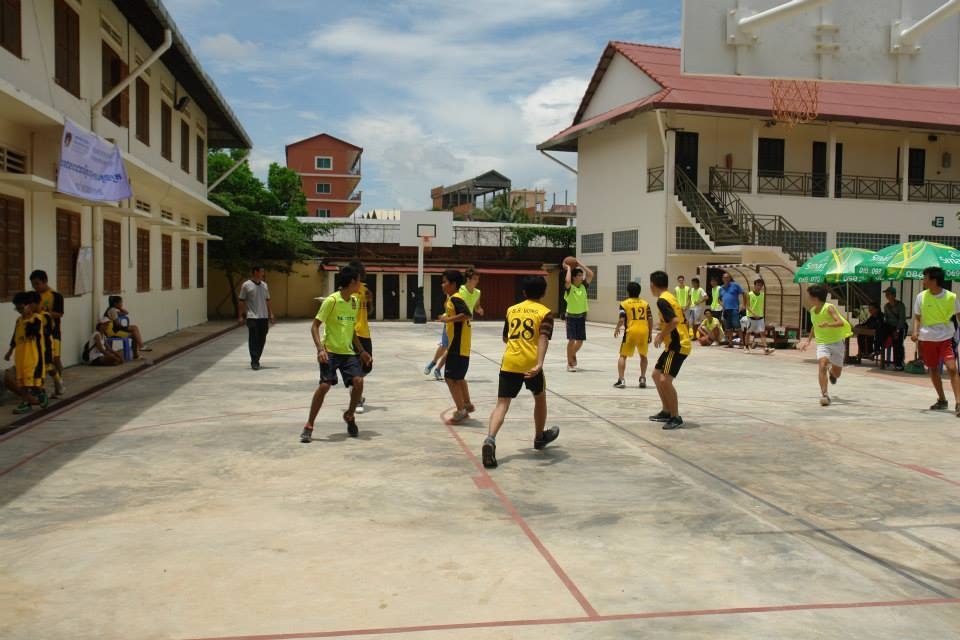
This project teaches English to students in Cambodia's slum areas andis a project that shares hope and courage with the children.
Children rummaging through garbage heaps all day in search of food...
In the southern part of Phnom Penh, there is a village where the entire community makes a living by scavenging through trash. In this village, children also rummage through garbage heaps from morning till night looking for food. Because they collect waste day and night in unsanitary conditions, they are easily exposed to all kinds of diseases. These children have no proper education, no food, and no hope of a "better tomorrow." The way to rescue these children from the dumps is to provide good education so they can obtain jobs that allow them to earn at least a basic living. English is a truly important skill for getting a job even in Cambodia. Through English education, please help these children avoid returning to the dump and let them dream of tomorrow!
13.8 Week
Based on past participants’ experiences, we’ve organized the common themes of learning, reflection, and growth by time period.
Capturing the growth journeys of our participants.
Grow

| ■ Need for English★★☆☆☆
This project is recommended for people who are passionate about English education. English is also an essential skill for obtaining good jobs in Cambodia. What matters is not simply 'knowing' English but the ability to 'use' it in real situations. This organization views English education not just as part of the curriculum but as an extension of vocational training. Therefore, we are looking for English teachers who can provide practical help in improving students' spoken English skills and who can help remove students' fear of using English inside and outside school. If you want to be a great teacher who can motivate students, please join us! Q. Would a Korean teaching English be competitive? Yes, it is competitive. Like Korea, Cambodia is not an English-speaking country, so a Korean English teacher's study know-how and experience using English can give students additional inspiration and motivation. Furthermore, today English is not the language of a single region such as the UK or the US but serves as an 'international language' used in various contexts such as international business, cultural exchange, and international conferences. In practice, English is used far more widely in many countries across Asia, Africa, and Europe than in its native lands. Therefore, in places like Cambodia where English is not the native language, actual English usage that is used and accepted across diverse environments and cultures is valued more than native-speaker English, and the organization also works to expose students to a variety of English environments through foreign teachers from multiple countries. |
Project details
Volunteers provide English lessons to students as part of basic education and vocational training, and engage in various English education support activities to help students gain confidence in English.
- Activities are about 35 hours per week (Mon–Fri).
- Participants teach English at schools, child support centers, etc.
- Students range from elementary to middle and high school, with about 20–30 students per class.
* Class assignments are determined after participation is confirmed based on the organization's and participant's circumstances; the final class assignment can be confirmed locally.
- In addition, participants may take part in school events and organization activities depending on students' timetables and the institution's schedule.
1. Health and nutrition support activities
2. Medical support activities
3. Childcare and protection support activities
4. Basic education
5. Vocational training
6. Family/community support activities
- Weekends and evenings after work are free time and can be used for travel, personal projects, etc.
- Depending on the participant's ability and willingness, additional project activities such as assisting with school events or teacher training may be possible.
- The detailed schedule will be finalized according to the participant and local circumstances.
- This project the first or third Monday of each monthWe recommend aligning the start date accordingly.
Some inclusions are available when options are added or selected.

| Organization StoryA New Life Found in Cambodia!
In the early 1990s, an elderly French couple visited Cambodia to enjoy their retirement. However, they were confronted with the horrific reality left by the genocide and the tragic condition of children, which reflected ongoing social instability. Children scavenging and eating from landfill sites and surviving by collecting recyclable waste... Seeing this, the French couple realized there was a life more meaningful than maintaining their previous lifestyle, and they returned to Cambodia to establish an NGO with the mission "For Smiling Children." To this day, the organization maintains extensive exchanges with France and Europe and continues its volunteer work in cooperation with over 500 Cambodian local staff as well as around 300 volunteers and staff from Europe. |
The organization running this project is an NGO founded by French nationals in 1996 to help Cambodian children with difficult livelihoods. The organization provides generous support in many areas—education, livelihoods, healthcare, and childcare—to help children break the cycle of poverty. It currently operates three schools offering formal education, one vocational training center, and child support centers free of charge, striving to provide quality education and systematic vocational training to 6,000 enrolled students. In fact, graduates of these schools go on to work in companies, hotels, and schools in Phnom Penh, contributing to the strengthening of Cambodian society.

During the project period, you will stay in a guesthouse-style volunteer accommodation with other participants. In the volunteer housing you can live with friends of various nationalities and enjoy the pleasures of communal living.
The accommodation is run and managed directly by a local partner organization and is located in the city, allowing you to live safely.Rooms are typically shared by up to three people; each room is equipped with a private bathroom, air conditioning, and basic furniture.Common areas are provided with tables, chairs, and a balcony where you can relax after activities in the evenings or on weekends and spend time with friends.
For meals, at the designatedrestaurant breakfast, lunch, and dinner are providedYou can choose the menu you want, and lunch can be taken as a packed meal. Breakfast is usually a simple meal such as bread, eggs, and fruit served with tea, while lunch and dinner offer a variety of dishes like fried rice, noodles, curry, and meats. The accommodation is located in Phnom Penh, making it convenient to participate in the project on weekdays and sightsee nearby on weekends. It takes about a 30-minute walk from the accommodation to the activity organization, or about 25 minutes by tuk-tuk, Cambodia's common mode of transport.
|
Shared room (3–5 people) / private bathroom (hot water available) / three meals per day (breakfast/lunch/dinner) provided / air conditioning / Wi‑Fi provided |
*Cambodia is generally hottest from March to May, and spots tend to fill up quickly between July and August.
*Travel time to the activity organization may vary depending on traffic conditions.
*The photos above are example images for reference; room layouts and furniture may vary depending on when you participate and local circumstances.

Cambodia's transportation infrastructure is weak, and public transit systems like city buses and subways are not well developed. The main means of transport are motorcycle taxis—where you sit on the back of a motorcycle—and three-wheeled tuk-tuks, which are modified motorcycles. Motorcycle taxis are very dangerous in terms of safety. Therefore, we recommend using tuk-tuks for safety, even if they cost a little more.Unlike regular taxis, tuk-tuks do not have fixed fares; prices are negotiated with the driver each time, and recently people often book and pay for tuk-tuks using mobile apps.
Typical one-way fares start at about 2 USD, and costs vary widely depending on distance, time of day, number of passengers, and other factors. You may be unsettled by Cambodia's unfamiliar transportation system at first, but if you understand the relatively underdeveloped transport system and follow local customs, you will be able to enjoy your time in Cambodia even more!
Region:Cambodia, Phnom Penh

Phnom Penh, Cambodia
The official name of Cambodia is the 'Kingdom of Cambodia,' and it borders Vietnam, Laos, and Thailand in southeastern Indochina. Phnom Penh, the capital, is the country's economic and political center, where the painful history of the French colonial period coexists with modern development. The city is full of attractions such as the National Museum, the Royal Palace, the Prime Minister's residence, and the Independence Monument. At the same time, you can also see the difficult lives of many Cambodians who struggle behind rapid economic development, because political instability has prevented the benefits of economic growth from being distributed evenly. For this reason, many international NGOs and relief organizations are working to rebuild Cambodian society across education, the economy, agriculture, and politics.

1. Silver Pagoda
The site is called the Silver Pagoda because more than 50,000 pieces of silver are inlaid in the floor of the shrine. Although the interior may look unremarkable at first—like simple tin pieces—if you look closely you will see intricate patterns engraved on the silver-colored tiles, so it's worth paying attention to details you might otherwise overlook. The temple houses a gold Buddha statue weighing 90 kg and a variety of other Buddha images displayed with lavish decorations. Like the Royal Palace, a strict dress code is enforced here, so be sure to wear long sleeves and long pants.

2. Russian Market
The Russian Market is a traditional market used by Phnom Penh residents. Locally it is pronounced 'Psar Tuol Tompong' and was named because it once sold Russian-made goods. You can browse a wide variety of items—traditional Cambodian food, books, clothing, and more—and it is especially famous for artifacts and handicrafts aimed at foreign tourists. Visiting a local market frequented by residents is one of the best ways to truly experience the area's culture. Spend some time at the Russian Market to observe various aspects of Cambodian daily life.

3. Tuol Sleng Museum
This place preserves Cambodia's painful history. Originally a school, it was used as the security headquarters during the Khmer Rouge regime that carried out mass killings. People were detained and killed here, and the records of those events are preserved. It was a site where young people who opposed the Khmer Rouge were tortured and interrogated; even the beds on which they died and the skulls are kept. By visiting with a guide, you can learn about Cambodia's tragic history and take time to mourn those who died.
|
- The minimum participation period for this project is 4 weeks or more. |
|||
|
■ Participation Fee 4 weeks 1,990,000 KRW 6 weeks 2,270,000 KRW 8weeks 2,630,000 KRW 12 weeks 3,530,000 KRW 16 weeks 4,420,000 KRW
* For popular projects, there may be no openings, so please apply quickly to secure a spot.
■ Eligible Participants - Physically healthy adults aged 18 and over - Those who aspire to be English teachers - Those currently teaching English or who have experience teaching English - Those interested in education or international development cooperation - Those who want to teach English to young children in Cambodia - Those who want to participate in volunteer activities and interact with friends from various countries - Those who want a unique experience during their vacation - Someone with basic English communication skills - An open-minded person * Anyone who meets at least one of the above is eligible
* For those who cannot pay the full amountMake an advance payment of a 500,000 KRW registration feeIf you pay the remaining balance within two weeks, starting from the date the registration fee is paid the process to confirm project participation will proceed and we will check participation availability and available slots. To join on your desired date and period, securing your spot quickly is important!(Non-refundable upon confirmation of participation) * However, if the start date is imminent, the deadline for the remaining payment may change depending on circumstances.■Early bird discount andUrgent applicationInformation
All Gap Year projects require normal processing procedures and a gap year preparation period,so we recommend applying at least three months before the project start date.Please,As a rule, please apply no later than two months in advanceThis is the principle. However, if there are unavoidable reasons or you urgently need to join a project, by paying an additional fee through the urgent application service, we will assist you with the fastest possible processing.
*We assist with the fastest possible processing, but there is a basic amount of time required for communication with local agencies and for confirming participation, and because all procedures are conducted the same as for regular participants,Participants who apply through the urgent application service must actively cooperatewith the Korea Gap Year operations team.
**Participants who apply at least 180 days before the start date are eligible for an early bird discount.
***The urgent application service can be selected from the options above. For inquiries related to the urgent application service, please contact koreagapyear@gmail.com.
|
|||
|
Included items |
|||
|
1. On-site project implementation and training costs 2. On-site orientation costs 3. Accommodation during the project period 4. Meals (breakfast/lunch/dinner) during the project period 5. Airport-to-accommodation pickup fee (one-way) |
6. Korea Gap Year Overseas Experience Certificate 7. Participation fee 8. Registration and placement, training, and project implementation costs 9. Project application and processing fees 10. Online orientation costs |
||
|
Not included |
|||
|
1. Round-trip airfare 2. Round-trip transportation between accommodation and volunteer site (tuk-tuk) 3. Visa issuance fee 4. Individual traveler insurance fee 5. Other local living expenses |
|||
* Please book flights and transportation after your project participation is confirmed and you receive the final departure schedule.
Estimated cost
|
Item |
Details and remarks |
Amount |
Category |
|
Round-trip airfare (including TAX) |
Varies by flight |
Approximately KRW 350,000 - 800,000 |
Not included |
|
Visa issuance fee |
Visa application and issuance fees |
$30 | |
|
Individual traveler insurance fee |
Varies by insurer and duration |
Approximately KRW 10,000 |
* Airfare may vary depending on the flight.
* Local living expenses are based on average estimates and may vary depending on participant preferences.
* Participants' travel expenses and personal pocket money are separate.
● Note (Estimated Local Prices)
|
Accommodation |
Per night |
Meals |
Per meal |
|
Guesthouse |
About 10,000 KRW |
Local meal |
About 2,000 KRW |
|
Hotel |
About 20,000 KRW |
Restaurant |
About 5,000 KRW |
*Estimated local prices are average guidelines and may vary depending on participants' preferences.



 Home
Home

Take a step out of your comfort zone.
Challenge yourself for your own sake.
Feel complete freedom.
Be happy.





 Please select a start date.