

Projects
|
FAQ
|
Announcements

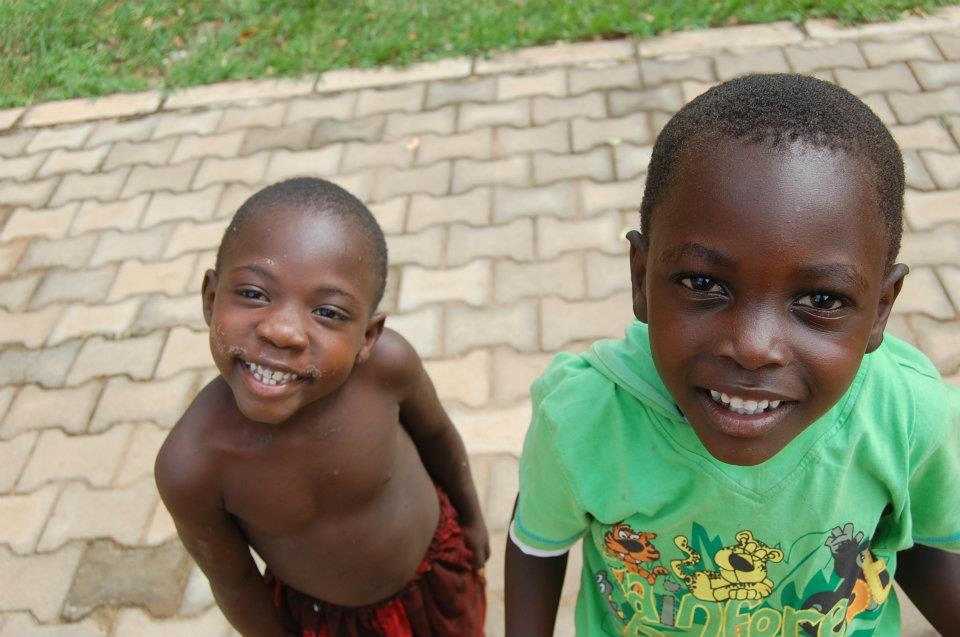


After 17 years of civil war, 25% of the population still live below the poverty line and people are dying because they cannot drink clean water. Provide clean water to Uganda using appropriate technology together with students from Harvard University, and give Uganda's growing children new dreams and hope.
Recommended for those interested in international activities and appropriate technology.

What makes this project special


Importance of English ★★☆☆☆
You should be able to carry out basic communication with local people and local children. However, a Korean field mentor from Harvard will always be with you and assist you, so even if you are not good at English, if you participate with a bright and proactive attitude, you will not have major difficulties carrying out the project.
- A Harvard alumnusThe field mentor will be with all participants throughout the project schedule and stay with them.
Local hardship level: ★★★★☆

● Making ceramic water filters
At the filter production facility, you will learn about the production process of ceramic water filters and directly experience filter clay mixing, mold production, drying, and kiln firing. Those staying for more than one month may be able to experience operating the factory firsthand and may conduct buyer meetings with local NGOs.
* Ceramic water filter
The organization related to this project is a non-profit organization certified by the U.S. federal government. Over the past three years it has formed partnerships with local universities in Uganda, built a local factory, employed local workers, and validated its business feasibility through pilot production of ceramic water filters. It is currently receiving orders from local Ugandan NGOs to produce water filters and supplying them to those NGOs. The inexpensive ceramic water filters supplied to NGOs are provided to Ugandan households in need of clean water either for free or at cost, depending on each NGO's policy..
● Public Health Volunteer Activities
You will give public health lectures to local elementary school students. The school is about 4 km from the accommodation.
* Public Health Volunteer Activities
This is volunteer work to prevent disease and to maintain and promote the health of all residents through community social efforts.Together with a local mentor, you will give lectures to local elementary school students on the importance of clean water, how to drink clean water, and malaria prevention.
* Public health volunteer activities can be carried out when participating as a group; during the school's vacation periodthey are not available.
● Uganda Area Tour
Tour the Sipi Falls National Park in northeastern Uganda. (Optional)
* Sipi Falls (additional cost): One of Uganda's representative tourist attractions, often cited as one of the most beautiful waterfalls. It is located in Mount Elgon National Park near Kapchorwa, close to the border with Kenya, and is characterized by a larger lower tier than the two upper tiers. The scenery is beautiful, overlooking Mount Elgon and the wide plains to the east, and the well-maintained road leading to Mbale, 55 km away, creates a spectacular view.
● Safari Tour
A safari tour to see rhinoceroses and other wildlife in Uganda's national parks. (Optional)
* Safari Tour (additional cost of approximately KRW 400,000 per person)
This 2-night, 3-day safari tour in Murchison National Park in southwestern Uganda includes viewing Murchison Falls, viewing the Nile River, camping, experiencing a Nile ferry ride, a 4-hour safari drive through wetlands and savanna around the Nile, a cruise tour to see hippos and crocodiles on the Nile, and another safari drive on the third day.
Animals that can be seen on the safari drive include lions, leopards, hippos, giraffes, elephants, buffalo, antelopes, deer, rhinoceroses, and some 450 species of birds. Because wildlife appearing on the safari varies by season and time, you may not see all animals at once. Safari costs include park entrance fees, ferry fares, tour guide fees, and two lunches; the cruise tour bar and restaurant require separate payment.


* Detailed reviews from participants areGap Year Story (Click)You can view it there.
* More participant reviews can be found at the bottom of the project in the "Participant Reviews" section and can be viewed.

Exclusions
- Round-trip Airfare
- Visa Issuance
- Vaccinations
- Transportation from airport to Kumi Terminal
- Lunch/Dinner during Project Period


We are a social enterprise founded by students from Harvard University in the United States.We supply ceramic water filters and provide public health education for children in Uganda who are falling ill and dying due to lack of clean water. Visitors can observe the filter production at the local factory and experience the management of a social enterprise run by Harvard students. Additionally, we give lectures on the importance of public health at local primary schools.
During the project period, participants meet mentors from Harvard, receive advice on various matters, and can design their own future plans.

Single room for one person (separated by gender) / shared bathroom / shared kitchen / meals provided / Wi‑Fi uncertain
Region:Africa, Uganda


Known as the "Pearl of Africa," Uganda borders major African countries such as Kenya, the Congo, Rwanda, and Tanzania. It boasts abundant water resources from Lake Victoria — called the "Mother River" — and a beautiful natural environment based on them. In this unspoiled place, wildlife and green savannas have been internationally recognized and even designated as UNESCO World Heritage sites.
Kampala, where the project takes place, became more famous after actor Yoo Ji-tae visited for volunteer work, and Kumi, another project site, is also an area where many Koreans gather.As various NGOs are currently running support projects, it serves as a stage for many NGOs' activities.


This national park preserves such beautiful nature that it was inscribed on the UNESCO World Heritage List in 1994. The Rwenzori Mountains have permanent snow, and from the summits you can even see glaciers and feel as if you are above the clouds. Compared to other high snow-capped mountains, the Rwenzoris are still relatively unknown and thus retain pristine, untouched wilderness where you can discover rare plants and animals everywhere you go. If you are adventurous and want to test your limits, visit the Rwenzoris!

- Anyone who can communicate at a basic level in English
- Anyone who has wanted to work in Africa at least once
- People who are passionate and want to directly help children in Africa as global citizens
- Those who want not only to sightsee in Africa but also to interact with locals and experience their way of life
■ The minimum participation period for this project isAt least 12 weeksis.
■ Participation Fee
12 weeks - KRW 4,005,000
* For popular projects, there may be no openings, soPlease apply quickly to secure a spot.
* Cost reductions apply for participation longer than 12 weeks. For inquiries, call (☎ 02-318-2553)
Schedule adjustments are available for three months or more.If you participate in the six-month course of this project, you will serve as the host/organizer of the project carried out at the overseas institution.Therefore, only those with practical experience in related activities in developing countries are eligible to participate.
■ Gap Year Mission Scholarship(▶ Learn more)
■ Installment Payment Information
If you have difficulty paying in full,pay an advance registration fee of KRW 500,000and if you pay the remaining balance within two weeks, the date you paid the registration fee will be used as the reference date.We will proceed with the process to confirm project participation and check availability and available slots (TO). To participate on your preferred dates and duration, securing a spot quickly is important!(Non-refundable once participation is confirmed)
However, if the start date is imminent, the schedule for the remaining balance payment may vary depending on the circumstances.
Note: Early bird discount andUrgent applicationInformation
All gap year projects require standard processing procedures and a gap year preparation period, sowe recommend applying at least 3 months before the project start date.and,as a rule, applications should be submitted no later than 2 months in advance.However, if unavoidable circumstances arise or you urgently need to join a project, you may pay an additional fee for the urgent application service and we will assist with expedited processing as much as possible.
We assist with expedited procedures as much as possible, but there is basic time required for communication with local organizations and for confirming participation, and all procedures are carried out the same as for regular participants, soparticipants using the urgent application service must actively cooperate with the KoreaGapYear operations teamand cooperate fully.
Those who apply at least 180 days before the start date can receive an early bird discount.
The urgent application service can be requested from the selection options above. For inquiries related to the urgent application service, please contact koreagapyear@gmail.com.
- Included:Automatic enrollment for the gap year mission and notes / Full OT materials provided immediately upon confirmation of participation / Additional urgent personnel deployment / Support in preparing documents if required, etc.
If you have difficulty calculating dates, please refer to the Naver Date Calculator >>Go to Naver Date Calculator
Note: For ultra-urgent applications, there may be no available slots (TO) depending on local circumstances, and subsequent procedures will proceed according to the gap year refund policy.Also,Participants are responsible for any issues resulting from their lack of cooperation.
■ Estimated Other Expenses (Per week)
| Item | Details and Remarks | Amount | Category |
| Round-trip Airfare (including TAX) | Varies depending on the flight | Approximately 800,000–1,200,000 KRW | Not Included |
| Visa Fee | Paid at the airport | $50 | |
| Individual travel insurance fee | Varies by insurer and policy period | Approximately 10,000 KRW expected | |
| Airport Fee | - | - | |
| Local living expenses | Yellow fever vaccination fee (required) | Approximately 32,000 KRW expected |
*Airfare may vary depending on the flight.
*Local living expenses are based on average estimates and may vary depending on participant preferences.
*Participants' travel expenses and personal pocket money are not included.
■ Note (Estimated local prices)
| Accommodation | Per night | Meals | Per meal |
| Guesthouse | Approximately 15,000 KRW | Local meal | Approximately 3,000KRW |
| Hotel | Approximately 100,000 KRW | Restaurant | Approximately 10,000KRW |
*The estimated local prices are based on averages and may vary depending on participant preferences.