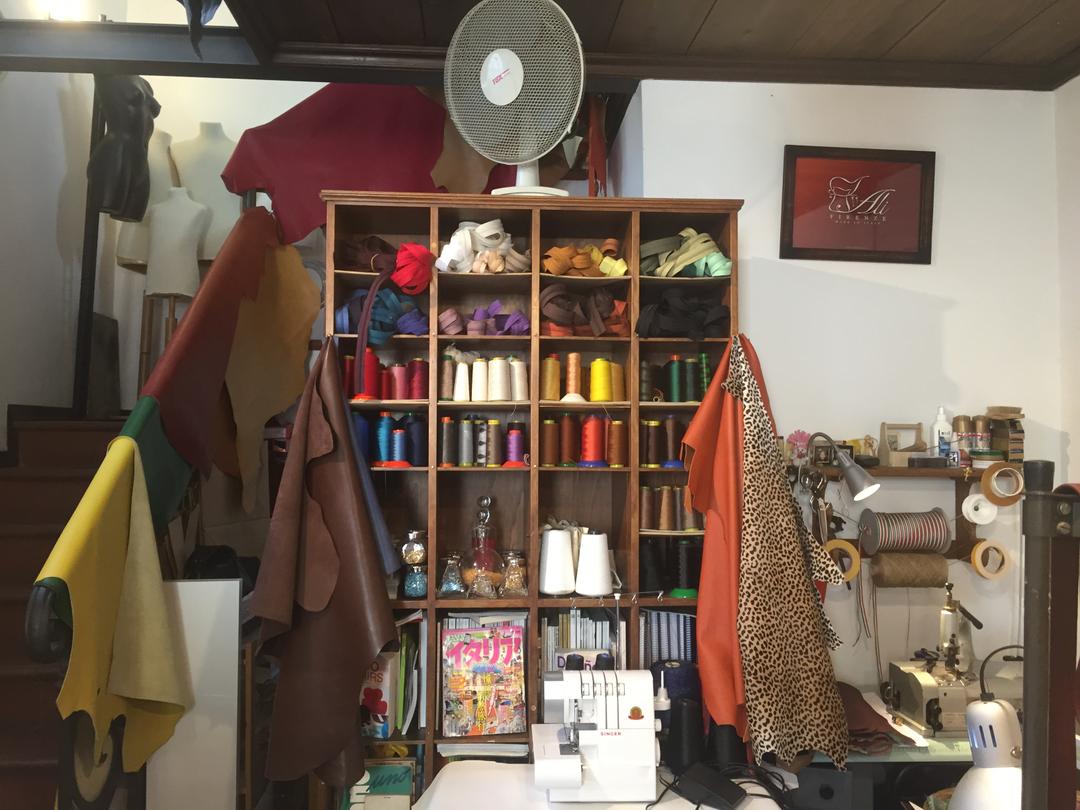
I started to spend much more time on myself. Beyond learning the skill of making leather bags, I learned a lot from Italians about their lifestyle, and I''ve tried to apply much of it after returning to Korea. Make luxury bags — and even get job training — in Florence, the world-famous city of leather craftsmanship! Song Min-kyung, gap year participant (36, on a gap year after leaving work) / 12-week gap year |
# After working at the company for 10 years, I hit a slump; I felt lethargic and empty.
My name is Song Min-kyung, and I''m 36 this year. Before participating in the gap year I was a company employee, but now I''m unemployed ^^
I worked for 10 years at the company I joined after graduating from university. Even while working I had many things I wanted to learn, so I would go to classes after work and on weekends; I''m someone who gains energy from learning actively.
After working at the company for 10 years I experienced a slump, became lethargic, and felt a sense of emptiness, with many negative feelings.I tried to overcome those feelings by learning many new things, but there came a moment when those methods no longer worked.
So I thought I should look for a new path, and on the ''Gap Year'' site I found a course for making leather bags.I do enjoy making things, and although leather bags were new to me, I wanted to try something different, so I looked into it.I applied a bit late, but fortunately I was accepted and was able to go.
# My goal was to rest my mind and body, worn out from daily life.
At first I decided simply because I wanted to leave and learn something, but when I actually thought about living there I was worried — about accommodation, safety, and I''d heard Italy''s water isn''t good, so I was concerned about that too.I figured it''s just a place where people live, so I packed minimally and planned to buy necessities there — I ended up bringing less than I thought.
I left the company on September 8, took a flight on September 9, and had to attend my first class on September 11 — it was a tight schedule, so I couldn''t prepare thoroughly. After my gap year participation was confirmed I booked a plane ticket, bought travel insurance, packed after work the day before departure, and flew out the next day.
When I inquired and registered, my mindset was simply ''let''s just go.'' I didn''t think my family or workplace would let me do it otherwise, so with mixed fear and excitement I registered — that''s when it started to feel real.My goals were to gain experience in a new field, the vague excitement of wanting to live in another country, and to rest my mind and body tired from daily life.It was.
# A day''s routine in Italy
Classes run every day from 10:30 AM to 5:00 PM. There''s a lunch break from 1:30 to 2:00. Because lunch is short, most people bring sandwiches or something quick from home, or buy from the pizza shop just outside the school.
Two teachers teach the class: one explains in Italian and the other repeats the explanation in English,The construction process is systematized step by step, so if you follow the instructions you can make the bag.
About 20 people took the class together; there were around four Koreans, and the rest came from other parts of Europe, the US, and South America. You spend three months at the same table with the people seated there — at my table were Swiss and American students, but they only took one- or two-month courses and returned home, and an Israeli friend from the table behind moved into that seat and worked with us.
Everyone was nice, and each person had their own personality depending on their country, so it was enjoyable to work together and to chat while working and learn about each other''s countries.
# The best part was the sense of accomplishment from creating something.
When people asked me why I chose to go to Italy specifically to make bags, I half-jokingly, half-seriously said I wanted to learn a craft. I was attracted to learning something with my hands. My job had been office work—sitting in front of a computer and using my head to do things according to company rules.
But completely the opposite, the projects werehands-on work; while the bag to be made is predetermined, you decide its shape and how to make it, and the teachers acknowledge that, so I felt my opinions were respected — the sense of accomplishment from creating something was the best part.It was.
# For prospective participants
People who have made bags before may find the first month boring. The class starts from very basic things, like using the sewing machine and cutting with a knife, so those with prior experience might feel it’s a waste of time.
On the other hand, people who have never tried it at all don’t need to be afraid that they can’t do it.If you do exactly what the teachers instruct, you can do everything, and for parts you can’t do you can ask the teachers and practice, so you don’t need to feel burdened about that.
However, if you don’t speak any English at all, you may experience stress because of the language,I recommend learning basic words in advance..
# My personal Italy travel TIP
During weekdays I couldn’t go anywhere because of classes, and on weekends most shops and restaurants are closed on Sundays, so I only went on nearby trips on Saturdays.
Instead of going to famous places, just open Google Maps, pick small towns that trains might go to, and check whether a train serves them,even if there isn’t much information, I recommend visiting small towns that few people go to: get off at the station, walk around, explore as you go, and stop for lunch when you find a restaurant..
# I ended up spending much more time on myself.
Because I brought only minimal luggage, I was forced to live a simple life. Items that are indispensable in Korea sometimes weren’t missed there, and although I lived with only what I truly needed, I ended up spending much more time on myself.
Beyond learning the skill of making leather bags, I learned a lot from Italians about their lifestyle and have tried to apply many of those things after returning to Korea.
Also, in Korea I used to commute at dawn every day and had become indifferent to changes in the weather or surroundings while leaving work in the dark, but there I admired the scenes that changed every day with the weather, took photos, recorded them, and realized that the route I used to take daily in Korea could have been a view to admire too — I hadn’t recognized those precious things. So now I try to fully appreciate the flowers around me, the clouds in the sky, the weather, and so on, even when I’m in Korea.






 Home
Home