Projects
|
FAQ
|
Announcements



#Overcame stress caused by interpersonal relationships #Felt family-like bonds and a sense of fulfillment from work #Found vitality in repetitive work life

I didn''t want to become a shabby thirty-something with nothing in my hands, so I worked at a company like everyone else, but I wondered whether money or social status were the only qualities my future self should have. So, thinking I wanted to try something different, I applied for the Gap Year Stay program.
-That place that holds a thousand years of history, Gyeongju! Gap Year Stay/Choi Su-jin Gap-Year Person/Gapper/8-week gap year |
The gap year I discovered during repetitive office life
I first learned about gap years while I was exhausted from the daily monotony of office life and was looking into places where I could take a short getaway.
In fact, when I first visited the Korea Gap Year website, I thought it was a place where college students could gain experience, and because there were many long-term programs I didn''t think it was realistic to leave my job and go.
Just the thought, ‘It would be wonderful if I could really participate,’ served as a small boost amid my tiring daily office life. For weeks I lost myself in imagination and left reality again and again. When I looked at the gap year programs, I would picture myself jumping up, packing, and leaving at once, but then my company''s work and the uncertain future waiting before me quickly reminded me of my position.
Being in my late twenties is an age that can feel like a lot or a little, but it''s an age filled with the compulsion to prepare to leave your twenties immediately. I worked at a company like everyone else because I didn''t want to become a shabby thirty-something with nothing in my hands, but justI wondered whether money or social status were the only qualities my future self should possess.So I applied for the Gap Year Stay program because I wanted to try something different.

When I said I would work as a guesthouse staff, people around meexpressed concernsthe most.
Friends and seniors who had traveled a bit all reacted negatively, saying that the guesthouse staff they''d met were always overworked and too busy socializing among themselves rather than interacting with travelers. Worried, I searched other guesthouses on the internet, and unsurprisingly various complaints caught my eye. So I worried a lot, but until one experiences something oneself,you don''t know.So I got on the bus to Gyeongju.
To put it briefly,the worries were needless. The hosts treated me kindly like family and I could socialize freely with the staff, so even living away from home was not difficult.
The staff experiencemainly involved helping guests check in and check out, and cleaning rooms and common areas. Since the guesthouse was fairly large, it could be tough at first. But there were no overly difficult tasks, so you could adapt quickly, and duties could change or be adjusted depending on individual abilities.

Also, I felt rewarded because you received immediate feedback from guests proportional to how hard you worked. Most guests follow the guesthouse rules well and are proactive about interacting with hosts and staff. In fact, unless you are very outgoing, it can be hard to be friendly with strangers at first, but since you''re at a guesthouse, the more you approach others with an open mind, the richer the experience.
Of course, not everyone was pleasant or someone you wanted to socialize with. There were guests who demanded too much or used facilities carelessly, and those who posted negative blogs about their complaints and unfounded stories. Even in a short time I encountered all kinds of people, so it would be a lie to say I didn''t experience stress because of people.
But since people come and go anyway, I learned not to take it to heart and to just let it pass as ''there was such a person.''
I heard that foreign tourists to Gyeongju have decreased compared to before. However, foreign tourists came about once every two weeks, and each time I could have brief conversations with people from various countries, which was a unique experience.

Barbecue parties, Christmas, preparing for the New Year... memorable and varied experiences
At the guesthouse, barbecue parties were held on the rooftop through November, and when temperatures dropped around late November, December, January, and February, indoor chimaek (chicken-and-beer) parties were held. Barbecue parties required going up and down the rooftop to prepare, so they were physically tiring, but you could eat as much meat as you wanted and people''s satisfaction was high, so the staff and owner who prepared diligently naturally received praise and it felt rewarding. After barbecue or chimaek parties, those who got along would go out for round two, where I was able to get closer to people.
On special days like Christmas or New Year''s, parties were held, and since the hosts and staff put their heads together to discuss everything from party concepts to the proceedings and preparations, it was a truly enjoyable time for someone like me who likes this. What I remember most is shopping together and preparing various things.
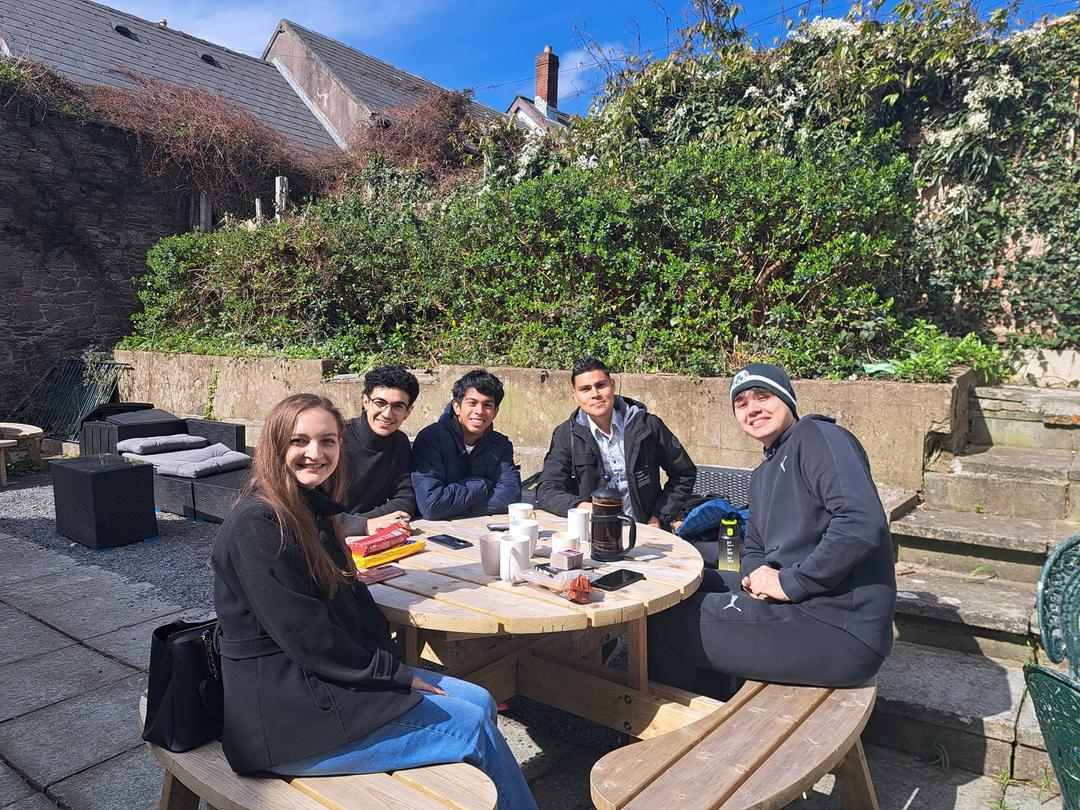
During the low season when there weren’t many guests, the guesthouse family would sometimes empty the guesthouse together and go on an outing to nearby Namsan. It wasn''t just the owner and staff of the place where I stayed and worked temporarily, but truly a family-like, comfortablehealingplace where I could heal — this concludes my account of living in Gyeongju.

My own Gyeongju discovered during the gap year
Because the gap-year stay program allowed plenty of time for travel, I visited one place each day.
1. Yangdong Village
At first I started with places farthest from Gyeongju Station, and this time I visited "Yangdong Folk Village," which I had never heard of before.
It''s about a 40-minute bus ride from in front of Gyeongju Station, and, like Andong Hanok Village, it preserves traditional houses.
Compared to other hanok villages, it feels more rustic and unadorned, with houses nestled into the mountainside, so you can really feel like you''re walking through the Joseon era.
2. Gyeongju Namsan
Gyeongju Namsan isn''t very high, but it''s a long, sprawling mountain where you can find different sights at each entrance.
The place I went to was the entrance to Chilbulam; the terrain isn''t rugged or steep, so it''s easy to climb if the weather is good. Although I usually dislike hiking, I had a leisurely time drinking tea with monks on the mountainside and enjoying the scenery from a hermitage.
3. Historical sites
Within about a 30-minute walk from downtown, there are historical sites such as Daereungwon, the Choi family house (Gyochon Village), Gyerim, and Anapji. I like walking, so I got around mostly on foot, but if the weather is nice you can ride a bicycle around the city to visit the sites.
I didn''t want to become a shabby thirty-something with nothing in my hands, so I worked at a company like everyone else, but I wondered whether money or social status were the only qualities my future self should have. So, thinking I wanted to try something different, I applied for the Gap Year Stay program.
-That place that holds a thousand years of history, Gyeongju! Gap Year Stay/Choi Su-jin Gap-Year Person/Gapper/8-week gap year |
The gap year I discovered during repetitive office life
I first learned about gap years while I was exhausted from the daily monotony of office life and was looking into places where I could take a short getaway.
In fact, when I first visited the Korea Gap Year website, I thought it was a place where college students could gain experience, and because there were many long-term programs I didn''t think it was realistic to leave my job and go.
Just the thought, ‘It would be wonderful if I could really participate,’ served as a small boost amid my tiring daily office life. For weeks I lost myself in imagination and left reality again and again. When I looked at the gap year programs, I would picture myself jumping up, packing, and leaving at once, but then my company''s work and the uncertain future waiting before me quickly reminded me of my position.
Being in my late twenties is an age that can feel like a lot or a little, but it''s an age filled with the compulsion to prepare to leave your twenties immediately. I worked at a company like everyone else because I didn''t want to become a shabby thirty-something with nothing in my hands, but justI wondered whether money or social status were the only qualities my future self should possess.So I applied for the Gap Year Stay program because I wanted to try something different.
When I said I would work as a guesthouse staff, people around meexpressed concernsthe most.
Friends and seniors who had traveled a bit all reacted negatively, saying that the guesthouse staff they''d met were always overworked and too busy socializing among themselves rather than interacting with travelers. Worried, I searched other guesthouses on the internet, and unsurprisingly various complaints caught my eye. So I worried a lot, but until one experiences something oneself,you don''t know.So I got on the bus to Gyeongju.
To put it briefly,the worries were needless. The hosts treated me kindly like family and I could socialize freely with the staff, so even living away from home was not difficult.
The staff experiencemainly involved helping guests check in and check out, and cleaning rooms and common areas. Since the guesthouse was fairly large, it could be tough at first. But there were no overly difficult tasks, so you could adapt quickly, and duties could change or be adjusted depending on individual abilities.
Also, I felt rewarded because you received immediate feedback from guests proportional to how hard you worked. Most guests follow the guesthouse rules well and are proactive about interacting with hosts and staff. In fact, unless you are very outgoing, it can be hard to be friendly with strangers at first, but since you''re at a guesthouse, the more you approach others with an open mind, the richer the experience.
Of course, not everyone was pleasant or someone you wanted to socialize with. There were guests who demanded too much or used facilities carelessly, and those who posted negative blogs about their complaints and unfounded stories. Even in a short time I encountered all kinds of people, so it would be a lie to say I didn''t experience stress because of people.
But since people come and go anyway, I learned not to take it to heart and to just let it pass as ''there was such a person.''
I heard that foreign tourists to Gyeongju have decreased compared to before. However, foreign tourists came about once every two weeks, and each time I could have brief conversations with people from various countries, which was a unique experience.
Barbecue parties, Christmas, preparing for the New Year... memorable and varied experiences
At the guesthouse, barbecue parties were held on the rooftop through November, and when temperatures dropped around late November, December, January, and February, indoor chimaek (chicken-and-beer) parties were held. Barbecue parties required going up and down the rooftop to prepare, so they were physically tiring, but you could eat as much meat as you wanted and people''s satisfaction was high, so the staff and owner who prepared diligently naturally received praise and it felt rewarding. After barbecue or chimaek parties, those who got along would go out for round two, where I was able to get closer to people.
On special days like Christmas or New Year''s, parties were held, and since the hosts and staff put their heads together to discuss everything from party concepts to the proceedings and preparations, it was a truly enjoyable time for someone like me who likes this. What I remember most is shopping together and preparing various things.
During the low season when there weren’t many guests, the guesthouse family would sometimes empty the guesthouse together and go on an outing to nearby Namsan. It wasn''t just the owner and staff of the place where I stayed and worked temporarily, but truly a family-like, comfortablehealingplace where I could heal — this concludes my account of living in Gyeongju.
My own Gyeongju discovered during the gap year
Because the gap-year stay program allowed plenty of time for travel, I visited one place each day.
1. Yangdong Village
At first I started with places farthest from Gyeongju Station, and this time I visited "Yangdong Folk Village," which I had never heard of before.
It''s about a 40-minute bus ride from in front of Gyeongju Station, and, like Andong Hanok Village, it preserves traditional houses.
Compared to other hanok villages, it feels more rustic and unadorned, with houses nestled into the mountainside, so you can really feel like you''re walking through the Joseon era.
2. Gyeongju Namsan
Gyeongju Namsan isn''t very high, but it''s a long, sprawling mountain where you can find different sights at each entrance.
The place I went to was the entrance to Chilbulam; the terrain isn''t rugged or steep, so it''s easy to climb if the weather is good. Although I usually dislike hiking, I had a leisurely time drinking tea with monks on the mountainside and enjoying the scenery from a hermitage.
3. Historical sites
Within about a 30-minute walk from downtown, there are historical sites such as Daereungwon, the Choi family house (Gyochon Village), Gyerim, and Anapji. I like walking, so I got around mostly on foot, but if the weather is nice you can ride a bicycle around the city to visit the sites.

 Home
Home


Take a step out of your comfort zone.
Challenge yourself for your own sake.
Feel complete freedom.
Be happy.