Projects
|
FAQ
|
Announcements


#Marketing Internship Korea #Event Design #Growing Independence
“More confident handling everyday situations than before”Loura’s marketing internship in South Korea has brought the satisfaction of seeing their designs displayed at an event and greater confidence in daily life. Originally from the Philippines and studying psychology and business marketing in Hawaii, Loura is interning at Korea GapYear through its Internship Training Program In South Korea. How did Loura feel supported while adjusting to life in Korea? Loura found the application requirements more approachable with Korea GapYear’s help and appreciated the continued check-ins after arrival. In this interview, Loura also describes coworkers initiating conversations in English, small gestures that conveyed a wish to become friends despite differences in language and background. |
I found Korea GapYear on Google while researching internship opportunities myself.
My school organization did not offer many options, so I decided to look beyond the choices available there.
My first priority was to complete an internship, but I also wanted to enjoy the experience. I felt that combining work with an enjoyable stay would make it more memorable. So I chose the Korea GapYear Internship Training, which would allow me to gain experience in Korea during my internship and the time I had left.
I wanted to discover what living in Korea would feel like through ordinary daily routines.
I started learning Korean in 2020 through K-dramas and K-pop, and although I am not fluent, I can manage everyday conversations.
I imagined riding the subway at rush hour and eating at a corner store. I also hoped that the higher standards I associated with Korea, including being on time, would encourage me to grow into the person I wanted to become.
I was in charge of making posters and banners which are used during the EdTech event in COEX, Seoul.
Seeing my poster and banner designs used at the EdTech event felt really fulfilling. I was responsible for creating those materials for the event.
At COEX, I could see the posters on display while people walked past them. It meant a lot to see my designs being used in that setting.
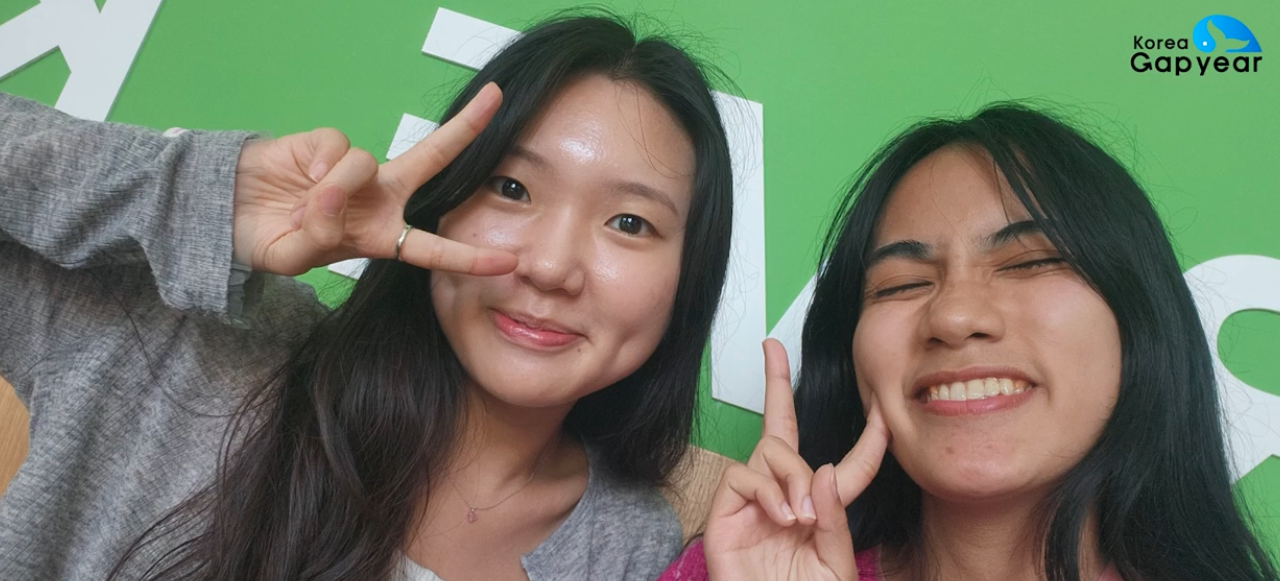
My coworkers’ efforts to speak with me have made me feel welcome.
I try to get to know people one by one, but sometimes someone approaches me before I have the chance. A wish for a good week, or a few words in English, shows me that they want to connect.
Communication is not always smooth. Sometimes I nod without fully understanding, and sometimes someone does the same when I speak. Even so, I appreciate the friendliness and effort around me.
I love the convenience of daily life and the way people make time to connect. Transportation feels quick, restaurants are close by, and many things I need are within easy reach.
I especially enjoy going to a cafe after a meal. In my experience at home, we often eat and then return to our own activities; here, continuing the conversation over a drink feels like a way to spend more time together.
People’s willingness to help has also reminded me of the Philippines and Hawaii. The sense of connection I associate with “jeong” feels familiar, even in a different culture. “Jeong” means a bond that they have with each other in Korean, and I felt “jeong” through my friends in Korea.
The help with requirements made a process I expected to find intimidating feel more approachable.
There were many things to prepare, and Korea GapYear helped me work through what I needed.
That support has continued since my arrival. The team still checks on me to see how I am doing, and I appreciate that their involvement did not stop once I reached Korea.
I feel more confident handling everyday situations and more independent than before.
I can order my own food, go to new places I have never been, and socialize with people I have never met.
These may sound like ordinary things, but they matter to me as I become an adult. I am also learning to adapt to cultures different from mine while staying grounded in my values and being flexible.
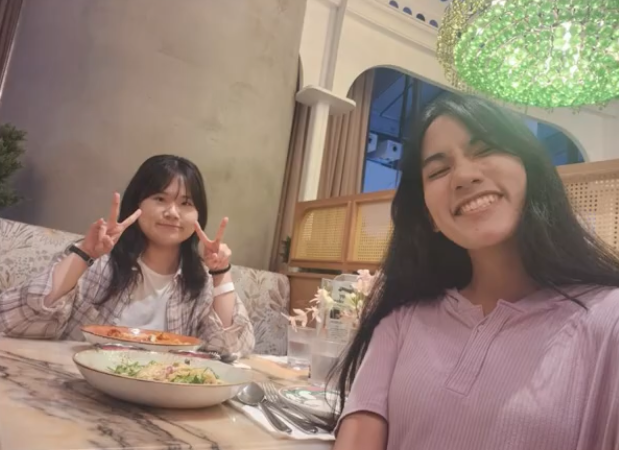
I would recommend Korea GapYear to people looking for a way to work, learn, or study in Korea.
Searching online can be difficult when you are trying to figure out how to get started.
If you are interested in Korea and want to experience more than a vacation, this is the kind of opportunity I would encourage you to explore.
Korea GapYear’s Internship Training Program In South Korea introduces participants to Korean workplaces. Placements take applicants’ interests and goals into account.
Korea GapYear’s standard requirements are a minimum age of 18 and intermediate or higher proficiency in English and/or Korean. Applicants must also commit to their host organization’s rules and assigned tasks and meet the internship’s legal and administrative requirements.
Potential placement fields include business, education, culture, and social or environmental work. Depending on the placement, activities may include market analysis, business development, educational content creation, project support, public relations, fundraising, or communications.
Korea GapYear considers participants’ interests and goals when arranging placements; applicants can contact the team to discuss specific fields and locations.
Tasks vary by placement, with matching based on applicants’ interests, skills, and goals.
In this interview, she made posters and banners that advertise the company that she worked for. Also, she handled a lot of marketing parts of the company especially for foreigners.
These are examples from one placement; the host organization determines individual responsibilities.
Korea GapYear lists training, a completion certificate, orientation materials, and local, administrative, and emergency support, with some benefits dependent on selected options.
Accommodation options can be chosen according to personal preference. Applicants are responsible for arranging insurance and handling applicable visa requirements.
This program generally involves approximately 35 hours of activity per week on a weekday basis.
Working days and hours vary by placement and participant preferences.
Interns in Korea GapYear’s program do not work on South Korean public holidays.
Yes, we provide general guidance on the visa application process and issue official supporting documents if needed.
Additionally, the availability and type of visa may vary depending on your nationality, so be sure to check the information from the relevant Korean embassy or consulate office near your place of residence in advance.
Korea GapYear always ready to guide you kindly.
“More confident handling everyday situations than before”Loura’s marketing internship in South Korea has brought the satisfaction of seeing their designs displayed at an event and greater confidence in daily life. Originally from the Philippines and studying psychology and business marketing in Hawaii, Loura is interning at Korea GapYear through its Internship Training Program In South Korea. How did Loura feel supported while adjusting to life in Korea? Loura found the application requirements more approachable with Korea GapYear’s help and appreciated the continued check-ins after arrival. In this interview, Loura also describes coworkers initiating conversations in English, small gestures that conveyed a wish to become friends despite differences in language and background. |
I found Korea GapYear on Google while researching internship opportunities myself.
My school organization did not offer many options, so I decided to look beyond the choices available there.
My first priority was to complete an internship, but I also wanted to enjoy the experience. I felt that combining work with an enjoyable stay would make it more memorable. So I chose the Korea GapYear Internship Training, which would allow me to gain experience in Korea during my internship and the time I had left.
I wanted to discover what living in Korea would feel like through ordinary daily routines.
I started learning Korean in 2020 through K-dramas and K-pop, and although I am not fluent, I can manage everyday conversations.
I imagined riding the subway at rush hour and eating at a corner store. I also hoped that the higher standards I associated with Korea, including being on time, would encourage me to grow into the person I wanted to become.
I was in charge of making posters and banners which are used during the EdTech event in COEX, Seoul.
Seeing my poster and banner designs used at the EdTech event felt really fulfilling. I was responsible for creating those materials for the event.
At COEX, I could see the posters on display while people walked past them. It meant a lot to see my designs being used in that setting.
My coworkers’ efforts to speak with me have made me feel welcome.
I try to get to know people one by one, but sometimes someone approaches me before I have the chance. A wish for a good week, or a few words in English, shows me that they want to connect.
Communication is not always smooth. Sometimes I nod without fully understanding, and sometimes someone does the same when I speak. Even so, I appreciate the friendliness and effort around me.
I love the convenience of daily life and the way people make time to connect. Transportation feels quick, restaurants are close by, and many things I need are within easy reach.
I especially enjoy going to a cafe after a meal. In my experience at home, we often eat and then return to our own activities; here, continuing the conversation over a drink feels like a way to spend more time together.
People’s willingness to help has also reminded me of the Philippines and Hawaii. The sense of connection I associate with “jeong” feels familiar, even in a different culture. “Jeong” means a bond that they have with each other in Korean, and I felt “jeong” through my friends in Korea.
The help with requirements made a process I expected to find intimidating feel more approachable.
There were many things to prepare, and Korea GapYear helped me work through what I needed.
That support has continued since my arrival. The team still checks on me to see how I am doing, and I appreciate that their involvement did not stop once I reached Korea.
I feel more confident handling everyday situations and more independent than before.
I can order my own food, go to new places I have never been, and socialize with people I have never met.
These may sound like ordinary things, but they matter to me as I become an adult. I am also learning to adapt to cultures different from mine while staying grounded in my values and being flexible.
I would recommend Korea GapYear to people looking for a way to work, learn, or study in Korea.
Searching online can be difficult when you are trying to figure out how to get started.
If you are interested in Korea and want to experience more than a vacation, this is the kind of opportunity I would encourage you to explore.
Korea GapYear’s Internship Training Program In South Korea introduces participants to Korean workplaces. Placements take applicants’ interests and goals into account.
Korea GapYear’s standard requirements are a minimum age of 18 and intermediate or higher proficiency in English and/or Korean. Applicants must also commit to their host organization’s rules and assigned tasks and meet the internship’s legal and administrative requirements.
Potential placement fields include business, education, culture, and social or environmental work. Depending on the placement, activities may include market analysis, business development, educational content creation, project support, public relations, fundraising, or communications.
Korea GapYear considers participants’ interests and goals when arranging placements; applicants can contact the team to discuss specific fields and locations.
Tasks vary by placement, with matching based on applicants’ interests, skills, and goals.
In this interview, she made posters and banners that advertise the company that she worked for. Also, she handled a lot of marketing parts of the company especially for foreigners.
These are examples from one placement; the host organization determines individual responsibilities.
Korea GapYear lists training, a completion certificate, orientation materials, and local, administrative, and emergency support, with some benefits dependent on selected options.
Accommodation options can be chosen according to personal preference. Applicants are responsible for arranging insurance and handling applicable visa requirements.
This program generally involves approximately 35 hours of activity per week on a weekday basis.
Working days and hours vary by placement and participant preferences.
Interns in Korea GapYear’s program do not work on South Korean public holidays.
Yes, we provide general guidance on the visa application process and issue official supporting documents if needed.
Additionally, the availability and type of visa may vary depending on your nationality, so be sure to check the information from the relevant Korean embassy or consulate office near your place of residence in advance.
Korea GapYear always ready to guide you kindly.
Capturing the growth journeys
of our participants.
 Home


Take a step out of your comfort zone.
Challenge yourself for your own sake.
Feel complete freedom.
Be happy.


