Projects
|
FAQ
|
Announcements


#Internship In Korea #Data Analytics #Workplace Connections
“A rewarding and unforgettable first experience of working abroad”A Singapore student's two-month summer internship in Korea became a memorable first experience of IT- and coding-related work. Through Korea GapYear’s Internship Training Program In South Korea, they joined a health tech company and helped its sales team look for potential business partners. What was it like to connect with colleagues during the internship? He felt touched by coworkers who made an effort to get to know them, even though both sides were shy at first. In this interview, they describe adjusting to more direct communication while working with colleagues to get around occasional communication barriers. |
I returned because my first visit had made me curious about what a longer stay in Korea would feel like. I had visited for the first time the previous year and found the experience really interesting. That made me wonder what spending two months there would be like, with more time to experience the country beyond a vacation.
I began searching for internship programs in Korea on Google and other search engines, which was how I came across this program. I joined for two months during the summer, turning that curiosity about a longer stay into an experience of working at a company in Korea.
During my internship, my work mainly focused on data analytics and international business development. The company was in the health tech sector and worked on helping diagnose patients with dementia and other cognitive diseases.
One of my tasks was supporting the sales team with lead generation, which involved finding other businesses they could reach out to about potential partnerships.
Learning how to use APIs and Python scripts for process automation was a new part of the work for me. I had no previous experience working on IT- or coding-related tasks, so this was my first opportunity to encounter that kind of work in a company setting.
That is one reason the project will stay with me. Learning to use those tools was part of my first work project in this area, and I think that will make the experience especially memorable.
My colleagues made an effort to get to know me, and I felt really touched by it. I am a shy person, and my coworkers were shy too, so we did not talk very much at the beginning. Even with that quiet start, I could see that they were trying to get to know me as the new intern.
One thing that took some getting used to was how directly people spoke. Compared with the more indirect Taiwanese and Japanese communication styles I was familiar with, the directness sometimes surprised me. There were also occasional communication barriers, but my colleagues were kind, and we tried to work around those difficulties together.
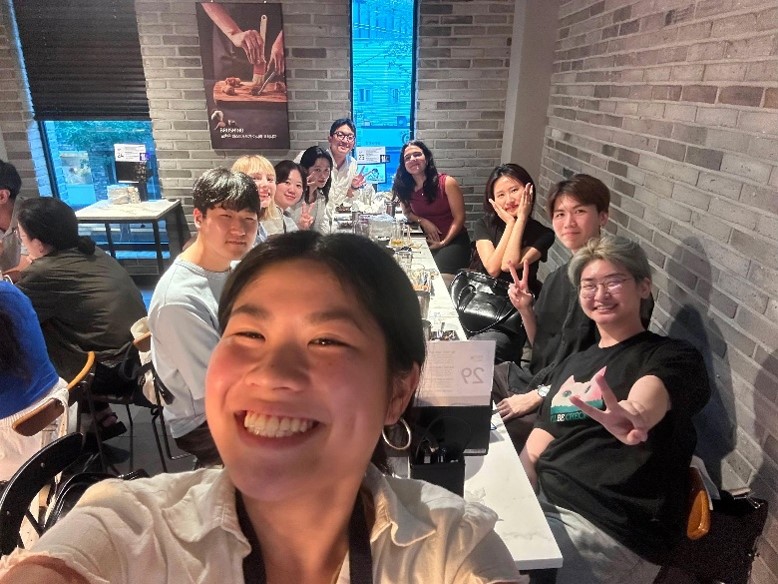
I sometimes used my weekends to explore other cities, taking a day trip or staying overnight. Busan and Sokcho are among the places I have visited in Korea. I also found people friendly: even though I could not speak Korean, people would still come up and talk to me.
One thing I really liked was how much there was to do on weekends, whether someone was interested in nature, shopping, or cafes. You could go hiking, look for pop-ups and newly opened stores, or explore the many cafes around. That variety made Korea feel very dynamic to me, with plenty of possibilities depending on what you enjoyed.

The food was different from what I was used to, and one unexpected combination left a particularly strong impression on me. Getting used to the food I could buy was one of the everyday adjustments I had to make during my stay.
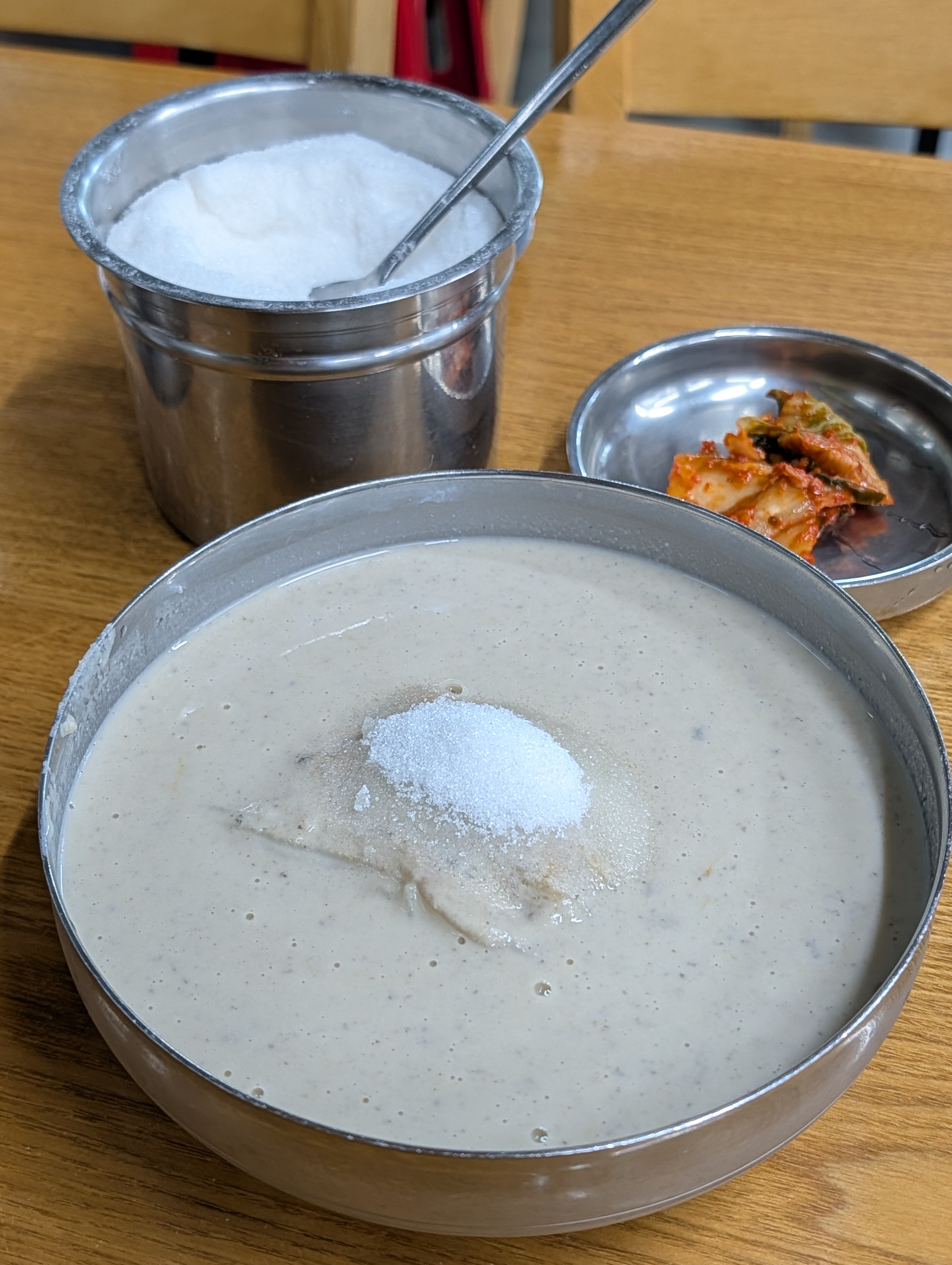
On a weekend trip, I tried a local dish with sugar after hearing people describe the combination as strange. Their comments made me curious to find out what it was actually like, so I decided to try it myself. Once I tasted it, my reaction was very different: for me, it was life-changing.
I would recommend this experience to university friends who want to try something new during a summer or winter break. Those breaks can offer more room to explore when classes and other academic commitments are not taking up as much time. For me, it was a chance to have an experience I would never have had without deciding to participate.
Working overseas at a company for two months was something I had never imagined I would do. I found the experience rewarding and unforgettable, and overall, I felt that those two months were quite a success.
Korea GapYear’s Internship Training Program In South Korea offers placements in selected fields. Matching considers applicants’ interests and goals as they explore Korean workplaces.
Korea GapYear’s standard requirements are age 18 or older and intermediate or higher English and/or Korean.
Applicants must also commit to their host organization’s rules and assigned tasks, and meet the internship’s legal and administrative requirements.
Tasks vary by placement, with matching based on applicants’ interests, skills, and goals.
In this interview, he describes data analytics and international business development, including finding potential business partners and learning to use APIs and Python scripts for automation.
These are examples from one placement; the host organization determines individual responsibilities.
Korea GapYear lists training, a completion certificate, orientation materials, and local, administrative, and emergency support, with some benefits dependent on selected options.
Accommodation options can be chosen according to personal preference.
Applicants are responsible for arranging insurance and handling applicable visa requirements.
This program generally involves approximately 35 hours of activity per week on a weekday basis.
Working days and hours vary by placement and participant preferences.
Interns in Korea GapYear’s program do not work on South Korean public holidays.
Yes, depending on the placement.
The participant featured in this interview joined Korea GapYear’s Internship Training Program in South Korea without previous experience in IT- or coding-related tasks.
During the internship, they learned to use APIs and Python scripts for automation.
“A rewarding and unforgettable first experience of working abroad”A Singapore student's two-month summer internship in Korea became a memorable first experience of IT- and coding-related work. Through Korea GapYear’s Internship Training Program In South Korea, they joined a health tech company and helped its sales team look for potential business partners. What was it like to connect with colleagues during the internship? He felt touched by coworkers who made an effort to get to know them, even though both sides were shy at first. In this interview, they describe adjusting to more direct communication while working with colleagues to get around occasional communication barriers. |
I returned because my first visit had made me curious about what a longer stay in Korea would feel like. I had visited for the first time the previous year and found the experience really interesting. That made me wonder what spending two months there would be like, with more time to experience the country beyond a vacation.
I began searching for internship programs in Korea on Google and other search engines, which was how I came across this program. I joined for two months during the summer, turning that curiosity about a longer stay into an experience of working at a company in Korea.
During my internship, my work mainly focused on data analytics and international business development. The company was in the health tech sector and worked on helping diagnose patients with dementia and other cognitive diseases.
One of my tasks was supporting the sales team with lead generation, which involved finding other businesses they could reach out to about potential partnerships.
Learning how to use APIs and Python scripts for process automation was a new part of the work for me. I had no previous experience working on IT- or coding-related tasks, so this was my first opportunity to encounter that kind of work in a company setting.
That is one reason the project will stay with me. Learning to use those tools was part of my first work project in this area, and I think that will make the experience especially memorable.
My colleagues made an effort to get to know me, and I felt really touched by it. I am a shy person, and my coworkers were shy too, so we did not talk very much at the beginning. Even with that quiet start, I could see that they were trying to get to know me as the new intern.
One thing that took some getting used to was how directly people spoke. Compared with the more indirect Taiwanese and Japanese communication styles I was familiar with, the directness sometimes surprised me. There were also occasional communication barriers, but my colleagues were kind, and we tried to work around those difficulties together.
I sometimes used my weekends to explore other cities, taking a day trip or staying overnight. Busan and Sokcho are among the places I have visited in Korea. I also found people friendly: even though I could not speak Korean, people would still come up and talk to me.
One thing I really liked was how much there was to do on weekends, whether someone was interested in nature, shopping, or cafes. You could go hiking, look for pop-ups and newly opened stores, or explore the many cafes around. That variety made Korea feel very dynamic to me, with plenty of possibilities depending on what you enjoyed.
The food was different from what I was used to, and one unexpected combination left a particularly strong impression on me. Getting used to the food I could buy was one of the everyday adjustments I had to make during my stay.
On a weekend trip, I tried a local dish with sugar after hearing people describe the combination as strange. Their comments made me curious to find out what it was actually like, so I decided to try it myself. Once I tasted it, my reaction was very different: for me, it was life-changing.
I would recommend this experience to university friends who want to try something new during a summer or winter break. Those breaks can offer more room to explore when classes and other academic commitments are not taking up as much time. For me, it was a chance to have an experience I would never have had without deciding to participate.
Working overseas at a company for two months was something I had never imagined I would do. I found the experience rewarding and unforgettable, and overall, I felt that those two months were quite a success.
Korea GapYear’s Internship Training Program In South Korea offers placements in selected fields. Matching considers applicants’ interests and goals as they explore Korean workplaces.
Korea GapYear’s standard requirements are age 18 or older and intermediate or higher English and/or Korean.
Applicants must also commit to their host organization’s rules and assigned tasks, and meet the internship’s legal and administrative requirements.
Tasks vary by placement, with matching based on applicants’ interests, skills, and goals.
In this interview, he describes data analytics and international business development, including finding potential business partners and learning to use APIs and Python scripts for automation.
These are examples from one placement; the host organization determines individual responsibilities.
Korea GapYear lists training, a completion certificate, orientation materials, and local, administrative, and emergency support, with some benefits dependent on selected options.
Accommodation options can be chosen according to personal preference.
Applicants are responsible for arranging insurance and handling applicable visa requirements.
This program generally involves approximately 35 hours of activity per week on a weekday basis.
Working days and hours vary by placement and participant preferences.
Interns in Korea GapYear’s program do not work on South Korean public holidays.
Yes, depending on the placement.
The participant featured in this interview joined Korea GapYear’s Internship Training Program in South Korea without previous experience in IT- or coding-related tasks.
During the internship, they learned to use APIs and Python scripts for automation.
Capturing the growth journeys
of our participants.
 Home


Take a step out of your comfort zone.
Challenge yourself for your own sake.
Feel complete freedom.
Be happy.


