Projects
|
FAQ
|
Announcements



#Increased interest in developing countries; expanded perspective #The value of sharing; adaptability to new environments #Broadened perspective on the world

If I hadn''t come to Phnom Penh, I think I would have lived my whole life not knowing about developing countries and the history of Cambodia; this made me reflect, sparked my interest, and was a valuable experience.Meeting and talking directly with people who live in completely different environments and cultures, despite living in the same era, made me think that rather than pursuing only my own happiness and personal satisfaction, I should share what I can, even a little, where help is needed, and consistently stay interested in the world. - Showing Cambodian children a boundless world through English education / Moon Yoojin, gap-year participant / 12-week gap year |
Currently, South Korea is,
Each year 60,000 middle and high school students drop out, 346,000 people in their twenties are idle because they have no dreams, and the one-year turnover rate after employment has entered the 40% range,75% of university students are not satisfied with university life, and more than 80% of office workers say they do not feel happy.Although many people tell them to dream, to solve this problem of having no practical methods or support, we want to bring the ''gap year'' to South Korea.
''Gap year (Gapyear)''is a practice of either combining study and work or taking a break to engage in various activities such as volunteering, traveling, internships, education, or starting a business,as a time to set the direction for the future; it is a culture encouraged in the United States, Europe, Japan, and other places.
# I was very tired of feeling like I was living a ''life without myself'', so I wanted to take a short break and let myself breathe.

My name is Moon Yoojin. I quit my job and spent a gap year from last November until this April in two places: Cambodia and Thailand.I had long wanted to do overseas volunteer work, and I immediately decided when I saw an English education volunteer program in Cambodia on the Gap Year website.
I didn''t have any special preparations before departure, and I had almost a month left before leaving, so I comfortably prepared by studying English in my spare time and getting the necessary documents. I heard that you have to pay extra at the airport to get a visa on arrival in Cambodia, so I got the visa at the Korean embassy a month in advance, and from about two weeks before departure I got vaccinations, insurance, and packed. I booked the cheapest flight I could find online.
While working at a company I had become very tired of feeling like I was living a life without myself, so I wanted to take a short break and let myself go. I also wanted to use this gap year to improve my impatient tendencies and anxiety.
# I was happy and joyful throughout the volunteering.

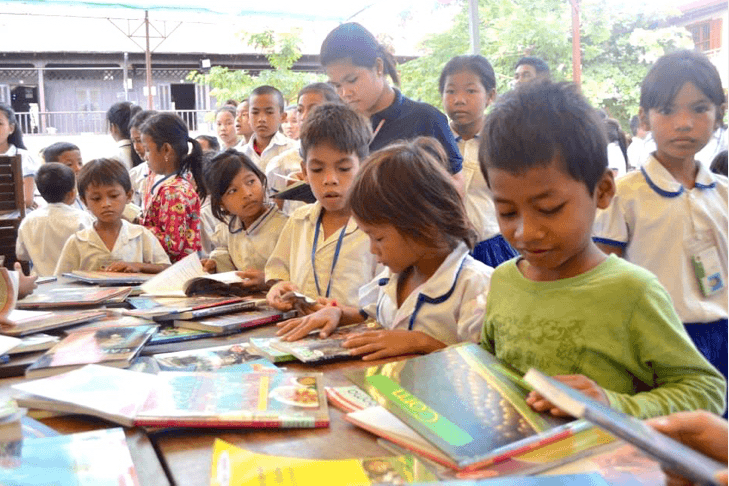
I taught English to 3rd-, 5th-, and 6th-grade students at an elementary school belonging to an orphanage run by an NGO,I enjoyed talking with the children and spending time with them, so although there were many things to pay attention to like preparing lessons, I was happy and joyful throughout the volunteer work.
An unpleasant experience was when my phone was stolen a few weeks after starting the project. At that moment I hated Phnom Penh and even felt afraid to go outside, resenting the Cambodian people. But I changed my mindset, tried to adapt to Cambodia''s environment, developed the habit of managing my belongings better, and it was naturally resolved.Looking back now,I think it became a good experience.
Schedules differ slightly for each school where volunteering takes place; at the institution where I volunteered, due to the school schedule, the first month was in the afternoons, the second month in the afternoons, and the final month in the mornings.
When the schedule was afternoon classes, I used the mornings before going to school to prepare lessons and handouts, then took a tuk-tuk around 11:30 and arrived at school at about 12 after a 30-minute ride. From 12 to 1 pm was free time to play and spend time with the children. From 1 to 4 pm I rotated among grades 3/5/6, teaching one-hour classes,
Then from 4:00 to 4:45 pm I taught Korean (Hangul) to middle school students who wanted to learn it. After finishing the schedule I returned to the accommodation around 5:30–6:00 pm. After that I would have dinner, go to the market, drink beer, or spend time with friends to end the day.
# IThrough this project I came to know about developing countries and it became an opportunity to cultivate my interest.

Through this project I came to learn about developing countries and it sparked my interest. I had never deeply thought about the realities of developing countries nor had opportunities to experience them, so when I first arrived there were many things that surprised me. There is almost no traffic light system, and during rush hour it was hard to understand that of the six lanes, five were all going in the same direction (???). I was also very surprised by the wealth gap.
If I hadn''t come to Phnom Penh, I think I would have lived my whole life not knowing about developing countries and the history of Cambodia; this made me reflect, sparked my interest, and was a valuable experience.
Meeting and talking directly with people who live in the same era but in completely different environments and cultures made me think that instead of living pursuing only my own happiness and personal satisfaction, I should share even a little of what I have with places in need and live with a steady interest in the world.

I met many friends while volunteering. There was a friend my age who had interned at a Japanese NGO that founded and runs the school where I volunteered. We got along well, traveled to Sihanoukville, and often spent our free time together. She really loved Cambodia and said she wanted to live there longer, so as someone who had difficulty adapting to life in Cambodia, I was able to get a lot of help from her.
I also met a Japanese friend who travels around Cambodia planning and carrying out their own projects and conducting art education volunteer activities. Seeing that friend made me reflect on my own lack of initiative, and we had many conversations about Cambodia and visited galleries together, so I learned a lot.
I also remember the Korean older sisters, friends, and younger siblings who spent the gap year with me during the same period. If it hadn''t been for them, adapting would probably have been really difficult. They were a big support when I lost my phone, when my English froze up, or when I had worries. Besides them, I had fun sharing rooms and traveling with friends from various countries.
My personal recommended travel destinations!

I recommend Kep and Sihanoukville. Kep is a resort area about three hours from Phnom Penh. Travelers usually combine Kep with Kampot, but I didn''t have time so I stayed about one night at a resort in Kep to rest. When people think of resorts they usually imagine Sihanoukville, but Kep is much quieter and has a local atmosphere, making it a great place to relax for a day.
There are many inexpensive resorts and Kep''s crab dishes are really delicious — I ate the best crab of my life there. It''s not far from Phnom Penh, so it''s a great place to get away from the busy city for a short time, eat well, and rest fully.

In contrast, Sihanoukville has the lively bustle that makes resort towns attractive. The beaches in the city area aren''t clean and are crowded and hectic, but if you take a tuk-tuk to a bit more distant beach called Otres Beach, the water is really clean and the facilities are neatly kept — I recommend it. I also think it''s safe in terms of security. If you go to Sihanoukville, be sure to spend time at Otres Beach.
My personal tips

(Language)
Before starting the project I practiced common everyday conversational phrases used in Korea. When I first arrived I wasn''t used to using English, so I couldn''t understand it well, but being continuously exposed to an English-speaking environment made me accustomed to it, and as long as friends didn''t speak too fast I could mostly understand.
Speaking one-on-one wasn''t a problem because the other person used English to match my pace, but when talking with many people in English there were definitely times I didn''t understand well. In those cases I either figured it out from context or asked once more.
(Accommodation)
You usually share a room with 2–5 other volunteer friends. Phnom Penh is too expensive to get around on your own (tuk-tuk fares), so it''s good to get close with your roommates and go around together a lot.
(Meals)
Because there were many Western volunteers, food was served in a local (Khmer) style with Western/fusion influences, and I ate well. Breakfast also came out nicely — fruit, toast, and eggs — so I was satisfied. Be careful with milk and dairy products: even if you put them in the refrigerator, the fridge is too small for the number of volunteers and they can go bad.
(Tip)
Even if you are careful in Cambodia, you can still have items lost, so it''s best to have loss insurance. Also, most things you can get in Korea are generally available at local markets, so you don''t need to bring too many daily necessities.
The hardest thing to adapt to at first was the environment. The living infrastructure isn''t as good as in our country, so I worried most about pickpocketing and traffic accidents, and at first I didn''t go out much, but looking back now I regret that.It''s good to be careful, but don''t get too stressed — I recommend accepting the environment as it is and trying to enjoy it.
#I think my perspective on the world has broadened a bit.

After returning from the gap year project, I feel that my view of the world has broadened somewhat. It was a somewhat embarrassing moment to realize for the first time how many people in the world need help, and it made me want to live with interest in the world and share what I have. I also realized that rather than complaining about the surrounding environment and blaming it, the easiest and best way is to change my own mind within the given circumstances.

My gap year was
Experience★★★★★
It was my first time interacting with children at an elementary school, and I experienced and felt a lot about the country of Cambodia.
Learning★★★★☆
While living in a developing country, I learned a lot about people''s cultures and tendencies regarding the environment, and learned that I must put aside my own thoughts and break prejudices to properly understand the culture and situation.
Environment★★☆☆☆
Phnom Penh''s road conditions are not very safe, so it''s best to avoid walking alone on very large roads or going out alone late at night. Personally, I initially had difficulty adapting to an environment without public transportation. Also, walking around holding your phone or cash in your hand can be dangerous. If you avoid such behavior and adapt to the environment to some extent, you''ll be fine. Accommodations and buildings are safe, so you don''t need to worry too much.
Safety★☆☆☆☆
Because road conditions and infrastructure are not well developed, you need to be careful and watch out for vehicles and other people.
Leisure★★★☆☆
There is a large sports center within walking distance where you can enjoy swimming and fitness, AEON Mall is about a 15-minute tuk-tuk ride away, and there are many foreign restaurants, cafes, and pubs around the accommodation area, so it was a good place to enjoy leisure activities.


If I hadn''t come to Phnom Penh, I think I would have lived my whole life not knowing about developing countries and the history of Cambodia; this made me reflect, sparked my interest, and was a valuable experience.Meeting and talking directly with people who live in completely different environments and cultures, despite living in the same era, made me think that rather than pursuing only my own happiness and personal satisfaction, I should share what I can, even a little, where help is needed, and consistently stay interested in the world. - Showing Cambodian children a boundless world through English education / Moon Yoojin, gap-year participant / 12-week gap year |
Currently, South Korea is,
Each year 60,000 middle and high school students drop out, 346,000 people in their twenties are idle because they have no dreams, and the one-year turnover rate after employment has entered the 40% range,75% of university students are not satisfied with university life, and more than 80% of office workers say they do not feel happy.Although many people tell them to dream, to solve this problem of having no practical methods or support, we want to bring the ''gap year'' to South Korea.
''Gap year (Gapyear)''is a practice of either combining study and work or taking a break to engage in various activities such as volunteering, traveling, internships, education, or starting a business,as a time to set the direction for the future; it is a culture encouraged in the United States, Europe, Japan, and other places.
# I was very tired of feeling like I was living a ''life without myself'', so I wanted to take a short break and let myself breathe.
My name is Moon Yoojin. I quit my job and spent a gap year from last November until this April in two places: Cambodia and Thailand.I had long wanted to do overseas volunteer work, and I immediately decided when I saw an English education volunteer program in Cambodia on the Gap Year website.
I didn''t have any special preparations before departure, and I had almost a month left before leaving, so I comfortably prepared by studying English in my spare time and getting the necessary documents. I heard that you have to pay extra at the airport to get a visa on arrival in Cambodia, so I got the visa at the Korean embassy a month in advance, and from about two weeks before departure I got vaccinations, insurance, and packed. I booked the cheapest flight I could find online.
While working at a company I had become very tired of feeling like I was living a life without myself, so I wanted to take a short break and let myself go. I also wanted to use this gap year to improve my impatient tendencies and anxiety.
# I was happy and joyful throughout the volunteering.
I taught English to 3rd-, 5th-, and 6th-grade students at an elementary school belonging to an orphanage run by an NGO,I enjoyed talking with the children and spending time with them, so although there were many things to pay attention to like preparing lessons, I was happy and joyful throughout the volunteer work.
An unpleasant experience was when my phone was stolen a few weeks after starting the project. At that moment I hated Phnom Penh and even felt afraid to go outside, resenting the Cambodian people. But I changed my mindset, tried to adapt to Cambodia''s environment, developed the habit of managing my belongings better, and it was naturally resolved.Looking back now,I think it became a good experience.
Schedules differ slightly for each school where volunteering takes place; at the institution where I volunteered, due to the school schedule, the first month was in the afternoons, the second month in the afternoons, and the final month in the mornings.
When the schedule was afternoon classes, I used the mornings before going to school to prepare lessons and handouts, then took a tuk-tuk around 11:30 and arrived at school at about 12 after a 30-minute ride. From 12 to 1 pm was free time to play and spend time with the children. From 1 to 4 pm I rotated among grades 3/5/6, teaching one-hour classes,
Then from 4:00 to 4:45 pm I taught Korean (Hangul) to middle school students who wanted to learn it. After finishing the schedule I returned to the accommodation around 5:30–6:00 pm. After that I would have dinner, go to the market, drink beer, or spend time with friends to end the day.
# IThrough this project I came to know about developing countries and it became an opportunity to cultivate my interest.
Through this project I came to learn about developing countries and it sparked my interest. I had never deeply thought about the realities of developing countries nor had opportunities to experience them, so when I first arrived there were many things that surprised me. There is almost no traffic light system, and during rush hour it was hard to understand that of the six lanes, five were all going in the same direction (???). I was also very surprised by the wealth gap.
If I hadn''t come to Phnom Penh, I think I would have lived my whole life not knowing about developing countries and the history of Cambodia; this made me reflect, sparked my interest, and was a valuable experience.
Meeting and talking directly with people who live in the same era but in completely different environments and cultures made me think that instead of living pursuing only my own happiness and personal satisfaction, I should share even a little of what I have with places in need and live with a steady interest in the world.
I met many friends while volunteering. There was a friend my age who had interned at a Japanese NGO that founded and runs the school where I volunteered. We got along well, traveled to Sihanoukville, and often spent our free time together. She really loved Cambodia and said she wanted to live there longer, so as someone who had difficulty adapting to life in Cambodia, I was able to get a lot of help from her.
I also met a Japanese friend who travels around Cambodia planning and carrying out their own projects and conducting art education volunteer activities. Seeing that friend made me reflect on my own lack of initiative, and we had many conversations about Cambodia and visited galleries together, so I learned a lot.
I also remember the Korean older sisters, friends, and younger siblings who spent the gap year with me during the same period. If it hadn''t been for them, adapting would probably have been really difficult. They were a big support when I lost my phone, when my English froze up, or when I had worries. Besides them, I had fun sharing rooms and traveling with friends from various countries.
My personal recommended travel destinations!
I recommend Kep and Sihanoukville. Kep is a resort area about three hours from Phnom Penh. Travelers usually combine Kep with Kampot, but I didn''t have time so I stayed about one night at a resort in Kep to rest. When people think of resorts they usually imagine Sihanoukville, but Kep is much quieter and has a local atmosphere, making it a great place to relax for a day.
There are many inexpensive resorts and Kep''s crab dishes are really delicious — I ate the best crab of my life there. It''s not far from Phnom Penh, so it''s a great place to get away from the busy city for a short time, eat well, and rest fully.
In contrast, Sihanoukville has the lively bustle that makes resort towns attractive. The beaches in the city area aren''t clean and are crowded and hectic, but if you take a tuk-tuk to a bit more distant beach called Otres Beach, the water is really clean and the facilities are neatly kept — I recommend it. I also think it''s safe in terms of security. If you go to Sihanoukville, be sure to spend time at Otres Beach.
My personal tips
(Language)
Before starting the project I practiced common everyday conversational phrases used in Korea. When I first arrived I wasn''t used to using English, so I couldn''t understand it well, but being continuously exposed to an English-speaking environment made me accustomed to it, and as long as friends didn''t speak too fast I could mostly understand.
Speaking one-on-one wasn''t a problem because the other person used English to match my pace, but when talking with many people in English there were definitely times I didn''t understand well. In those cases I either figured it out from context or asked once more.
(Accommodation)
You usually share a room with 2–5 other volunteer friends. Phnom Penh is too expensive to get around on your own (tuk-tuk fares), so it''s good to get close with your roommates and go around together a lot.
(Meals)
Because there were many Western volunteers, food was served in a local (Khmer) style with Western/fusion influences, and I ate well. Breakfast also came out nicely — fruit, toast, and eggs — so I was satisfied. Be careful with milk and dairy products: even if you put them in the refrigerator, the fridge is too small for the number of volunteers and they can go bad.
(Tip)
Even if you are careful in Cambodia, you can still have items lost, so it''s best to have loss insurance. Also, most things you can get in Korea are generally available at local markets, so you don''t need to bring too many daily necessities.
The hardest thing to adapt to at first was the environment. The living infrastructure isn''t as good as in our country, so I worried most about pickpocketing and traffic accidents, and at first I didn''t go out much, but looking back now I regret that.It''s good to be careful, but don''t get too stressed — I recommend accepting the environment as it is and trying to enjoy it.
#I think my perspective on the world has broadened a bit.
After returning from the gap year project, I feel that my view of the world has broadened somewhat. It was a somewhat embarrassing moment to realize for the first time how many people in the world need help, and it made me want to live with interest in the world and share what I have. I also realized that rather than complaining about the surrounding environment and blaming it, the easiest and best way is to change my own mind within the given circumstances.
My gap year was
Experience★★★★★
It was my first time interacting with children at an elementary school, and I experienced and felt a lot about the country of Cambodia.
Learning★★★★☆
While living in a developing country, I learned a lot about people''s cultures and tendencies regarding the environment, and learned that I must put aside my own thoughts and break prejudices to properly understand the culture and situation.
Environment★★☆☆☆
Phnom Penh''s road conditions are not very safe, so it''s best to avoid walking alone on very large roads or going out alone late at night. Personally, I initially had difficulty adapting to an environment without public transportation. Also, walking around holding your phone or cash in your hand can be dangerous. If you avoid such behavior and adapt to the environment to some extent, you''ll be fine. Accommodations and buildings are safe, so you don''t need to worry too much.
Safety★☆☆☆☆
Because road conditions and infrastructure are not well developed, you need to be careful and watch out for vehicles and other people.
Leisure★★★☆☆
There is a large sports center within walking distance where you can enjoy swimming and fitness, AEON Mall is about a 15-minute tuk-tuk ride away, and there are many foreign restaurants, cafes, and pubs around the accommodation area, so it was a good place to enjoy leisure activities.
Capturing the growth journeys
of our participants.

 Home
Home


Take a step out of your comfort zone.
Challenge yourself for your own sake.
Feel complete freedom.
Be happy.