Projects
|
FAQ
|
Announcements



#Reduced impatience; adapted more relaxedly #Planned mini-projects; gained confidence #Became grateful for each moment and motivated to give my best

If I hadn''t come here, I would probably still be living under pressure and anxiety. During a three-month gap year in Thailand I learned a simple, obvious but most important lesson: to be grateful for every moment and to give my best at each moment. If I cherish and act on the moment without rushing or worrying, I believe I can take one step further and complete a page of my life.
-Harvard student, departs for Thailand to brighten the world!/ Moon Yoojin, gap-year tribe gapper / 12-week gap year |
Currently, South Korea is,
seeing 60,000 middle and high school students drop out each year; 346,000 people in their twenties just idling with no dreams; and the one-year job turnover rate entering the 40% range,75% of university students are not satisfied with campus life, and over 80% of workers say they do not feel happy.Many people tell others to dream, but to solve this problem that lacks practical methods and support, we aim to introduce the ''gap year'' to South Korea as well.
''Gap year (Gapyear)''refers to taking a break from—or combining—studies and work and, through various activities such as volunteering, travel, internships, education, and startups,serving as a time to set the direction for the future; it is a culture encouraged in the United States, Europe, Japan, and other places.
# I ran for 25 years to avoid being left behind by others.

Before taking a gap year, like most young people in Korea, I spent 25 years constantly striving to achieve something and to avoid falling behind others. Ironically, I was only looking ahead, running without knowing what I was running for.
Fortunately I got a job before even graduating from university and joined a company, but not long after starting work I realized that the job didn''t suit me.But having come this far with difficulty, I didn''t have the courage to quit, and I think I endured thinking that others must be living the same way.
However, after more than a year the situation did not improve, and after much deliberation I decided to try living through new experiences and take a gap year. While wondering what new experiences to try, I planned to do overseas volunteer work I had long wanted to do and to travel to places I''d never been to learn about different worlds. Thus began my two projects: three months of elementary school teaching volunteer work in Cambodia and three months volunteering at a Thai NGO.
# It actually took quite a long time to get used to living and working here.

As soon as I finished the English teaching volunteer work in Phnom Penh, Cambodia, I moved straight to a Thai NGO to start the second project. Upon arriving at the organization, I felt at ease in its peaceful atmosphere, the exact opposite of Phnom Penh. But at the same time I thought that living here for three months would require a lot of adjustment.
On the first day at the organization I was taking a shower when the water was suddenly cut off and there was a power outage— it was a total meltdown. Such unusual things happened from day one, and since it was my first time living in a completely rural area with no nearby conveniences and poor transportation, it was full of inconveniences and I couldn''t adapt at first.
It really took quite a while to get used to living and working here. Everything was so new—the very country-style (?) accommodation, having to ride a motorcycle myself instead of using public transport, and so on. For the first few weeks I couldn''t get used to the atmosphere, so unless someone gave me a ride I hardly left the accommodation or the organization.
Moreover, for several weeks after the project started I only worried about what to do and made no progress, so at first I even had trouble going to the volunteers'' office where everyone was working hard.
At first I was very worried whether there would be anything I could do here. Then one day I realized I needed time to get used to the living conditions and the atmosphere here.
When I gave my impatient self some leeway, I was naturally able to adapt to the other volunteers and the village, and I found things I wanted to do. Only then did I finally begin to enjoy my remaining time living in Thailand and at this NGO.

As a result, I didn''t focus on just one project; I planned many mini-projects and helped other volunteers. I talked a lot with a Korean volunteer friend named Minju, and since she was running the organization''s Korean Naver blog, I decided to join. That was how my first project began.
I had never written a blog post before, but thinking that one is better than none, we decided to pool our efforts. I learned a lot about blogging from Minju, and we ran the blog reflecting both of our ideas. Through the blog I wanted to introduce Chiang Mai, which is less well known compared to Bangkok, and also promote the local NGO.
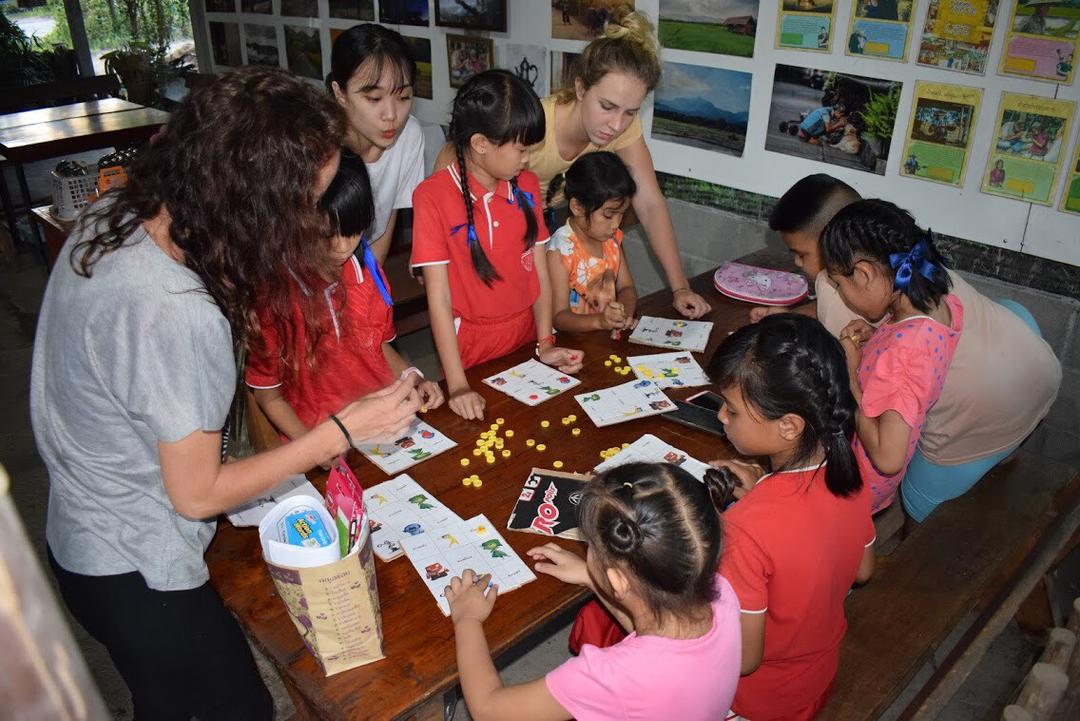
Also, Minju and I planned an after-school music + English class once a week. Minju wanted to teach music to the children, and since I had experience teaching English in Cambodia we thought it would be more fun to do it together. Although we worked hard, we didn''t have much time to interact with the children and couldn''t lead the classes in the direction the children wanted, so honestly the results weren''t great.But if another opportunity arises, I want to take this experience as a lesson and create a more substantial class.
# I felt that I wanted to live simply, and I am still trying to live that way.

About a month before my time at the NGO was up, my main project began. The NGO had received a donated plot of land in Phrao, and to put it to meaningful use they planned to build an eco-resort, so I was assigned the initial research work. The resort site was a beautiful place surrounded by small hills and streams, about a 20-minute drive from the organization.
After touring the site, we discussed what concept the resort should have. We proceeded with the project together with Fei, a Chinese professional architect and professor, and I was responsible for supporting Fei. My main task was to list current eco-resorts in Thailand and investigate how they operate and what their characteristics are.
Sometimes I helped staff or volunteers when they needed assistance. There was a Thai staff member named Aom who was in charge of the NGO''s main project, biochar, and I often helped this person. We went to a field clearing to make biochar fertilizer, and I also helped run a two-day workshop for 100 Thai farmers. I learned about biochar for the first time at this NGO; by making the fertilizer myself and participating in the production process, I studied this new alternative material.
On a Saturday that was the Thai New Year, the Thai staff and other volunteer friends and I visited a highland village on the border of Chiang Mai and Chiang Rai to take part in the village''s New Year festival. We rode a truck for about an hour and a half up winding mountain roads and drove along unpaved tracks that barely seemed like roads until we arrived at the village.
Honestly, I could never have imagined a village where people live halfway up a mountain like that, and one friend with a fear of heights was almost in tears. The people living there led very simple lives yet looked truly happy, and we were grateful that they welcomed us outsiders warmly. We danced the village''s traditional dances together, ate New Year foods, and celebrated the New Year with the villagers.
It was a modest, nothing-special village, but its residents truly seemed happy, and comparing myself to them made me reflect that I had been enjoying so many things yet living without feeling happy. Since then, I felt I wanted to live simply, and I am still trying to live that way.
My recommended travel destinations

Nimmanhaemin- Nimmanhaemin is a place where you can escape the crowded tourist streets and enjoy Chiang Mai''s unique atmosphere. It''s nice to relax in a place full of charming shops, atmospheric restaurants, and hot spots like the cafe ''Ristr8to'', where a World Barista Championship barista makes lattes.
My tips

(Language)
Because I had been living in Cambodia using English continuously, I think I wasn''t afraid of English. Even so, when conversing among native English-speaking friends there are many things I couldn''t understand. At those times, don''t be discouraged,Don''t worry about what others think; just ask again or ask them to speak a little more slowly.
(Accommodation)
The place I stayed was not a typical family house but a house built by the volunteers themselves. It''s located in the forest (?), so at night it becomes very dark and can be a little frightening. The bathroom and kitchen are outside, and electricity may be unreliable, so it''s good to have a portable lamp at night. Also, local dogs sometimes break into the kitchen and open the fridge to take food, so you should manage your ingredients carefully. ^^;;
(Meals)
At the kitchen, Chiang Mai local dishes were served at every meal, so you could enjoy local food to your heart''s content. However, similar dishes are served frequently, so personally I brought simple Korean foods like instant noodles or gim (seaweed) to avoid getting bored and to handle meals.
(Luggage)
I had a lot of personal time, so I could bring movies or books and enjoy my own time. I brought too many cosmetics, which only made my luggage heavy for no reason. In the end there were cosmetics I never used. You don''t need to pack so many makeup products since there are not many occasions for color makeup.
Most items can be found at markets or marts. Buying at the market is even much cheaper. I, for example, packed lots of clothes, cosmetics, and miscellaneous items from Korea, but when packing I regretted it and felt unsure for no reason.
#If I hadn''t come here, I would probably still be living under pressure and anxiety.

If I hadn''t come here, I would probably still be living under pressure and anxiety. Spending a three-month gap year in Thailand taught me an utterly ordinary and obvious but most important lesson: to be grateful for every moment and to give my best in every moment. If I don''t rush and, without worrying, cherish and act on the present,
I believe I can take one step further and complete a page of my life.
My gap year is
Experience★★★★★
Thailand as felt through travel and Thailand experienced by living there from a local''s perspective are truly different. It was a time when I properly experienced local culture: a highland tribe''s village festival, a local person''s funeral, life with people in Chiang Mai, and so on. Also, it was my first time living in the countryside for an extended period, and I found that I am somewhat suited to rural life.
Learning★★★☆☆
Through the foreign volunteers who came here with professional knowledge, I often felt that I want to come better prepared next time. I regret that during my time here I don''t think I was much help to the organization.
Environment★★★☆☆
It has a much cleaner and more peaceful atmosphere than the city. However, farmers in Chiang Mai practice slash-and-burn farming, burning their fields, which causes serious air pollution and wildfires. Therefore, when riding a motorcycle or on days with heavy ash, it is advisable to wear a mask.
Safety★★★☆☆
Because it is a rural village with no public transportation, you need to take a scooter to go into town or to nearby suburbs for outings. I''m sensitive about safety, so I never rode late at night or when I wasn''t feeling well, and I kept my speed low. You really need to be careful when riding a scooter. Prao, the village where the organization is located, is a rural village and thus a safe place, but as anywhere, you should be cautious very late at night.
Leisure★★★★★
Just a short distance outside the organization there are many places to spend time, such as waterfalls, hot springs, and places to learn Muay Thai. On weekends it’s nice to ride a scooter and tour the area or relax at the various cafes around Prao. Also, you can reach Chiang Mai city in 1 hour and 30 minutes by songthaew (a Thai public transport vehicle made from a converted truck), so you can use a long weekend to stay in a hostel in Chiang Mai and spend time as a traveler.

If I hadn''t come here, I would probably still be living under pressure and anxiety. During a three-month gap year in Thailand I learned a simple, obvious but most important lesson: to be grateful for every moment and to give my best at each moment. If I cherish and act on the moment without rushing or worrying, I believe I can take one step further and complete a page of my life.
-Harvard student, departs for Thailand to brighten the world!/ Moon Yoojin, gap-year tribe gapper / 12-week gap year |
Currently, South Korea is,
seeing 60,000 middle and high school students drop out each year; 346,000 people in their twenties just idling with no dreams; and the one-year job turnover rate entering the 40% range,75% of university students are not satisfied with campus life, and over 80% of workers say they do not feel happy.Many people tell others to dream, but to solve this problem that lacks practical methods and support, we aim to introduce the ''gap year'' to South Korea as well.
''Gap year (Gapyear)''refers to taking a break from—or combining—studies and work and, through various activities such as volunteering, travel, internships, education, and startups,serving as a time to set the direction for the future; it is a culture encouraged in the United States, Europe, Japan, and other places.
# I ran for 25 years to avoid being left behind by others.
Before taking a gap year, like most young people in Korea, I spent 25 years constantly striving to achieve something and to avoid falling behind others. Ironically, I was only looking ahead, running without knowing what I was running for.
Fortunately I got a job before even graduating from university and joined a company, but not long after starting work I realized that the job didn''t suit me.But having come this far with difficulty, I didn''t have the courage to quit, and I think I endured thinking that others must be living the same way.
However, after more than a year the situation did not improve, and after much deliberation I decided to try living through new experiences and take a gap year. While wondering what new experiences to try, I planned to do overseas volunteer work I had long wanted to do and to travel to places I''d never been to learn about different worlds. Thus began my two projects: three months of elementary school teaching volunteer work in Cambodia and three months volunteering at a Thai NGO.
# It actually took quite a long time to get used to living and working here.
As soon as I finished the English teaching volunteer work in Phnom Penh, Cambodia, I moved straight to a Thai NGO to start the second project. Upon arriving at the organization, I felt at ease in its peaceful atmosphere, the exact opposite of Phnom Penh. But at the same time I thought that living here for three months would require a lot of adjustment.
On the first day at the organization I was taking a shower when the water was suddenly cut off and there was a power outage— it was a total meltdown. Such unusual things happened from day one, and since it was my first time living in a completely rural area with no nearby conveniences and poor transportation, it was full of inconveniences and I couldn''t adapt at first.
It really took quite a while to get used to living and working here. Everything was so new—the very country-style (?) accommodation, having to ride a motorcycle myself instead of using public transport, and so on. For the first few weeks I couldn''t get used to the atmosphere, so unless someone gave me a ride I hardly left the accommodation or the organization.
Moreover, for several weeks after the project started I only worried about what to do and made no progress, so at first I even had trouble going to the volunteers'' office where everyone was working hard.
At first I was very worried whether there would be anything I could do here. Then one day I realized I needed time to get used to the living conditions and the atmosphere here.
When I gave my impatient self some leeway, I was naturally able to adapt to the other volunteers and the village, and I found things I wanted to do. Only then did I finally begin to enjoy my remaining time living in Thailand and at this NGO.
As a result, I didn''t focus on just one project; I planned many mini-projects and helped other volunteers. I talked a lot with a Korean volunteer friend named Minju, and since she was running the organization''s Korean Naver blog, I decided to join. That was how my first project began.
I had never written a blog post before, but thinking that one is better than none, we decided to pool our efforts. I learned a lot about blogging from Minju, and we ran the blog reflecting both of our ideas. Through the blog I wanted to introduce Chiang Mai, which is less well known compared to Bangkok, and also promote the local NGO.
Also, Minju and I planned an after-school music + English class once a week. Minju wanted to teach music to the children, and since I had experience teaching English in Cambodia we thought it would be more fun to do it together. Although we worked hard, we didn''t have much time to interact with the children and couldn''t lead the classes in the direction the children wanted, so honestly the results weren''t great.But if another opportunity arises, I want to take this experience as a lesson and create a more substantial class.
# I felt that I wanted to live simply, and I am still trying to live that way.
About a month before my time at the NGO was up, my main project began. The NGO had received a donated plot of land in Phrao, and to put it to meaningful use they planned to build an eco-resort, so I was assigned the initial research work. The resort site was a beautiful place surrounded by small hills and streams, about a 20-minute drive from the organization.
After touring the site, we discussed what concept the resort should have. We proceeded with the project together with Fei, a Chinese professional architect and professor, and I was responsible for supporting Fei. My main task was to list current eco-resorts in Thailand and investigate how they operate and what their characteristics are.
Sometimes I helped staff or volunteers when they needed assistance. There was a Thai staff member named Aom who was in charge of the NGO''s main project, biochar, and I often helped this person. We went to a field clearing to make biochar fertilizer, and I also helped run a two-day workshop for 100 Thai farmers. I learned about biochar for the first time at this NGO; by making the fertilizer myself and participating in the production process, I studied this new alternative material.
On a Saturday that was the Thai New Year, the Thai staff and other volunteer friends and I visited a highland village on the border of Chiang Mai and Chiang Rai to take part in the village''s New Year festival. We rode a truck for about an hour and a half up winding mountain roads and drove along unpaved tracks that barely seemed like roads until we arrived at the village.
Honestly, I could never have imagined a village where people live halfway up a mountain like that, and one friend with a fear of heights was almost in tears. The people living there led very simple lives yet looked truly happy, and we were grateful that they welcomed us outsiders warmly. We danced the village''s traditional dances together, ate New Year foods, and celebrated the New Year with the villagers.
It was a modest, nothing-special village, but its residents truly seemed happy, and comparing myself to them made me reflect that I had been enjoying so many things yet living without feeling happy. Since then, I felt I wanted to live simply, and I am still trying to live that way.
My recommended travel destinations
Nimmanhaemin- Nimmanhaemin is a place where you can escape the crowded tourist streets and enjoy Chiang Mai''s unique atmosphere. It''s nice to relax in a place full of charming shops, atmospheric restaurants, and hot spots like the cafe ''Ristr8to'', where a World Barista Championship barista makes lattes.
My tips
(Language)
Because I had been living in Cambodia using English continuously, I think I wasn''t afraid of English. Even so, when conversing among native English-speaking friends there are many things I couldn''t understand. At those times, don''t be discouraged,Don''t worry about what others think; just ask again or ask them to speak a little more slowly.
(Accommodation)
The place I stayed was not a typical family house but a house built by the volunteers themselves. It''s located in the forest (?), so at night it becomes very dark and can be a little frightening. The bathroom and kitchen are outside, and electricity may be unreliable, so it''s good to have a portable lamp at night. Also, local dogs sometimes break into the kitchen and open the fridge to take food, so you should manage your ingredients carefully. ^^;;
(Meals)
At the kitchen, Chiang Mai local dishes were served at every meal, so you could enjoy local food to your heart''s content. However, similar dishes are served frequently, so personally I brought simple Korean foods like instant noodles or gim (seaweed) to avoid getting bored and to handle meals.
(Luggage)
I had a lot of personal time, so I could bring movies or books and enjoy my own time. I brought too many cosmetics, which only made my luggage heavy for no reason. In the end there were cosmetics I never used. You don''t need to pack so many makeup products since there are not many occasions for color makeup.
Most items can be found at markets or marts. Buying at the market is even much cheaper. I, for example, packed lots of clothes, cosmetics, and miscellaneous items from Korea, but when packing I regretted it and felt unsure for no reason.
#If I hadn''t come here, I would probably still be living under pressure and anxiety.
If I hadn''t come here, I would probably still be living under pressure and anxiety. Spending a three-month gap year in Thailand taught me an utterly ordinary and obvious but most important lesson: to be grateful for every moment and to give my best in every moment. If I don''t rush and, without worrying, cherish and act on the present,
I believe I can take one step further and complete a page of my life.
My gap year is
Experience★★★★★
Thailand as felt through travel and Thailand experienced by living there from a local''s perspective are truly different. It was a time when I properly experienced local culture: a highland tribe''s village festival, a local person''s funeral, life with people in Chiang Mai, and so on. Also, it was my first time living in the countryside for an extended period, and I found that I am somewhat suited to rural life.
Learning★★★☆☆
Through the foreign volunteers who came here with professional knowledge, I often felt that I want to come better prepared next time. I regret that during my time here I don''t think I was much help to the organization.
Environment★★★☆☆
It has a much cleaner and more peaceful atmosphere than the city. However, farmers in Chiang Mai practice slash-and-burn farming, burning their fields, which causes serious air pollution and wildfires. Therefore, when riding a motorcycle or on days with heavy ash, it is advisable to wear a mask.
Safety★★★☆☆
Because it is a rural village with no public transportation, you need to take a scooter to go into town or to nearby suburbs for outings. I''m sensitive about safety, so I never rode late at night or when I wasn''t feeling well, and I kept my speed low. You really need to be careful when riding a scooter. Prao, the village where the organization is located, is a rural village and thus a safe place, but as anywhere, you should be cautious very late at night.
Leisure★★★★★
Just a short distance outside the organization there are many places to spend time, such as waterfalls, hot springs, and places to learn Muay Thai. On weekends it’s nice to ride a scooter and tour the area or relax at the various cafes around Prao. Also, you can reach Chiang Mai city in 1 hour and 30 minutes by songthaew (a Thai public transport vehicle made from a converted truck), so you can use a long weekend to stay in a hostel in Chiang Mai and spend time as a traveler.
Capturing the growth journeys
of our participants.

 Home
Home


Take a step out of your comfort zone.
Challenge yourself for your own sake.
Feel complete freedom.
Be happy.