Projects
|
FAQ
|
Announcements



#Improved English skills, increased confidence #Friends from various nationalities, cultural experiences #Enjoyable class format and effective learning

This program seems better suited for people who want to meet others and experience different cultures by meeting people from various countries, rather than for those who are simply going to learn the language.
-Hola! Spanish beginner at the top of my bucket list!/Song Byung-ho, gapper from the Gap Year group/8-week gap year |
Q.Please briefly introduce yourself.
A. My name is Song Byung-ho. I lived in Israel from a young age, so my Korean is still a bit awkward. I''m 23 years old. I attended university for about a year and a half and took a leave of absence last September.
Q.How did you learn about our Gap Year program?
A. I was watching TED on YouTube and saw a video featuring the representative of Korean Gap Year, and that''s how I learned about Gap Year.
Q.Had you heard of the concept of a gap year before?
A. I didn''t know about it at all before watching TED. After watching TED, I looked up what a Gap Year is and found out that it started abroad and is widely practiced there. So I thought I wanted to try it too, and since I happened to be on a leave of absence, I decided to do it.
Q.What did you do while on leave from school?
A. I thought about what to do for a year and at first decided to tutor; I tutored to save money, and since I couldn''t just waste the year, I thought I''d use that money to do something. That''s when I learned about Korean Gap Year and went to Spain through them.
Q.When did you go to Spain?
A. I left on March 26 and returned to Korea on May 28.
Q.Did you travel a lot around Spain during those two months?
A. Yes, I wanted to go alone and traveled a lot; I searched online and used maps to explore many places.
Q.Did you travel a lot before this?
A. Yes, a year ago I went on a trip to Europe with a friend, but we didn''t go to Spain then.
Q.There were several programs; what motivated you to choose the Spanish language learning program among them?
A. There were other programs that interested me. I like DJ music and there was a program to learn DJing in Australia, but that program only lasted six weeks, so I looked for something that would let me stay a bit longer and decided to go to Spain.
Q.Did your Spanish improve a lot?
A. At first I felt a bit awkward and embarrassed about not speaking Spanish well, but the school teachers understood me to some extent even when I couldn''t speak well and made me feel comfortable, so later—even when I wasn''t very good—I actively tried to speak and worked hard to correct the parts I struggled with.
Q.Generally, it''s uncommon to visit only one country in Europe; when you said you were going to Spain to learn Spanish, how did people around you react?
A. They were very envious. I like football, so I could watch football matches, the weather was nice, there were beaches nearby, and since it was Europe I could experience different things, so people were very jealous.
Q.Since you''ve traveled a lot before, you probably don''t have much fear about going abroad, right?
A.I always do. Even if I''ve been once, the feeling is always there when I go again.,
I''m always worried someone will steal my bag; there are a lot of pickpockets in Europe, so after going out you always have to check if your wallet or passport is missing.
Q.SpainWhile you were there, were you ever robbed or did you ever lose anything?
A. I once lost my wallet and was worried, but later I found it at my accommodation. Still, you should always be careful with your wallet and ID. Also, many bicycles get stolen in Spain. Many people use bicycles in Spain, but if you''re careful I think using a bike there can be good. The distance to school was about 30–40 minutes; I took the subway, but I thought riding a bicycle would also be nice.
Q.How was the school where you took classes overall?
A. The environment was generally good. People from various backgrounds studied together and communication was possible to an extent. It was difficult to speak only in Spanish all the time, but when I didn''t understand well they sometimes explained in English. And if there was something the students didn''t understand, the teachers kindly explained it, so I was able to enjoy the classes.
Q.Which nationalities were most common at the school?
A. Chinese, and there were also many Germans. I had a Swiss friend I met at the school, and that friend said that in Barcelona it seemed there were more Germans than Spaniards.
Q.Is there a friend you made at school who particularly stands out in your memory?
A. The Swiss friend I mentioned earlier. At first we were in different classes, but that friend''s teacher got sick so we attended class together and became close then. So until I returned to Korea I spent the most time with that friend; we''d converse in Spanish, and when neither of us could manage in Spanish we''d talk in English.
Q.Did your Spanish improve a lot while studying at the school?
A. Yes, it improved a lot. I learned many words and I feel I learned a lot grammatically as well.
Q.Does the class focus more on grammar or conversation?
A. Grammar is difficult, so I studied grammar more and practiced conversation a lot in daily life, but actually the hardest thing was vocabulary was the most difficult..They gave vocabulary homework every day. It was a bit tough but it helped a lot.
Q.Are the classes rigid, or are there also interactive/active lessons?
A. We also have card-game lessons. There are cards with various words; you act out or express the word and your teammates guess what it is — there were many classes like that.

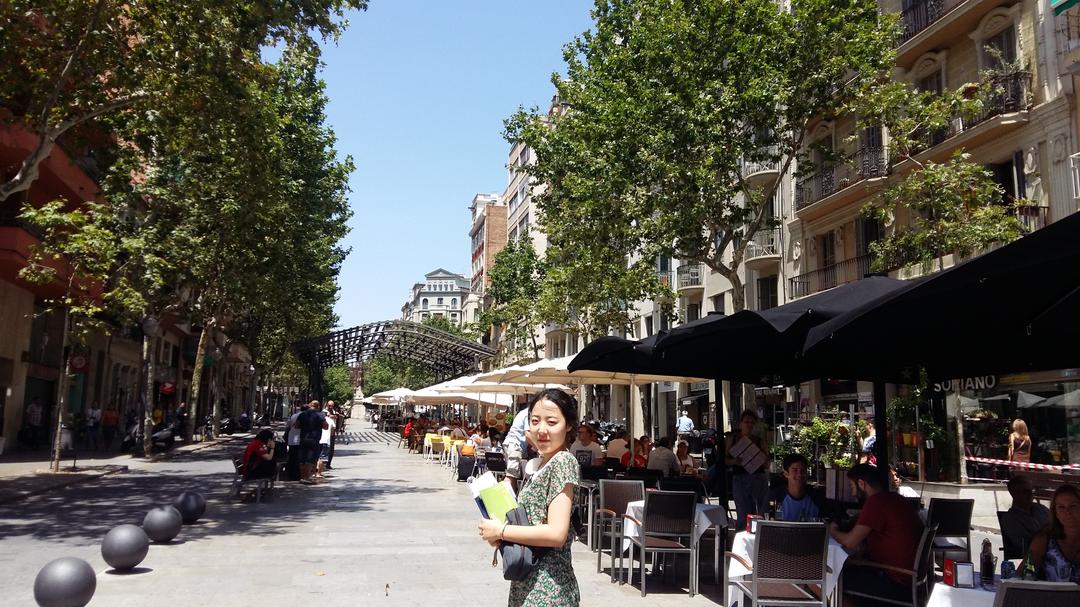
ⓒKorea Gapyear
Q.Where did you travel to?
A. I skipped school about twice. The first time I skipped was to go see the Real Madrid vs. Barcelona match; the game was held in Valencia. So I went to Valencia to watch the match and took an overnight bus back, which caused me to miss school, and the next day a teacher said that if I went to Valencia there were lots of things to see there, so why did I only go to watch the match and not do some sightseeing?
Q.Did you have any difficulties while living in Spain?
A. At first it was a bit difficult to adjust. I didn''t know Spanish well and most things were unfamiliar, so it was a little hard to adapt. But I tried not to worry about those things: I actively spoke to people, and if I made mistakes I told myself that it''s okay and tried to adapt quickly through conversation. Also, I''m not good at cooking, so having to cook for myself, managing money, going to the bank, and handling various problems on my own was a bit scary. I had learned a lot of cooking from my mother in Korea before I went, but I still failed a lot there and sometimes put random ingredients that weren''t in the recipe and made my own dishes.
Q.So how long did it take you to get used to it?
A. I think it took about two weeks. I stayed in accommodation run by a Spanish host, and the owner made me feel comfortable so I was able to settle in easily.
Q.What aspects of Spanish culture might we not know about?
A.In Spain, everything tends to be late..
Meal times are late too: lunch is usually between 2 PM and 4 PM, and dinner between 8 PM and 10 PM. People tend to eat small things throughout the day — about six times a day. After breakfast, around noon people might have a beer with jamón (cured ham), and around 2 PM they have lunch. Before dinner they also eat a little snack and then have dinner. Even at bars, if you go around 11 PM there are almost no people; you have to go around 1 AM or 2 AM to find many people.
Q.So was the school system different from Korea''s in any way?
A. Because I took morning classes, there didn''t seem to be any major differences.
Q.Hola! What did you like most about the Spanish learning program?
A. It''s hard to pick just one thing I liked most, but there were so many good things. Learning Spanish was great, but I especially liked meeting people from various countries; meeting them, having diverse conversations, and experiencing different cultures was probably the best part.
Q.If you were to recommend this program to friends who want to participate, what kind of person would it suit?
A. Rather than someone who goes just to learn the language, (it''s for) people who want to meet others and meet people from various countries...who want to experience various culturespeopleI think it would suit him/her better.
Q.What is the biggest difference between life in Korea and life in Spain?
A. First, Seoul has a "hurry" culture, so it felt difficult. Especially since I lived in Israel from a young age, that kind of Korean culture didn''t fit me well. That isn''t to say Spain is extremely slow, but I felt a lot of freedom there. I think money is a bit different too. Koreans worry about money a lot, but in Spain people tend to think you can live as long as you have enough. For example, most people in Korea use smartphones, but in Spain there aren''t that many people using smartphones. Also, Korea doesn''t have many comfortable places to relax outdoors, but in Spain many people sit comfortably by the sea or on high hills to read or listen to music. I also spent a lot of time sitting there and thinking.
Q.How were you feeling as you were about to return?
A. While talking on the phone with a friend about going back to Korea soon, I tried starting a week before my return to do one thing each day that I''d wanted to do but hadn''t yet. But maybe because I was in a hurry, that turned out to be harder than I thought. So I only did a few things, but I relaxed and enjoyed myself, thinking I could come again next time and do the rest then.
Q.Looking at your gap year, have there been any changes before and after taking it?
A. Before, I always lived with my parents, so I didn''t do everything by myself. But in Spain I had to handle everything on my own, so I think I started doing more things independently.
Q.In which areas did you feel those changes most strongly?
A. Cooking. I had never cooked before going to Spain. But in Spain I had to cook all my meals myself, so it was the hardest and also the area I improved the most.
Q.Do you still cook these days?
A. No, I haven''t cooked at all since coming to Korea. But sometimes I feel like cooking.
Q.Are you thinking of taking another gap year in the future?
A. I''m thinking about a working holiday.
Q.IsI heard Israel signed a working holiday agreement — have you considered Israel?
A. I don''t plan to go to Israel yet.
Q.If you were to take another gap year, what would you like to learn?
A. I like sports, so I''d like to learn and study more about that, and I also like DJ music so I want to learn that too. A friend recently started learning DJing and said it''s really fun and recommended it to me, so I''m considering it these days.
Q.What does a gap year mean to you, Byungho?
A. Self-improvement
Q.How would you evaluate the program in one word?
A.It''s fun!!!
It was much more enjoyable than I thought. In Korea, classes are generally stiff, but when studying in Spain we had a much wider variety of classes and they were taught in a fun, engaging way.
This program seems better suited for people who want to meet others and experience different cultures by meeting people from various countries, rather than for those who are simply going to learn the language.
-Hola! Spanish beginner at the top of my bucket list!/Song Byung-ho, gapper from the Gap Year group/8-week gap year |
Q.Please briefly introduce yourself.
A. My name is Song Byung-ho. I lived in Israel from a young age, so my Korean is still a bit awkward. I''m 23 years old. I attended university for about a year and a half and took a leave of absence last September.
Q.How did you learn about our Gap Year program?
A. I was watching TED on YouTube and saw a video featuring the representative of Korean Gap Year, and that''s how I learned about Gap Year.
Q.Had you heard of the concept of a gap year before?
A. I didn''t know about it at all before watching TED. After watching TED, I looked up what a Gap Year is and found out that it started abroad and is widely practiced there. So I thought I wanted to try it too, and since I happened to be on a leave of absence, I decided to do it.
Q.What did you do while on leave from school?
A. I thought about what to do for a year and at first decided to tutor; I tutored to save money, and since I couldn''t just waste the year, I thought I''d use that money to do something. That''s when I learned about Korean Gap Year and went to Spain through them.
Q.When did you go to Spain?
A. I left on March 26 and returned to Korea on May 28.
Q.Did you travel a lot around Spain during those two months?
A. Yes, I wanted to go alone and traveled a lot; I searched online and used maps to explore many places.
Q.Did you travel a lot before this?
A. Yes, a year ago I went on a trip to Europe with a friend, but we didn''t go to Spain then.
Q.There were several programs; what motivated you to choose the Spanish language learning program among them?
A. There were other programs that interested me. I like DJ music and there was a program to learn DJing in Australia, but that program only lasted six weeks, so I looked for something that would let me stay a bit longer and decided to go to Spain.
Q.Did your Spanish improve a lot?
A. At first I felt a bit awkward and embarrassed about not speaking Spanish well, but the school teachers understood me to some extent even when I couldn''t speak well and made me feel comfortable, so later—even when I wasn''t very good—I actively tried to speak and worked hard to correct the parts I struggled with.
Q.Generally, it''s uncommon to visit only one country in Europe; when you said you were going to Spain to learn Spanish, how did people around you react?
A. They were very envious. I like football, so I could watch football matches, the weather was nice, there were beaches nearby, and since it was Europe I could experience different things, so people were very jealous.
Q.Since you''ve traveled a lot before, you probably don''t have much fear about going abroad, right?
A.I always do. Even if I''ve been once, the feeling is always there when I go again.,
I''m always worried someone will steal my bag; there are a lot of pickpockets in Europe, so after going out you always have to check if your wallet or passport is missing.
Q.SpainWhile you were there, were you ever robbed or did you ever lose anything?
A. I once lost my wallet and was worried, but later I found it at my accommodation. Still, you should always be careful with your wallet and ID. Also, many bicycles get stolen in Spain. Many people use bicycles in Spain, but if you''re careful I think using a bike there can be good. The distance to school was about 30–40 minutes; I took the subway, but I thought riding a bicycle would also be nice.
Q.How was the school where you took classes overall?
A. The environment was generally good. People from various backgrounds studied together and communication was possible to an extent. It was difficult to speak only in Spanish all the time, but when I didn''t understand well they sometimes explained in English. And if there was something the students didn''t understand, the teachers kindly explained it, so I was able to enjoy the classes.
Q.Which nationalities were most common at the school?
A. Chinese, and there were also many Germans. I had a Swiss friend I met at the school, and that friend said that in Barcelona it seemed there were more Germans than Spaniards.
Q.Is there a friend you made at school who particularly stands out in your memory?
A. The Swiss friend I mentioned earlier. At first we were in different classes, but that friend''s teacher got sick so we attended class together and became close then. So until I returned to Korea I spent the most time with that friend; we''d converse in Spanish, and when neither of us could manage in Spanish we''d talk in English.
Q.Did your Spanish improve a lot while studying at the school?
A. Yes, it improved a lot. I learned many words and I feel I learned a lot grammatically as well.
Q.Does the class focus more on grammar or conversation?
A. Grammar is difficult, so I studied grammar more and practiced conversation a lot in daily life, but actually the hardest thing was vocabulary was the most difficult..They gave vocabulary homework every day. It was a bit tough but it helped a lot.
Q.Are the classes rigid, or are there also interactive/active lessons?
A. We also have card-game lessons. There are cards with various words; you act out or express the word and your teammates guess what it is — there were many classes like that.
ⓒKorea Gapyear
Q.Where did you travel to?
A. I skipped school about twice. The first time I skipped was to go see the Real Madrid vs. Barcelona match; the game was held in Valencia. So I went to Valencia to watch the match and took an overnight bus back, which caused me to miss school, and the next day a teacher said that if I went to Valencia there were lots of things to see there, so why did I only go to watch the match and not do some sightseeing?
Q.Did you have any difficulties while living in Spain?
A. At first it was a bit difficult to adjust. I didn''t know Spanish well and most things were unfamiliar, so it was a little hard to adapt. But I tried not to worry about those things: I actively spoke to people, and if I made mistakes I told myself that it''s okay and tried to adapt quickly through conversation. Also, I''m not good at cooking, so having to cook for myself, managing money, going to the bank, and handling various problems on my own was a bit scary. I had learned a lot of cooking from my mother in Korea before I went, but I still failed a lot there and sometimes put random ingredients that weren''t in the recipe and made my own dishes.
Q.So how long did it take you to get used to it?
A. I think it took about two weeks. I stayed in accommodation run by a Spanish host, and the owner made me feel comfortable so I was able to settle in easily.
Q.What aspects of Spanish culture might we not know about?
A.In Spain, everything tends to be late..
Meal times are late too: lunch is usually between 2 PM and 4 PM, and dinner between 8 PM and 10 PM. People tend to eat small things throughout the day — about six times a day. After breakfast, around noon people might have a beer with jamón (cured ham), and around 2 PM they have lunch. Before dinner they also eat a little snack and then have dinner. Even at bars, if you go around 11 PM there are almost no people; you have to go around 1 AM or 2 AM to find many people.
Q.So was the school system different from Korea''s in any way?
A. Because I took morning classes, there didn''t seem to be any major differences.
Q.Hola! What did you like most about the Spanish learning program?
A. It''s hard to pick just one thing I liked most, but there were so many good things. Learning Spanish was great, but I especially liked meeting people from various countries; meeting them, having diverse conversations, and experiencing different cultures was probably the best part.
Q.If you were to recommend this program to friends who want to participate, what kind of person would it suit?
A. Rather than someone who goes just to learn the language, (it''s for) people who want to meet others and meet people from various countries...who want to experience various culturespeopleI think it would suit him/her better.
Q.What is the biggest difference between life in Korea and life in Spain?
A. First, Seoul has a "hurry" culture, so it felt difficult. Especially since I lived in Israel from a young age, that kind of Korean culture didn''t fit me well. That isn''t to say Spain is extremely slow, but I felt a lot of freedom there. I think money is a bit different too. Koreans worry about money a lot, but in Spain people tend to think you can live as long as you have enough. For example, most people in Korea use smartphones, but in Spain there aren''t that many people using smartphones. Also, Korea doesn''t have many comfortable places to relax outdoors, but in Spain many people sit comfortably by the sea or on high hills to read or listen to music. I also spent a lot of time sitting there and thinking.
Q.How were you feeling as you were about to return?
A. While talking on the phone with a friend about going back to Korea soon, I tried starting a week before my return to do one thing each day that I''d wanted to do but hadn''t yet. But maybe because I was in a hurry, that turned out to be harder than I thought. So I only did a few things, but I relaxed and enjoyed myself, thinking I could come again next time and do the rest then.
Q.Looking at your gap year, have there been any changes before and after taking it?
A. Before, I always lived with my parents, so I didn''t do everything by myself. But in Spain I had to handle everything on my own, so I think I started doing more things independently.
Q.In which areas did you feel those changes most strongly?
A. Cooking. I had never cooked before going to Spain. But in Spain I had to cook all my meals myself, so it was the hardest and also the area I improved the most.
Q.Do you still cook these days?
A. No, I haven''t cooked at all since coming to Korea. But sometimes I feel like cooking.
Q.Are you thinking of taking another gap year in the future?
A. I''m thinking about a working holiday.
Q.IsI heard Israel signed a working holiday agreement — have you considered Israel?
A. I don''t plan to go to Israel yet.
Q.If you were to take another gap year, what would you like to learn?
A. I like sports, so I''d like to learn and study more about that, and I also like DJ music so I want to learn that too. A friend recently started learning DJing and said it''s really fun and recommended it to me, so I''m considering it these days.
Q.What does a gap year mean to you, Byungho?
A. Self-improvement
Q.How would you evaluate the program in one word?
A.It''s fun!!!
It was much more enjoyable than I thought. In Korea, classes are generally stiff, but when studying in Spain we had a much wider variety of classes and they were taught in a fun, engaging way.
Capturing the growth journeys
of our participants.

 Home
Home


Take a step out of your comfort zone.
Challenge yourself for your own sake.
Feel complete freedom.
Be happy.