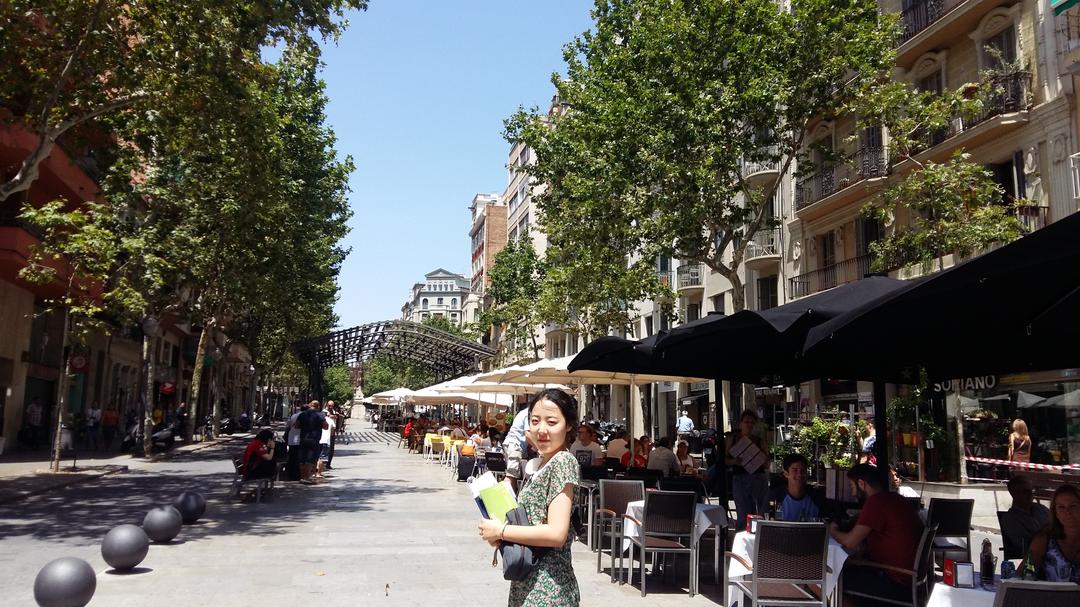
Two months isn''t long, but I''m having a great time—learning a lot each day and thinking about what to do next. - Hola! Bucket List Top-Ranked: Introduction to Spanish / 8-Week Gap Year |
- Official language:Spanish
▷ English ability before participation: Conversational (everyday) - OK
▷ Communication while participating:No problem
- Meals:Self-catering
▷ Advice about meals:It''s good to learn a little cooking at home before coming.
- Items I found inconvenient to be without:Nail clippers, shampoo
- What are your personal goals in participating in the program?
First:Getting away from Korea. I went to Barcelona to get away from life in Korea and to sort out things that were on my mind.
Second:Learn more Spanish. I decided to go to a Spanish-speaking country because I wanted to raise my level of Spanish a bit.
- Are you satisfied with the Korean Gap Year program you are currently participating in?
I''m satisfied. Two months isn''t long, but I''m having a great time—learning a lot each day and thinking about what to do going forward.
- What do you mainly do in your free time after class?
Enjoying a cup of café con leche (coffee mixed with milk) alone and relaxing.
Going to parks in Barcelona to listen to music and do homework or read.
Going to places I want to visit.
Going to the beach to play soccer or enjoy the scenery.
Doing school activities together with friends.
Going to pubs to watch soccer matches.
- Please tell us about any special Spanish culture you found impressive while living in Spain.
First is the roughly five meals a day and the slow pace of eating. Breakfast (desayuno), a meal like brunch (almuerzo) - between 12:00 and 13:00, lunch (comida) - between 13:30 and 15:30, an afternoon snack-like meal (merienda) - between 17:00 and 18:00, and dinner (cena) - between 21:00 and 22:00. At first I wondered how they ate five meals a day, but when I asked, they said each meal is simple and small in portion.
The second is taking a nap. Spanish people take about 30 minutes to an hour during the day. They sleep on the grass in parks, on the sand at the beach, or on benches. I haven''t tried sleeping in those places, but taking a nap seems really nice and effective.
- What should you definitely know before participating in this program?
① Most Spanish people do not speak English. Some do, but it''s a bit difficult to communicate/understand.
② Don''t go to the alleyways of La Rambla at night. It''s a very dangerous area.
③ Bring identification other than your passport. Since you could lose your passport, it''s safer and more convenient to have another form of ID.
④ Some tourist sites offer free admission on Sundays. (You should check the details online.)
⑤ You don''t necessarily have to buy water. You can drink the tap water available on the streets.
⑥ The paellas sold near La Rambla or the beach are usually ordinary. To eat authentic Spanish paella, go to ''7 Portes''! It''s a bit expensive but definitely worth visiting at least once.https://www.7portes.com/angles/index.php)
⑦ Although Barcelona is a large city, you don''t necessarily need to take the metro. I think it''s much better to walk using the map on your phone. You can see nearby natural areas and parks, which makes you feel good.
⑧ Be sure to bring sunscreen and sunglasses! The sun is very strong.
- How do you plan to carry out the remaining gap year program?
I plan to visit places I haven''t been to yet. For example, Tibidabo mountain (a mountain similar to Montmartre in Paris).
There''s a tapas festival this month, and I plan to pick a day to go.
Also, there are activities at the school that I want to participate in.






 Home
Home