Projects
|
FAQ
|
Announcements



#Regained confidence and gained motivation toward my dreams #Service in the great outdoors and learning with international friends #Confidence and pride about taking on a new challenge

After being discharged from the military, through the gap year I had in New Zealand, I met new people and I had relaxed time and naturally regained my confidence! And it was a time of many conversations with the friends I volunteered with, from which I gained and learned a lot.
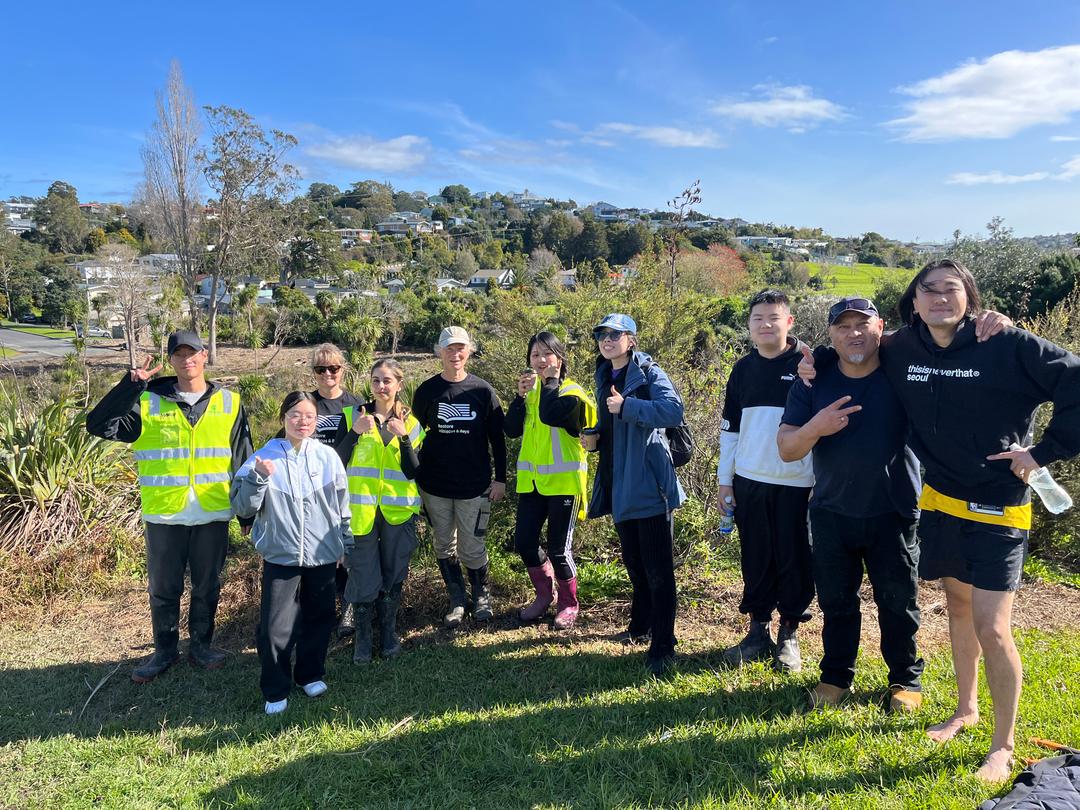
Having fun doing environmental volunteer work in New Zealand''s nature with friends from around the world! Choi Chan-sik, Gap Year Gapper (23)
|
# After leaving the military, I wanted to travel and think more deeply about myself, so I decided to take a gap year.

# I left with excitement rather than fear of the new environment!

From my military experience I learned the mindset of making the impossible possible and of taking on challenges without hesitation, so I was more inclined to try than to fear a new environment. I wasn''t overly worried about the language, and since I was alone I could just go back if I made mistakes,and I was excited at the thought that I could live freely without worrying about others'' opinions, so I took on the New Zealand volunteer project with enthusiasm.
Because I had traveled internationally a lot, preparations for departure—airfare, passport, visa—were straightforward. But it was my first time backpacking alone and I was going to volunteer, so packing took a lot of time.
However,Korea Gap Year provided meticulous information about every required item.Starting from airfare, accommodation, visas, and passports, they carefully provided tips for packing and information about New Zealand, so I was able to prepare easily. For anything I lacked, I asked by email and prepared thoroughly and meticulously.
# What I remember most are the attitudes and manners I learned from the friends I met while volunteering.

Through volunteering abroad I gained a lot linguistically, but the attitudes and behaviors I learned from living with foreigners are what I remember most.
When we introduced our names, I said mine once and from then on they called me by name right away. I was embarrassed because I couldn''t remember their names, but I learned from them that they focus on and show respect for others. I think I learned a lot about their manners from these small things.
The many lessons and realizations I gained from participating in this project motivated me to study hard again in Korea and run toward my dreams. If I had lived thoughtlessly in the military, this opportunity seems to have become the momentum to put a lot of effort into achieving my dreams.
# By approaching foreign friends first and starting conversations, I gradually gained confidence.

Although I had been living in Korea, I liked English a lot and studied it because I was interested, and I thought I was good at it. Before volunteering in New Zealand, seeing that my everyday conversational English caused no problems made me really proud, my worries about language difficulties disappeared, and I thought I would be able to adapt to volunteering without trouble.
So I tried to speak to the foreign friends I met in New Zealand as much as possible, and I often initiated one-on-one conversations. Doing so built my confidence, and the foreign friends appreciated it.Of course, I learned a lot while volunteering,There were also many things I gained through the many conversations I had with those friends.I regret that if I had spoken better, I could have gained more learning and wisdom through more conversations. If you are really good at English, you will be able to feel and learn more, butThere are many other things to learn and feel, so I hope you won''t give up on volunteering abroad because you''re afraid of the language.
# What is a day''s routine in the New Zealand environmental protection volunteer project?

On weekdays, you can expect volunteering to start at 8 AM. I would get up at 7, quickly wash up, prepare and eat breakfast, prepare lunch in advance, and then start morning volunteering. In fact, as you continue volunteering, you''ll probably give up washing in the morning—I did too.
Because I needed to eat breakfast and prepare lunch, I think I left for the volunteer site around 8:30. Although 8 is the nominal start time, the schedule is fairly flexible. Since it was winter, I always drank a warm tea in the morning. That cup of tea warms your whole body.

After finishing morning volunteering, we returned to the accommodation at 12, ate lunch until 1, and had free time to rest. At lunchtime, everyone was tired from volunteering, so people ate the food they''d prepared at their own spots, and it was a time to respect each person''s rest.
We volunteered in the afternoon from 1 to 4, then returned to the accommodation to wash up and rest, and prepared dinner at 6. Dinner was always prepared by everyone, and if many people weren''t needed, we divided cooking and dishwashing tasks. Even when I was on dish duty, I would help with preparation during cooking to learn to cook and to speak a few more words and use English. After dinner, everyone relaxed freely until bedtime. You can rest comfortably without worrying about anyone.
There isn''t a set bedtime, so you can sleep whenever you want. I used to go to bed at 9 or 10 for the next day''s volunteering.Lastly, when volunteering ended earlier than 4, we wandered around the surrounding nature with friends, took photos, breathed the clear air, and enjoyed New Zealand''s great outdoors.If volunteering ends late, they finish the next day''s volunteering that much earlier. There is absolutely no overtime! :)
# Memorable and enjoyable experiences while volunteering!

There were really many memorable and enjoyable experiences.This volunteer program has a history and has been continued by the New Zealand government.Because of that, thinking that I was becoming part of that history and cooperating with foreign friends made me feel rewarded and proud. So I found the volunteering itself very interesting.
During volunteering, the manager told interesting stories and would say that if it gets tough, feel free to rest without worrying. However, all the members show their best attitude in volunteering, so thanks to that atmosphere you''ll probably be able to work hard and enjoy the volunteering! :)
# My personal New Zealand travel recommendations!

I arrived in New Zealand two days before starting the volunteer work, took the SKY bus, and stayed at a backpackers (hostel) to get an overall understanding of Auckland and New Zealand. Talking with friends from various nationalities at the backpackers made me realize I was abroad and was fun, so I looked forward to life during volunteering. I recommend backpackers. The facilities are good, prices are cheap, you can cook and eat there or bring food to eat, and you can meet friends from many nationalities.
I participated in the volunteer program for two weeks. After the volunteering ended, I booked accommodation in Auckland through Airbnb for six days and traveled around Auckland. And I stayed in a hotel for the last day.

In Auckland, foreign people walk in front of you, unfamiliar foreign shops line the streets, and cars come from the opposite direction to our country. But I decided to enjoy the urban aspects of Auckland and leave the nature experiences for volunteering. The most memorable spot is DEVON PORT. You can get there by ferry in about 15 minutes; it''s part of Auckland but a place where you can feel nature. When you see the wide-open sea spread out before you, your chest opens up and the sea harmonized with yachts is a feast for the eyes.
Be sure to try fish and chips!Because so many ethnicities live in Auckland, rather than there being a single New Zealand food and culture, there are foods and cultures from many countries. There are many Korean restaurants too. Actually, after the volunteering ended I wanted Korean food so much that I ate it often. You might think you should enjoy New Zealand food, but after living there you''ll realize you''re inevitably Korean. Still, I think Auckland is definitely worth visiting, and about 4–5 days is enough to see the city.
# My personal gap year tips!

- Language
: Approach the friends you''re volunteering with first and start talking; as you volunteer together, you''ll soon find yourself mixing with foreign friends and gaining confidence! Don''t worry too much about the language!! Just the fact that we all came to volunteer together will give you plenty of common ground, hehe
- Accommodation
: Make sure to bring a sleeping bag haha. On weekends the accommodation has FREE WIFI so you can use it freely, but during volunteering there is no FREE WIFI and even if you want to use data, it''s so remote that there''s often no service. During volunteering you can think of your phone as just a camera. But because of that, it was nice to be away from my phone and have time to fully experience New Zealand''s great outdoors haha.
- Meals
: We mostly cooked our own meals. For the first weekend, the ingredients for what we''d cook would already be at the accommodation. Ingredients needed for the weekend are delivered to the accommodation. So on the weekend you can just cook according to those ingredients. Because the meal plan is mostly set, you can either follow it or freely change the menu.

During the volunteering period, you''ll stay at accommodation near the volunteering site. Before moving to this accommodation, we stop at a supermarket to do our own shopping and bring the ingredients with us. If there''s any particular food you want to eat, or if you''re vegetarian or have other dietary specifics, feel free to tell your teammates and shop accordingly. I bought instant noodles because I really wanted them, and I also bought more vegetables to accommodate a vegetarian friend.
During the volunteering period, you''ll have a simple breakfast by yourself and prepare your lunch in the morning. This is so you can eat lunch right after returning from morning volunteering. You might be confused by foreign ingredients (staple food being bread, unfamiliar spices, sauces). I also found it difficult at first to prepare breakfast and lunch. I hadn''t cooked much in Korea, and with bread as the staple I had no idea what to make. But as you live there you''ll naturally adapt to the point you hardly feel like a foreigner. If there''s something you''d like to eat besides the groceries you buy, it''s good to buy them on the weekend.
Indeed, at first all the ingredients are foreign and it can feel unfamiliar and frustrating not knowing how to use them. Whenever that happened I kept asking "Wanna cook something together?", "What did you make?" and learned by cooking together. It''s an opportunity to try foreign dishes and a chance to appreciate your mother too ^^
- What to bring
: The main things I needed were a water bottle, a sleeping bag, and ointment for itching (there aren''t insects, but while volunteering you might get something like plant dermatitis). For everything else, the Korea Gap Year coordinators sent detailed emails and we were able to prepare without lacking or inconvenience!
- Additional tips!
: For volunteering clothes you can probably bring only one set (top and bottom). I volunteered in winter, so I wore tights under two layers of comfortable hiking pants, and for tops I wore a functional long-sleeve shirt, a hoodie, and a windbreaker—three layers. I recommend clothes you wouldn''t mind discarding. Clothes don''t get terribly dirty, but it''s still volunteering ^^ Also, you can do laundry (paid) on weekends. So you can manage for the five weekdays, do laundry on the weekend, then wear them again for the next five days. (Honestly clothes don''t get that dirty so you could wear them for two weeks.) Bring a windbreaker for your top—definitely bring one. New Zealand rains frequently, so I recommend a water-resistant windbreaker. For shoes, bring comfortable walkers/hiking boots. Because you often walk on steep slopes during volunteering there is a risk of ankle sprain, so I recommend boots that cover the ankle. And definitely bring a sleeping bag to use when sleeping.
My Gap Year
Experience ★★★★★
: Sharing three meals a day with foreigners, participating in meaningful volunteer work while experiencing New Zealand''s great outdoors that you can''t feel in Korea, the refreshing openness and leisure of being with nature during the volunteering — I think all of this provides the best experience.
Learning ★★★★★
: Similar to the ''Experience'' section above, living with foreigners taught me things; I learned about how New Zealanders (Kiwis) relate to nature, and I could learn Kiwis'' relaxed attitude and generosity.
Environment ★★★★★
: There''s no need to say much about New Zealand''s environment. Enjoy the great outdoors. I wanted to live there. Also, all volunteer-related facilities—accommodation, transportation—were very good.
Safety ★★★★★
: I asked many questions via email to Gap Year and their answers gave me confidence that it would be safe, so I decided to participate. As a result I experienced the volunteering very safely and enjoyably!
Leisure ★★★★★
: Although volunteering was important, the weekend leisure activities were truly happy and special experiences; as a solo traveler I was able to go to tourist spots I couldn''t have imagined and places only locals know. At the accommodation where we stayed on weekends we lived with a native New Zealander manager, so we traveled every weekend with that friend. Within Auckland public transport is fairly developed so you can go where you want if you set your mind to it. But once you leave Auckland, you can only get around by car. So every weekend we drove deep into forests and nature and had happy times experiencing the great outdoors.
You probably want to rest on the weekends too, but I was really grateful to the manager who took us to such great places. Be sure to get close with the manager and you can suggest going to different places first, or like in my case the manager suggested to all our team to go together. Make good use of the weekends and I recommend enjoying New Zealand''s varied great outdoors, not just during volunteering!
that Choi Chansik participated inNew Zealand environmental conservation volunteer activityprojectIf you''re curious?!
Click belowplease!
▼ ▼ ▼ ▼ ▼ ▼ ▼ ▼ ▼

After being discharged from the military, through the gap year I had in New Zealand, I met new people and I had relaxed time and naturally regained my confidence! And it was a time of many conversations with the friends I volunteered with, from which I gained and learned a lot.
Having fun doing environmental volunteer work in New Zealand''s nature with friends from around the world! Choi Chan-sik, Gap Year Gapper (23)
|
# After leaving the military, I wanted to travel and think more deeply about myself, so I decided to take a gap year.
# I left with excitement rather than fear of the new environment!
From my military experience I learned the mindset of making the impossible possible and of taking on challenges without hesitation, so I was more inclined to try than to fear a new environment. I wasn''t overly worried about the language, and since I was alone I could just go back if I made mistakes,and I was excited at the thought that I could live freely without worrying about others'' opinions, so I took on the New Zealand volunteer project with enthusiasm.
Because I had traveled internationally a lot, preparations for departure—airfare, passport, visa—were straightforward. But it was my first time backpacking alone and I was going to volunteer, so packing took a lot of time.
However,Korea Gap Year provided meticulous information about every required item.Starting from airfare, accommodation, visas, and passports, they carefully provided tips for packing and information about New Zealand, so I was able to prepare easily. For anything I lacked, I asked by email and prepared thoroughly and meticulously.
# What I remember most are the attitudes and manners I learned from the friends I met while volunteering.
Through volunteering abroad I gained a lot linguistically, but the attitudes and behaviors I learned from living with foreigners are what I remember most.
When we introduced our names, I said mine once and from then on they called me by name right away. I was embarrassed because I couldn''t remember their names, but I learned from them that they focus on and show respect for others. I think I learned a lot about their manners from these small things.
The many lessons and realizations I gained from participating in this project motivated me to study hard again in Korea and run toward my dreams. If I had lived thoughtlessly in the military, this opportunity seems to have become the momentum to put a lot of effort into achieving my dreams.
# By approaching foreign friends first and starting conversations, I gradually gained confidence.
Although I had been living in Korea, I liked English a lot and studied it because I was interested, and I thought I was good at it. Before volunteering in New Zealand, seeing that my everyday conversational English caused no problems made me really proud, my worries about language difficulties disappeared, and I thought I would be able to adapt to volunteering without trouble.
So I tried to speak to the foreign friends I met in New Zealand as much as possible, and I often initiated one-on-one conversations. Doing so built my confidence, and the foreign friends appreciated it.Of course, I learned a lot while volunteering,There were also many things I gained through the many conversations I had with those friends.I regret that if I had spoken better, I could have gained more learning and wisdom through more conversations. If you are really good at English, you will be able to feel and learn more, butThere are many other things to learn and feel, so I hope you won''t give up on volunteering abroad because you''re afraid of the language.
# What is a day''s routine in the New Zealand environmental protection volunteer project?
On weekdays, you can expect volunteering to start at 8 AM. I would get up at 7, quickly wash up, prepare and eat breakfast, prepare lunch in advance, and then start morning volunteering. In fact, as you continue volunteering, you''ll probably give up washing in the morning—I did too.
Because I needed to eat breakfast and prepare lunch, I think I left for the volunteer site around 8:30. Although 8 is the nominal start time, the schedule is fairly flexible. Since it was winter, I always drank a warm tea in the morning. That cup of tea warms your whole body.
After finishing morning volunteering, we returned to the accommodation at 12, ate lunch until 1, and had free time to rest. At lunchtime, everyone was tired from volunteering, so people ate the food they''d prepared at their own spots, and it was a time to respect each person''s rest.
We volunteered in the afternoon from 1 to 4, then returned to the accommodation to wash up and rest, and prepared dinner at 6. Dinner was always prepared by everyone, and if many people weren''t needed, we divided cooking and dishwashing tasks. Even when I was on dish duty, I would help with preparation during cooking to learn to cook and to speak a few more words and use English. After dinner, everyone relaxed freely until bedtime. You can rest comfortably without worrying about anyone.
There isn''t a set bedtime, so you can sleep whenever you want. I used to go to bed at 9 or 10 for the next day''s volunteering.Lastly, when volunteering ended earlier than 4, we wandered around the surrounding nature with friends, took photos, breathed the clear air, and enjoyed New Zealand''s great outdoors.If volunteering ends late, they finish the next day''s volunteering that much earlier. There is absolutely no overtime! :)
# Memorable and enjoyable experiences while volunteering!
There were really many memorable and enjoyable experiences.This volunteer program has a history and has been continued by the New Zealand government.Because of that, thinking that I was becoming part of that history and cooperating with foreign friends made me feel rewarded and proud. So I found the volunteering itself very interesting.
During volunteering, the manager told interesting stories and would say that if it gets tough, feel free to rest without worrying. However, all the members show their best attitude in volunteering, so thanks to that atmosphere you''ll probably be able to work hard and enjoy the volunteering! :)
# My personal New Zealand travel recommendations!
I arrived in New Zealand two days before starting the volunteer work, took the SKY bus, and stayed at a backpackers (hostel) to get an overall understanding of Auckland and New Zealand. Talking with friends from various nationalities at the backpackers made me realize I was abroad and was fun, so I looked forward to life during volunteering. I recommend backpackers. The facilities are good, prices are cheap, you can cook and eat there or bring food to eat, and you can meet friends from many nationalities.
I participated in the volunteer program for two weeks. After the volunteering ended, I booked accommodation in Auckland through Airbnb for six days and traveled around Auckland. And I stayed in a hotel for the last day.
In Auckland, foreign people walk in front of you, unfamiliar foreign shops line the streets, and cars come from the opposite direction to our country. But I decided to enjoy the urban aspects of Auckland and leave the nature experiences for volunteering. The most memorable spot is DEVON PORT. You can get there by ferry in about 15 minutes; it''s part of Auckland but a place where you can feel nature. When you see the wide-open sea spread out before you, your chest opens up and the sea harmonized with yachts is a feast for the eyes.
Be sure to try fish and chips!Because so many ethnicities live in Auckland, rather than there being a single New Zealand food and culture, there are foods and cultures from many countries. There are many Korean restaurants too. Actually, after the volunteering ended I wanted Korean food so much that I ate it often. You might think you should enjoy New Zealand food, but after living there you''ll realize you''re inevitably Korean. Still, I think Auckland is definitely worth visiting, and about 4–5 days is enough to see the city.
# My personal gap year tips!
- Language
: Approach the friends you''re volunteering with first and start talking; as you volunteer together, you''ll soon find yourself mixing with foreign friends and gaining confidence! Don''t worry too much about the language!! Just the fact that we all came to volunteer together will give you plenty of common ground, hehe
- Accommodation
: Make sure to bring a sleeping bag haha. On weekends the accommodation has FREE WIFI so you can use it freely, but during volunteering there is no FREE WIFI and even if you want to use data, it''s so remote that there''s often no service. During volunteering you can think of your phone as just a camera. But because of that, it was nice to be away from my phone and have time to fully experience New Zealand''s great outdoors haha.
- Meals
: We mostly cooked our own meals. For the first weekend, the ingredients for what we''d cook would already be at the accommodation. Ingredients needed for the weekend are delivered to the accommodation. So on the weekend you can just cook according to those ingredients. Because the meal plan is mostly set, you can either follow it or freely change the menu.
During the volunteering period, you''ll stay at accommodation near the volunteering site. Before moving to this accommodation, we stop at a supermarket to do our own shopping and bring the ingredients with us. If there''s any particular food you want to eat, or if you''re vegetarian or have other dietary specifics, feel free to tell your teammates and shop accordingly. I bought instant noodles because I really wanted them, and I also bought more vegetables to accommodate a vegetarian friend.
During the volunteering period, you''ll have a simple breakfast by yourself and prepare your lunch in the morning. This is so you can eat lunch right after returning from morning volunteering. You might be confused by foreign ingredients (staple food being bread, unfamiliar spices, sauces). I also found it difficult at first to prepare breakfast and lunch. I hadn''t cooked much in Korea, and with bread as the staple I had no idea what to make. But as you live there you''ll naturally adapt to the point you hardly feel like a foreigner. If there''s something you''d like to eat besides the groceries you buy, it''s good to buy them on the weekend.
Indeed, at first all the ingredients are foreign and it can feel unfamiliar and frustrating not knowing how to use them. Whenever that happened I kept asking "Wanna cook something together?", "What did you make?" and learned by cooking together. It''s an opportunity to try foreign dishes and a chance to appreciate your mother too ^^
- What to bring
: The main things I needed were a water bottle, a sleeping bag, and ointment for itching (there aren''t insects, but while volunteering you might get something like plant dermatitis). For everything else, the Korea Gap Year coordinators sent detailed emails and we were able to prepare without lacking or inconvenience!
- Additional tips!
: For volunteering clothes you can probably bring only one set (top and bottom). I volunteered in winter, so I wore tights under two layers of comfortable hiking pants, and for tops I wore a functional long-sleeve shirt, a hoodie, and a windbreaker—three layers. I recommend clothes you wouldn''t mind discarding. Clothes don''t get terribly dirty, but it''s still volunteering ^^ Also, you can do laundry (paid) on weekends. So you can manage for the five weekdays, do laundry on the weekend, then wear them again for the next five days. (Honestly clothes don''t get that dirty so you could wear them for two weeks.) Bring a windbreaker for your top—definitely bring one. New Zealand rains frequently, so I recommend a water-resistant windbreaker. For shoes, bring comfortable walkers/hiking boots. Because you often walk on steep slopes during volunteering there is a risk of ankle sprain, so I recommend boots that cover the ankle. And definitely bring a sleeping bag to use when sleeping.
My Gap Year
Experience ★★★★★
: Sharing three meals a day with foreigners, participating in meaningful volunteer work while experiencing New Zealand''s great outdoors that you can''t feel in Korea, the refreshing openness and leisure of being with nature during the volunteering — I think all of this provides the best experience.
Learning ★★★★★
: Similar to the ''Experience'' section above, living with foreigners taught me things; I learned about how New Zealanders (Kiwis) relate to nature, and I could learn Kiwis'' relaxed attitude and generosity.
Environment ★★★★★
: There''s no need to say much about New Zealand''s environment. Enjoy the great outdoors. I wanted to live there. Also, all volunteer-related facilities—accommodation, transportation—were very good.
Safety ★★★★★
: I asked many questions via email to Gap Year and their answers gave me confidence that it would be safe, so I decided to participate. As a result I experienced the volunteering very safely and enjoyably!
Leisure ★★★★★
: Although volunteering was important, the weekend leisure activities were truly happy and special experiences; as a solo traveler I was able to go to tourist spots I couldn''t have imagined and places only locals know. At the accommodation where we stayed on weekends we lived with a native New Zealander manager, so we traveled every weekend with that friend. Within Auckland public transport is fairly developed so you can go where you want if you set your mind to it. But once you leave Auckland, you can only get around by car. So every weekend we drove deep into forests and nature and had happy times experiencing the great outdoors.
You probably want to rest on the weekends too, but I was really grateful to the manager who took us to such great places. Be sure to get close with the manager and you can suggest going to different places first, or like in my case the manager suggested to all our team to go together. Make good use of the weekends and I recommend enjoying New Zealand''s varied great outdoors, not just during volunteering!
that Choi Chansik participated inNew Zealand environmental conservation volunteer activityprojectIf you''re curious?!
Click belowplease!
▼ ▼ ▼ ▼ ▼ ▼ ▼ ▼ ▼
Capturing the growth journeys
of our participants.

 Home
Home


Take a step out of your comfort zone.
Challenge yourself for your own sake.
Feel complete freedom.
Be happy.