Projects
|
FAQ
|
Announcements





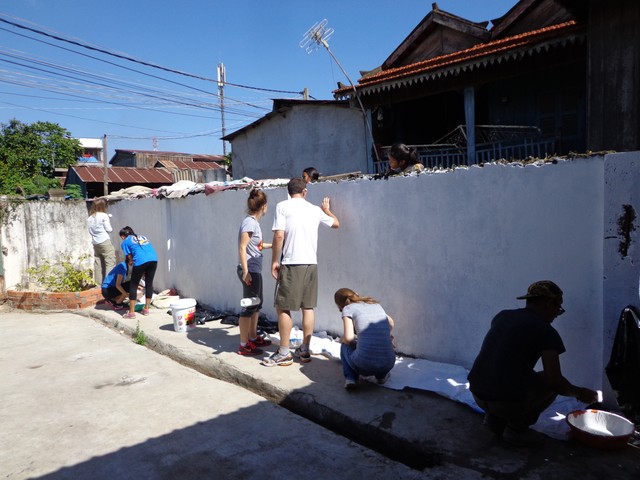

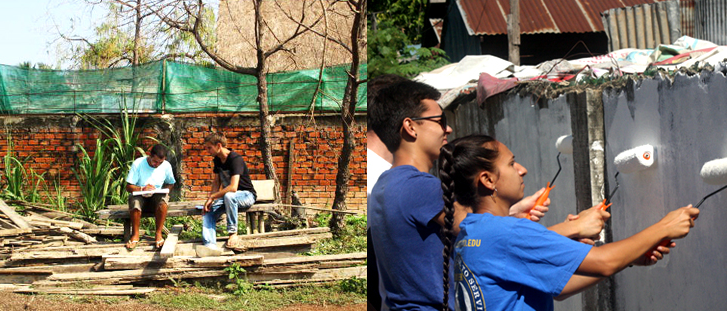
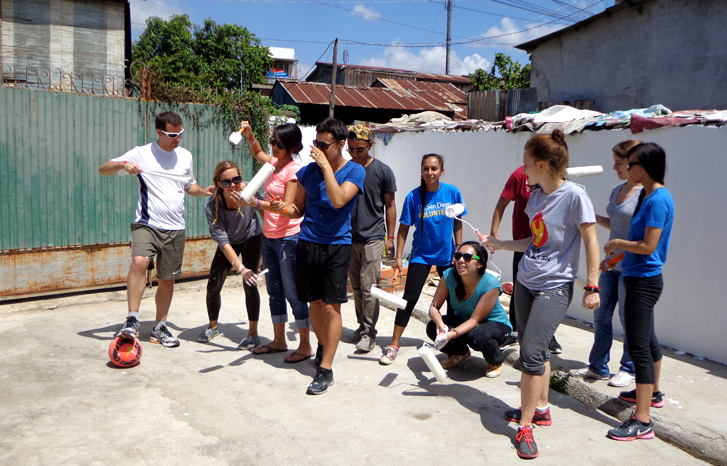
Cambodia, one of the poorest countries, experienced a war with Vietnam and a civil war, and bears the pain of three million people being massacred. Although twenty years have passed since the end of the civil war, the scars of that suffering could still be found in people’s hearts and in Cambodia’s devastated, ruined buildings.
This project is a painting volunteer project undertaken with friends.
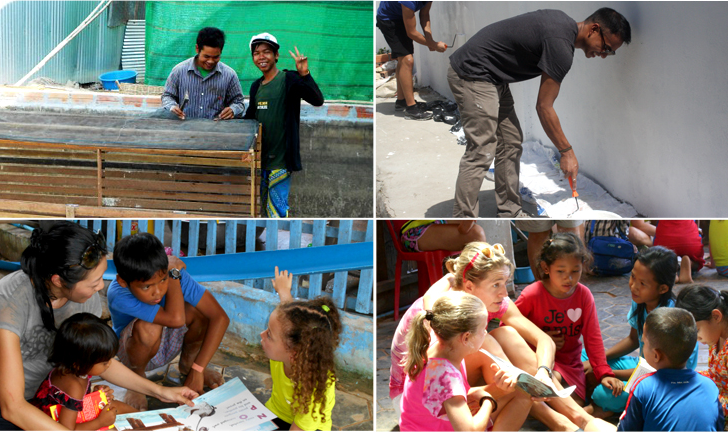
You will take part in activities such as painting various colors on gray buildings, creating murals, and repairing damaged parts of buildings. Let your talents shine so that Cambodian citizens can feel uplifted by the transformed buildings!
4.5 Week
Based on past participants’ experiences, we’ve organized the common themes of learning, reflection, and growth by time period.
Capturing the growth journeys of our participants.
Discover
.jpg "d (13).jpg")
Some inclusions are available when options are added or selected.
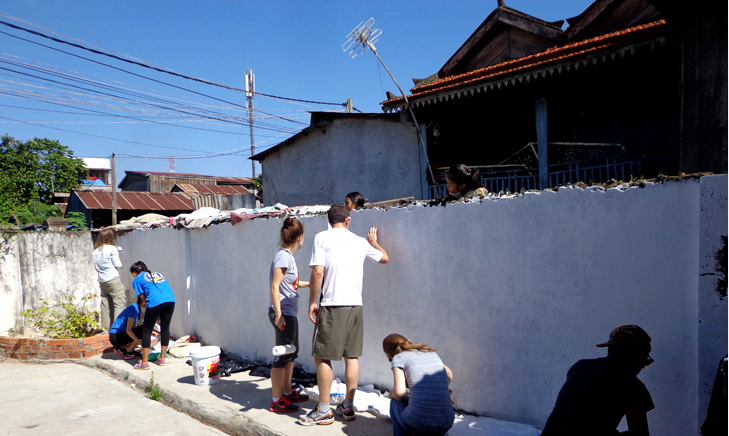
The organization that runs the project isa non-governmental organizationanda Cambodian non-profit organizationis.
We invite volunteers from around the world to Cambodia so they can learn about Cambodian culture. Volunteers can use the talents and skills they have in their areas of service to help the Cambodian people. We also strive to create an atmosphere in which volunteers communicate with each other and learn about each other's different cultures.
The organization's main role isto identify neglected areas and buildings in Cambodia and repair the buildings together with volunteersthus transforming them into livable spaces, andto provide safe housing for the Cambodian peopleThis is what we strive to do.
.001.jpeg)
Participants will live with volunteers of various nationalities in the volunteer accommodation. The accommodation is located about a 5-minute walk from Phnom Penh’s landmark, the Russian Market. The building includes a restaurant and communal areas where you can interact with volunteers and relax. Meals — breakfast, lunch, and dinner — are provided in the on-site restaurant.
| 2–3 person room / private bathroom in room /Wi-Fi provided / kitchen available / laundry service provided (1 USD / kg) |
*The accommodation is equipped with fans by default; if you wish to have air conditioning or a private room option, you can request it as an add-on in the application.
.002.jpeg)
#A small tip about transportation in Cambodia
Cambodia’s transportation infrastructure is limited, and public transit systems like city buses or subways are not well developed. The main modes of transport are motorcycle taxis, where you sit on the back of a motorcycle, and tuk-tuks, three-wheeled vehicles made by modifying motorcycles. Motorcycle taxis are very dangerous in terms of safety. Therefore, even if it costs a bit more, we recommend using tuk-tuks for safety. Unlike regular taxis, tuk-tuk fares are not fixed and must be negotiated with the driver each time. Typical one-way fares start at around 2 USD, but prices vary widely depending on distance, time of day, number of passengers, and so on. You may be surprised by the unfamiliar transportation system at first, but if you understand Cambodia’s relatively limited transport system and respect local customs, you can enjoy your time in Cambodia even more.Region:Cambodia, Phnom Penh
.jpg "d (57).jpg")
.jpg "d (15).jpg")
.jpg "d (21).jpg")
See image.https://blog.naver.com/pookie12/50152819161
1. Tuol Sleng Museum
It is a place that preserves Cambodia's painful history. Originally a school, it was used as the headquarters of the security forces during the Khmer Rouge's rule, when mass killings took place. People were imprisoned and killed here, and records of the massacre sites have been preserved. It is where the Khmer Rouge regime tortured and interrogated young people who opposed it, and it even preserves the beds where they died and the skulls. Visiting this site allows you to hear the painful history of Cambodia from a guide and to spend time mourning the dead.
.jpg "d (23).jpg")
2. Russian Market
In the 1980s, this market was frequented by Russians living in Phnom Penh. It was named the Russian Market because it sold various foods and Russian-made goods. Today, however, it serves as a place to sell everyday necessities for local Cambodians. It is one of the larger markets in Phnom Penh and a traditional market visited by many travelers. The Russian Market's special charm is visiting at night: you can taste a variety of foods and, by bargaining with vendors, buy simple daily necessities or tourist souvenirs featuring Cambodian elephants.
.jpg "d (25).jpg")
3. Tonle Sap Lake
In Cambodia, there is Tonle Sap Lake, the largest lake in East Asia. It is 16 km long and 36 km wide, an enormous lake ranked among the top five in the world. Surrounding the lake are floating village communities. A floating house refers to a home built on the water. The houses floating on the water are equipped with various buildings such as schools, shops, and playgrounds. Residents of the floating houses travel between their homes, markets, and schools by small boats like canoes. In addition, 80% of the people living in the floating villages make their living from fishing, and many are of Vietnamese descent. This is because they left Vietnam during the Vietnam War and settled in Cambodia. When visiting Cambodia, you can take a boat tour to observe the life of the floating villages up close.
|
- The minimum participation period for this project is at least 1 week. - The cost of this project is At the top of this pageYou can easily check the detailed amounts by duration and option. |
|||
|
* For popular projects, there may be no TO, so Please apply quickly to secure your spot. * Eligible participants
1. Physically healthy adults aged 18 or older
2. People who want to produce impressive creative works through small handcraft skills
3. Anyone who enjoys drawing or likes to draw.
4. Anyone who likes or is interested in interior design and home decorating.
5. People who want to create memorable volunteer experiences with friends.
6. People who want to discover their hidden creative potential.
7. People who can actively participate in various volunteer activities.
8. People who want to participate in painting volunteer activities with multinational volunteers.
9. People with an open mind.
* If you have difficulty paying in full,Prepay a registration fee of 500,000 KRW.If you pay the remaining balance within two weeks, the process to confirm project participation will begin based on the date the registration fee was paid, and we will check whether participation is possible and the available slots. To join on your desired dates and for your desired duration, securing your spot quickly is important! (Non-refundable once participation is confirmed) * However, if the start date is imminent, the schedule for paying the remaining balance may vary depending on the situation.
■ Early bird discount and Urgent application Information
All Gap Year projects, because of regular processing procedures and the Gap Year preparation period,are recommended to be applied for at least 3 months prior to the project start date.and,as a rule, applications should be submitted no later than 2 months before the start date.However, in unavoidable circumstances or if you urgently need to join a project, by paying an additional fee through the urgent application service, we will assist with expedited processing as much as possible.
* We assist with expedited processing as much as possible, but there is inherently time required for communication with local organizations and for confirming participation, and since all procedures are carried out the same as for regular participants,participants using the urgent application service must actively cooperatewith the Korea Gap Year operations team.
** Those who apply 180 days before the start date will receive an early bird discount.
*** The urgent application service can be selected from the options above. For inquiries about the urgent application service, please contact koreagapyear@gmail.com.
|
Inclusions
1. Local project implementation and training costs
2. Local orientation cost
3. Accommodation during the project period
4. Meals (breakfast, lunch, dinner) during the project period
5. Airport–accommodation transfer fee (round-trip) (one-way)
6. Korea Gap Year overseas experience certificate
7. Participation fee
8. Registration, placement, training, and project implementation costs
9. Project application and processing fees
10. Online orientation fee
11. Costs for purchasing project materials and supplies
Exclusions
1. Round-trip airfare
2. Visa fee
3. Transportation between accommodation and internship site (round-trip)
4. Individual travel insurance fee
5. Other local living expenses
* Please book your flights and transportation after your project participation is confirmed and you have received the final departure schedule.
|
Item |
Details and Remarks |
Amount |
Category |
|
Round-trip airfare (tax included) |
Varies by flight |
Approximately KRW 350,000–800,000 |
Exclusions |
|
Visa issuance fee |
Visa processing and issuance fees |
$30 |
|
|
Individual travel insurance fee |
Varies by insurer / coverage period |
Approximately KRW 10,000 |
|
|
Airport fees |
- |
- |
|
|
Local living expenses |
- |
- |
* Airfares may vary depending on the flight.
* Local living expenses are based on average estimates and may vary depending on participants' preferences.
* Participants' travel expenses and personal pocket money are separate.
● Note (Estimated local prices)
|
Accommodation |
Per night |
Meals |
Per meal |
|
Guesthouse |
About 10,000 KRW |
Local meal |
About 2,000 KRW |
|
Hotel |
About 30,000 KRW |
Restaurant |
About 5,000 KRW |
*Estimated local prices are based on average standards and may vary depending on participants' preferences.



 Home
Home

Take a step out of your comfort zone.
Challenge yourself for your own sake.
Feel complete freedom.
Be happy.





 Please select a start date.