Projects
|
FAQ
|
Announcements



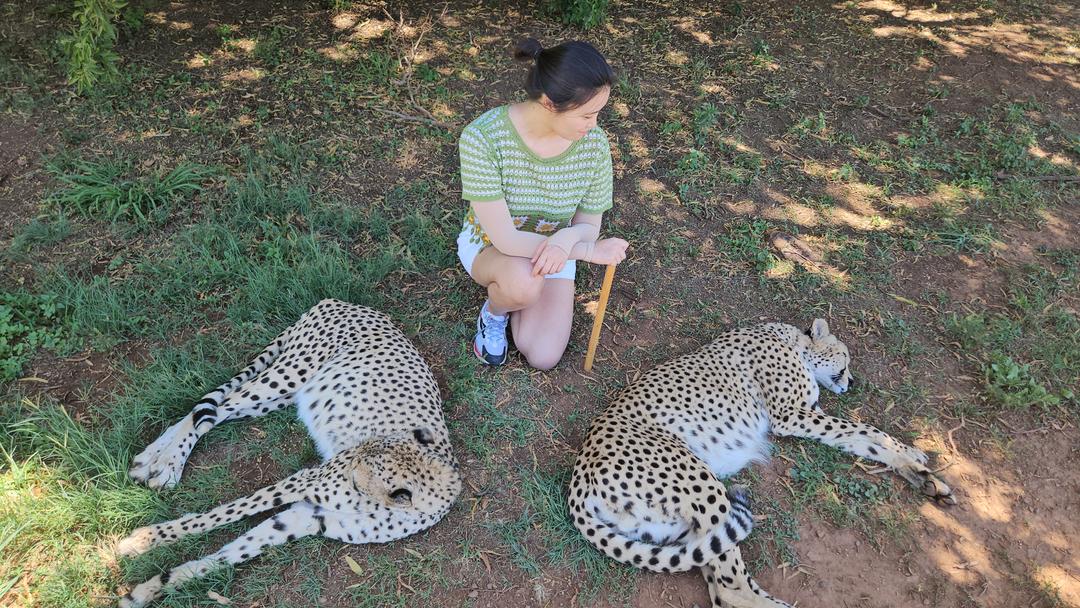
#Became more honest in expressing emotions #A deep connection with wildlife in nature #Happiness; a true sense of relaxation

The most memorable moment was when I went on my first elephant walk — the morning mist was thick, and in it...I remember watching an elephant drinking water and feeling like I was about to cry. It was such a peaceful sight.
[Africa/Overseas Volunteering] My own holiday enjoying wildlife in South Africa! Yoon Jin-sol, gap-year gapper (34, took a gap year after quitting her job) / 4-week gap year |
# I didn''t want a trip that just visits tourist spots, eats, shops, and consumes money.

I''m a woman in my thirties. I studied Japanese for a long time and worked as a Japanese interpreter at a company. While working I felt I probably liked the job, but I kept feeling doubtful. Interpreters are often employed on contracts, so I moved companies frequently and had to adapt to new environments each time; meeting various people and being bounced around accumulated fatigue. I wondered whether I should find a more stable job,My mind became cluttered and I couldn''t be satisfied with daily life, so I thought I should leave this environment for a while.
I wanted to quit my job and travel, but I didn''t want a trip that just visits tourist spots, eats, shops, and wastes money.I also thought going far away alone might be too lonely. I had originally been thinking of Portugal, but on a whim I searched Africa and found this project. I had been interested in wildlife since I was a child — I liked shows like ''The World of Animals'' — and I thought if not now, when would I go to Africa?
# Through this gap year, what parts of myself do I want to change and what do I want to achieve?

I wasn''t worried about staying abroad long-term. Rather, because I didn''t know much, I kind of thought it would work out somehow.
I was a bit worried before leaving. I had studied in Japan for a year, but I''d never lived with foreigners from a completely different culture like this. I''m not fluent in English either. For the first time I wondered if I could do it, if I''d done something foolish. It was a week before departure so I couldn''t cancel... So I told myself not to cause trouble there, just stay quiet and blend in... I''d be grateful just to see the animals up close... I convinced myself of that. ^^;
As for departure preparations, first, South Africa requires a visa for stays longer than a month, and since I was participating in the program for 4 weeks and planning to travel to Cape Town afterward, I prepared the documents for a visa.
I worked right up until departure, so apart from that I only packed supplies.
And it may sound like a textbook answer, but I prepared by reading the gap year''s orientation materials. Because I chose a gap year to spend meaningful time, following the materials...I organized what parts of myself I wanted to change and what I wanted to accomplish through this gap year, and this especially helped me mentally prepare.
* For Yoon Jin-sol, who strongly wanted personal change, customized 1:1 personal missions related to self-reflection, personal growth, and post-gap-year career were provided daily, and a gap year notebook to reflect and make plans was also provided.
My first goal for this gap year was above all to finish it safely without any trouble. I also made a rule not to rush as if pressed by time while traveling.It was rare time for myself, so I wanted to rest without the obsession of having to do something by a deadline.And during the gap year, I wanted not just to hold onto my feelings but to express them honestly, not be swayed by others, and let go of perfectionism,I tried to be a little more lenient with myself and others.
This was also a concern I had while working; because I couldn''t express my opinions or feelings properly, frustration built up and I lost emotional space, which made me more sensitive toward myself and others, I think.
# I was happy even while cleaning up horse manure.

During the project, a typical day starts in the morning with two teams splitting up to clean the stables and the elephant enclosure. After cleaning and breakfast, for the morning tasks one team does work like weeding or fence repairs while the other team exercises with the young lions.
After lunch, the team that worked in the morning spends time with the lions, and the team that spent the morning with the lions does the work. After dinner, at the bar upstairs from the dining hall,you can spend free time chatting with other volunteers or resting in your room.However, when the sun sets it''s dangerous because of wildlife, so you can''t walk alone outside the accommodation fence.
Additionally, once a week on a designated day you can go for an early morning elephant walk and have interaction time with the young lions, and you can also go horseback riding (additional cost). On Thursdays and Saturdays you can pay extra for local tours or various activities, and Sunday is a full rest day.
The most memorable moment was when I first went on an elephant walk; the morning fog was thick, and in it...I remember watching an elephant drinking water and feeling like I was about to cry. It was truly a peaceful sight. I think being able to see up close animals that were happy and healthy rather than exhausted in zoo enclosures was an experience that''s hard to have in life.
Walking with young lions, falling asleep to their roars, and waking to the sound of horses'' hooves was a way of life hard to imagine in Korea. Also, because most activities were outdoors, not being able to do them when it rained—though minor—felt nice.
In Korea you have to go to the office whether it rains or snows, after all ^^;I could adapt to nature and feel true ease in the slow passage of each day.It was comfortable not having to wear makeup or worry about dressing to please others.Having lots of physical work actually cleared my mind and was healing. I was happy even when cleaning horse dung.
And because volunteers each had different lengths of stay, there were new friends arriving and others leaving every week, so the atmosphere changed bit by bit. Also, when we met the animals, they weren''t there for visitors, so they weren''t always in great condition, and sometimes they showed unexpectedly precious moments. SoI came to realize how precious each moment was, and I thought I should focus on those moments and do my best.
# It was an unforgettable, beautiful night.

Through the gap year project, I enjoyed meeting people of various ages from different countries. I had been feeling my social circle narrowing, so being able to mingle regardless of age or job was a new experience for me. When I first arrived,most people were in their early twenties and I was the only Asian, so I worried about fitting in, but everyone welcomed me kindly.
In particular, Tanya from Germany, one of my roommates, was a year older than me, so we shared similar concerns, and since neither of us had English as our native language, the pace of conversation felt comfortable. Thanks to Tanya, I think I could mix more easily among friends from different cultures.
Also, memorable people were Rodney who led the safari tour and a guide I met on a Cape Town Cape of Good Hope tour. As a tour guide they must have visited the same places countless times, but it wasn''t out of boredom or just to make money,I could feel that they genuinely loved their work, which moved me. I thought I want to work like that when I return to Korea, whatever the job.
My happiest memory during the project was that every Wednesday evening we would each bring a drink, light a bonfire and have a party. For me, at the fourth party which was my last, I danced with friends by the fire and soothed my sadness at parting by going for a night drive under the stars—that sticks with me.It was an unforgettable, beautiful night.
# An experience you can''t have just anywhere

Before participating in the gap year project, I had built some career and, with age, expected myself to handle every situation well; I felt showing emotion was a sign of weakness so I couldn''t do it well. Those things made me feel like I was suppressing myself.
But the friends I met there often said nice things to each other over even small matters and expressed themselves a lot.At first it was just a place I went to avoid dealing with people and to see animals, but I ended up receiving a lot of comfort from people too.
I anew realized how powerful it is to share small but positive feelings.I felt that while someone might hurt me, someone else would give me comfort. So I thought there''s no need to be overly swayed by relationships, and I''m not someone who changes because of them.
The positive energy I got from the Africa project allowed me to be more relaxed and observant during the subsequent Portugal project, and ultimately gave me the strength to adapt well.
For future prospective participants, Africa is hard to jump into since it requires time and money investments, but if you like animals, I''d tell you to just go for it. It''s thatyou can have an experience you can''t get just anywhere, and many other volunteer friends returned to this place.And because there are many variables like animals and weather, the duration isI think you need to stay at least two weeks to fully feel this place''s charm.
And because it''s not easy to travel alone to other nearby areas, I want to say actively use the activities offered here. I didn''t want to leave with regrets, so although I exceeded my budget a lot, I tried to do as many things I wanted or hadn''t done as possible. Among them, skydiving and the day safari were such good experiences that I''m glad I did them.
# My Gap Year Tips

- How to get there
At the airport arrival terminal, someone was standing directly opposite the immigration exit holding a sign.
Because the gap year organizers provided ample information in advance, it wasn''t particularly difficult. However, I must have been a bit nervous and fixated on the words ''Terminal A'', so I followed the signs and initially went toward the domestic transfer area ^^; Johannesburg Airport isn''t very large, so just go out to the arrivals area.
- Language
I hadn''t studied English recently and rarely used it, so during the preparation period I took about three months of English conversation classes. Of course this alone didn''t suddenly boost my English, and I was sometimes frustrated that I couldn''t say everything I wanted on site. But as long as you can manage basic everyday conversation, being proactive seems more important. People come from many different countries and there are lots of sociable friends,If you actively engage in conversation, you should be able to enjoy it fully.Questions about animals or work-related matters are always welcome.
- Accommodation
To be honest, you may be disappointed if you have high expectations for the lodging. There are about four accommodation buildings; in the building I stayed in, the large room had six to seven metal beds, and the toilet and shower were simply external cement structures. Some rooms have a toilet and shower inside the building, so it''s really a matter of luck.
At first I wanted to move to a cozier-looking room, but after I got used to it I was really comfortable in my room. The room''s cleanliness wasn''t a major issue, and the bathroom was larger than others and not crowded. They replace bed covers and shower towels regularly. Each has pros and cons, so rather than expecting everything to be perfect,it''s necessary to adapt with an open mind. The resident cats came and went like they owned the place, and even when they sometimes took my bed, I didn''t mind.

- Meals
Since this place also serves as accommodation, the meals are fairly good. As I adapted, the food I ate while working tasted like heaven. However, because meals are provided to volunteers of many nationalities, the menu is Western-style and limited—meats, pasta, salads, bread—so from the latter part of the third week I started to lose my appetite and found it a bit hard. It''s fine for short-term stays, but if you plan to stay longer than a month, you should prepare for this.
- Things to bring
A clothesline was useful for drying underwear. There is a laundry service, but it doesn''t seem to separate underwear from outer clothes, and it''s convenient to hand-wash underwear while showering, so you don''t need to bring many.
A small flashlight was handy because the accommodation is a dormitory and sometimes you have to get up early alone; also, after heavy rain the power went out in the room once, and the flashlight was useful then.
Also, the sun is strong during the day and there are many outdoor activities, so water is essential. I bought bottled water at the supermarket and, after finishing it, refilled that bottle to carry around—bringing a light bottle or tumbler would be convenient. You can fill and drink from any tap.
Other than that, I ran short on socks and sunscreen so I bought more locally. It''s probably fine to bring plenty.
- Travel
If you visit Cape Town, most people climb Table Mountain, but I highly recommend climbing Lion''s Head. The path near the summit is a bit steep, but once you reach the top and look out at the Twelve Apostles rocks and the coastline, Table Mountain, and the city nestled below, you''ll be reminded how beautiful Cape Town is.
My gap year
Experience ★★★★★
Interacting with animals was truly a wonderful experience, and I challenged myself with various other activities.
Learning ★★★★☆
I learned about animals, of course, and I was also able to reflect on myself.
Environment ★★★★☆
It was easy to adapt because I could stay with the other volunteers.
Safety★★★☆☆
I felt sufficiently safe, but because there are many outdoor activities and the project involves wild animals, I think personal caution is necessary.
Leisure★★★★☆
The daily schedule isn''t too tight, and you can take part in various activities offered by the organization.

The most memorable moment was when I went on my first elephant walk — the morning mist was thick, and in it...I remember watching an elephant drinking water and feeling like I was about to cry. It was such a peaceful sight.
[Africa/Overseas Volunteering] My own holiday enjoying wildlife in South Africa! Yoon Jin-sol, gap-year gapper (34, took a gap year after quitting her job) / 4-week gap year |
# I didn''t want a trip that just visits tourist spots, eats, shops, and consumes money.
I''m a woman in my thirties. I studied Japanese for a long time and worked as a Japanese interpreter at a company. While working I felt I probably liked the job, but I kept feeling doubtful. Interpreters are often employed on contracts, so I moved companies frequently and had to adapt to new environments each time; meeting various people and being bounced around accumulated fatigue. I wondered whether I should find a more stable job,My mind became cluttered and I couldn''t be satisfied with daily life, so I thought I should leave this environment for a while.
I wanted to quit my job and travel, but I didn''t want a trip that just visits tourist spots, eats, shops, and wastes money.I also thought going far away alone might be too lonely. I had originally been thinking of Portugal, but on a whim I searched Africa and found this project. I had been interested in wildlife since I was a child — I liked shows like ''The World of Animals'' — and I thought if not now, when would I go to Africa?
# Through this gap year, what parts of myself do I want to change and what do I want to achieve?
I wasn''t worried about staying abroad long-term. Rather, because I didn''t know much, I kind of thought it would work out somehow.
I was a bit worried before leaving. I had studied in Japan for a year, but I''d never lived with foreigners from a completely different culture like this. I''m not fluent in English either. For the first time I wondered if I could do it, if I''d done something foolish. It was a week before departure so I couldn''t cancel... So I told myself not to cause trouble there, just stay quiet and blend in... I''d be grateful just to see the animals up close... I convinced myself of that. ^^;
As for departure preparations, first, South Africa requires a visa for stays longer than a month, and since I was participating in the program for 4 weeks and planning to travel to Cape Town afterward, I prepared the documents for a visa.
I worked right up until departure, so apart from that I only packed supplies.
And it may sound like a textbook answer, but I prepared by reading the gap year''s orientation materials. Because I chose a gap year to spend meaningful time, following the materials...I organized what parts of myself I wanted to change and what I wanted to accomplish through this gap year, and this especially helped me mentally prepare.
* For Yoon Jin-sol, who strongly wanted personal change, customized 1:1 personal missions related to self-reflection, personal growth, and post-gap-year career were provided daily, and a gap year notebook to reflect and make plans was also provided.
My first goal for this gap year was above all to finish it safely without any trouble. I also made a rule not to rush as if pressed by time while traveling.It was rare time for myself, so I wanted to rest without the obsession of having to do something by a deadline.And during the gap year, I wanted not just to hold onto my feelings but to express them honestly, not be swayed by others, and let go of perfectionism,I tried to be a little more lenient with myself and others.
This was also a concern I had while working; because I couldn''t express my opinions or feelings properly, frustration built up and I lost emotional space, which made me more sensitive toward myself and others, I think.
# I was happy even while cleaning up horse manure.
During the project, a typical day starts in the morning with two teams splitting up to clean the stables and the elephant enclosure. After cleaning and breakfast, for the morning tasks one team does work like weeding or fence repairs while the other team exercises with the young lions.
After lunch, the team that worked in the morning spends time with the lions, and the team that spent the morning with the lions does the work. After dinner, at the bar upstairs from the dining hall,you can spend free time chatting with other volunteers or resting in your room.However, when the sun sets it''s dangerous because of wildlife, so you can''t walk alone outside the accommodation fence.
Additionally, once a week on a designated day you can go for an early morning elephant walk and have interaction time with the young lions, and you can also go horseback riding (additional cost). On Thursdays and Saturdays you can pay extra for local tours or various activities, and Sunday is a full rest day.
The most memorable moment was when I first went on an elephant walk; the morning fog was thick, and in it...I remember watching an elephant drinking water and feeling like I was about to cry. It was truly a peaceful sight. I think being able to see up close animals that were happy and healthy rather than exhausted in zoo enclosures was an experience that''s hard to have in life.
Walking with young lions, falling asleep to their roars, and waking to the sound of horses'' hooves was a way of life hard to imagine in Korea. Also, because most activities were outdoors, not being able to do them when it rained—though minor—felt nice.
In Korea you have to go to the office whether it rains or snows, after all ^^;I could adapt to nature and feel true ease in the slow passage of each day.It was comfortable not having to wear makeup or worry about dressing to please others.Having lots of physical work actually cleared my mind and was healing. I was happy even when cleaning horse dung.
And because volunteers each had different lengths of stay, there were new friends arriving and others leaving every week, so the atmosphere changed bit by bit. Also, when we met the animals, they weren''t there for visitors, so they weren''t always in great condition, and sometimes they showed unexpectedly precious moments. SoI came to realize how precious each moment was, and I thought I should focus on those moments and do my best.
# It was an unforgettable, beautiful night.
Through the gap year project, I enjoyed meeting people of various ages from different countries. I had been feeling my social circle narrowing, so being able to mingle regardless of age or job was a new experience for me. When I first arrived,most people were in their early twenties and I was the only Asian, so I worried about fitting in, but everyone welcomed me kindly.
In particular, Tanya from Germany, one of my roommates, was a year older than me, so we shared similar concerns, and since neither of us had English as our native language, the pace of conversation felt comfortable. Thanks to Tanya, I think I could mix more easily among friends from different cultures.
Also, memorable people were Rodney who led the safari tour and a guide I met on a Cape Town Cape of Good Hope tour. As a tour guide they must have visited the same places countless times, but it wasn''t out of boredom or just to make money,I could feel that they genuinely loved their work, which moved me. I thought I want to work like that when I return to Korea, whatever the job.
My happiest memory during the project was that every Wednesday evening we would each bring a drink, light a bonfire and have a party. For me, at the fourth party which was my last, I danced with friends by the fire and soothed my sadness at parting by going for a night drive under the stars—that sticks with me.It was an unforgettable, beautiful night.
# An experience you can''t have just anywhere
Before participating in the gap year project, I had built some career and, with age, expected myself to handle every situation well; I felt showing emotion was a sign of weakness so I couldn''t do it well. Those things made me feel like I was suppressing myself.
But the friends I met there often said nice things to each other over even small matters and expressed themselves a lot.At first it was just a place I went to avoid dealing with people and to see animals, but I ended up receiving a lot of comfort from people too.
I anew realized how powerful it is to share small but positive feelings.I felt that while someone might hurt me, someone else would give me comfort. So I thought there''s no need to be overly swayed by relationships, and I''m not someone who changes because of them.
The positive energy I got from the Africa project allowed me to be more relaxed and observant during the subsequent Portugal project, and ultimately gave me the strength to adapt well.
For future prospective participants, Africa is hard to jump into since it requires time and money investments, but if you like animals, I''d tell you to just go for it. It''s thatyou can have an experience you can''t get just anywhere, and many other volunteer friends returned to this place.And because there are many variables like animals and weather, the duration isI think you need to stay at least two weeks to fully feel this place''s charm.
And because it''s not easy to travel alone to other nearby areas, I want to say actively use the activities offered here. I didn''t want to leave with regrets, so although I exceeded my budget a lot, I tried to do as many things I wanted or hadn''t done as possible. Among them, skydiving and the day safari were such good experiences that I''m glad I did them.
# My Gap Year Tips
- How to get there
At the airport arrival terminal, someone was standing directly opposite the immigration exit holding a sign.
Because the gap year organizers provided ample information in advance, it wasn''t particularly difficult. However, I must have been a bit nervous and fixated on the words ''Terminal A'', so I followed the signs and initially went toward the domestic transfer area ^^; Johannesburg Airport isn''t very large, so just go out to the arrivals area.
- Language
I hadn''t studied English recently and rarely used it, so during the preparation period I took about three months of English conversation classes. Of course this alone didn''t suddenly boost my English, and I was sometimes frustrated that I couldn''t say everything I wanted on site. But as long as you can manage basic everyday conversation, being proactive seems more important. People come from many different countries and there are lots of sociable friends,If you actively engage in conversation, you should be able to enjoy it fully.Questions about animals or work-related matters are always welcome.
- Accommodation
To be honest, you may be disappointed if you have high expectations for the lodging. There are about four accommodation buildings; in the building I stayed in, the large room had six to seven metal beds, and the toilet and shower were simply external cement structures. Some rooms have a toilet and shower inside the building, so it''s really a matter of luck.
At first I wanted to move to a cozier-looking room, but after I got used to it I was really comfortable in my room. The room''s cleanliness wasn''t a major issue, and the bathroom was larger than others and not crowded. They replace bed covers and shower towels regularly. Each has pros and cons, so rather than expecting everything to be perfect,it''s necessary to adapt with an open mind. The resident cats came and went like they owned the place, and even when they sometimes took my bed, I didn''t mind.
- Meals
Since this place also serves as accommodation, the meals are fairly good. As I adapted, the food I ate while working tasted like heaven. However, because meals are provided to volunteers of many nationalities, the menu is Western-style and limited—meats, pasta, salads, bread—so from the latter part of the third week I started to lose my appetite and found it a bit hard. It''s fine for short-term stays, but if you plan to stay longer than a month, you should prepare for this.
- Things to bring
A clothesline was useful for drying underwear. There is a laundry service, but it doesn''t seem to separate underwear from outer clothes, and it''s convenient to hand-wash underwear while showering, so you don''t need to bring many.
A small flashlight was handy because the accommodation is a dormitory and sometimes you have to get up early alone; also, after heavy rain the power went out in the room once, and the flashlight was useful then.
Also, the sun is strong during the day and there are many outdoor activities, so water is essential. I bought bottled water at the supermarket and, after finishing it, refilled that bottle to carry around—bringing a light bottle or tumbler would be convenient. You can fill and drink from any tap.
Other than that, I ran short on socks and sunscreen so I bought more locally. It''s probably fine to bring plenty.
- Travel
If you visit Cape Town, most people climb Table Mountain, but I highly recommend climbing Lion''s Head. The path near the summit is a bit steep, but once you reach the top and look out at the Twelve Apostles rocks and the coastline, Table Mountain, and the city nestled below, you''ll be reminded how beautiful Cape Town is.
My gap year
Experience ★★★★★
Interacting with animals was truly a wonderful experience, and I challenged myself with various other activities.
Learning ★★★★☆
I learned about animals, of course, and I was also able to reflect on myself.
Environment ★★★★☆
It was easy to adapt because I could stay with the other volunteers.
Safety★★★☆☆
I felt sufficiently safe, but because there are many outdoor activities and the project involves wild animals, I think personal caution is necessary.
Leisure★★★★☆
The daily schedule isn''t too tight, and you can take part in various activities offered by the organization.
Capturing the growth journeys
of our participants.

 Home
Home


Take a step out of your comfort zone.
Challenge yourself for your own sake.
Feel complete freedom.
Be happy.