Projects
|
FAQ
|
Announcements



#Became a stronger, more positive person with clearer convictions #Found my career direction and got some rest #Wanted to help the children

"I''m so sorry I couldn''t be a better teacher, and I''m truly grateful you were the best students! On the last day the kids ran up to me and hugged me the moment they saw me, and I just burst into tears. It was a feeling I had never experienced before.. We made a vague promise to see each other again in a year, and I really want to see them again!"
[Extracurricular/Overseas Volunteer] Volunteering as a childcare teacher in Cambodia! Park Seong-hwa, gap-year participant (27, gap year after resigning) / 8-week gap year
|
# Gap year goals: find the next career path, rest, and reward myself for the hardships of working life

After resigning, I couldn''t decide on my career path, so I got consulting and joined a project recommended by the consultant.My goals for the gap year are to find my next career path, rest, and compensate myself for the hard work I endured in the workplace.
My 2018 gap year, which would become one of the most precious moments of my life, began with two months of volunteer work in Cambodia. When I first arrived at the airport and took a tuk-tuk, I felt really good. Riding the open tuk-tuk with warm wind blowing as we headed to the accommodation, I was excited and nervous to see how my two months would unfold.
But the first week after the gap year began wasn''t entirely pleasant. The first room I was assigned was so cramped and dark, and two cockroaches would come out every day... It was that kind of room. I requested a change from the accommodation manager and was able to move to a clean and comfortable room.
Another problem stemmed from language and culture: I was the only Asian while the others were all from European countries. So the topics we could share were limited, and those kids got along so well that sometimes I felt left out. I was physically ill and had nowhere to emotionally attach, so it felt a bit heartbreaking... My friends in Korea weren''t people who could understand what I was saying or feeling or who might have had similar experiences.
So I cried and felt the weight was more than I could handle alone, and I explained the emotional issues I was feeling in detail to the gap-year coordinator; they gave me warm advice by email.Based on that advice, the next time such a situation happened I didn''t avoid it but faced it. I approached more, asked questions, smiled brightly, and honestly shared my own story first.If I had just struggled alone and avoided it then, it would have become a page in my embarrassing past..
From then on, when new volunteers arrived, since I had been in Phnom Penh longer than they had, I could introduce good places and talk about my volunteering so they could feel comfortable and not intimidated. Watching them, I realized a bit...When people first arrive, since there''s no common topic it''s natural that most go through a similar process of feeling somewhat excluded like I did. I sighed in relief realizing I wasn''t the only one, and because I couldn''t just watch that happen, I approached them more and looked after them.
# Volunteering where I actively voiced my opinions and led because I wanted to help the children

When I thought of childcare volunteering, I expected to be feeding and bathing the kids (like in a daycare center),but my main duty was English teaching. In conclusion, I was more satisfied because I was teaching English.On the first day at the volunteer organization I was assigned to the 4-5 year-old class, but it was hard because neither the kids nor the teachers could communicate in English. The environment was poor so there was no system, and from writing tools to teaching materials there was almost nothing. I wondered what I was doing here... It felt like a waste of my time and energy and that I wasn''t making a positive impact on the children.
So I asked to change classes and was moved to the younger 3-year-old class, but I couldn''t imagine doing that for two months and the first two days were really tough. I gathered the courage to ask to change again and joined the 8–12-year-old class, and finally found a class that suited me; the kids had no major problems communicating in English. Communicating with the teachers was fine too.
There I was an assistant rather than leading classes, and at first I felt ''I''m not really needed here,'' so during the first three weeks I tried to spend more meaningful time with the friends I lived with rather than focusing on volunteering. Then...I felt that if I continued as it was something would be lacking, and above all I wanted to truly help the children, so I actively voiced my opinions to the homeroom teacher and ended up almost leading. Through that I genuinely began to enjoy it and could immerse myself.
The volunteer site is a 20-minute walk from the accommodation. Other friends took tuk-tuks and commuted daily, spending about $4–6 per day on transportation. You can save more by sharing with others.I walked to and from work every day. Lunch break is three hours; although you could eat lunch at the volunteer site, I always returned to the accommodation to eat and rest.
If you eat lunch at the volunteer site, you end up spending nine hours there. In return you can spend time with local teachers and volunteers who live at the organization. During lunch you feed the children, brush their teeth, and put them to sleep. I participated in lunch three times in total; it was a good experience but not something I could do every day.
The toilets at the volunteer site were so poor that I once left early because of them. It''s best to carry your own toilet paper, and I sometimes walked about five minutes to a nearby café to use the facilities. This organization has extremely poor children as well as children from ordinary families. Literally, about half were kids rescued from the streets and the rest were ordinary children. In other words, half pay and the other half attend for free.
Most of them are sociable and really like foreigners. They seem eager to learn from foreigners.
No special instruction other than English takes place at the volunteer organization. After the morning class the children go to local schools, and children who studied at local schools in the morning come in the afternoon. Even in the same class there''s a big age gap and large differences in educational levels. Most of the teachers are from the volunteer organization and have never received proper training. Rather than teaching something new, they keep teaching the same things.
During break the children mainly play games; at first I just used my smartphone and did nothing, but gradually I started playing with them. I taught them the ''369'' game and they loved it. It was a rewarding moment.
Teaching the children proper English pronunciation was a bit difficult. I would teach ten times and they''d forget it the next day... But when I learned simple Italian and French words from the European kids, their pronunciation was really hard and no matter how many times I tried I couldn''t get it right, which made me laugh. Thinking about it from the other side made me realize how hard it must be for the kids. From then on I began to understand them.
# A culture I had never experienced before — living with multinational volunteers who gave me daily culture shocks

I enjoyed experiencing a culture I had never encountered while volunteering in Cambodia.I had always wanted to visit Cambodia but knew nothing besides Angkor Wat. Living there for two months, I was glad to learn that besides Angkor Wat it is such a diverse and fascinating country. Politics, economy, education, environment — everything was so new and shocking... it was amazing.
AndLiving with multinational volunteers, I was really... almost daily culture-shocked. It''s too long and shocking to put into words. But I liked it, it was always fun, and I developed a greater ability to understand others.
During the volunteer period many people joined, and what I remember most is traveling to other regions with friends. My heart ached each time friends left one by one for their next journeys... We said ''see you next time,'' and it wasn''t an empty phrase — I''ll definitely see them again!
My first roommate, 39-year-old Elizabeth, and 52-year-old Chris, an unmarried woman who loves cycling (I mentioned ages to show that age doesn''t matter on a journey like this),
Emilia from Latvia, who fell in love during an exchange program in Spain and ended up marrying, and a young Mexican named Pasto! (He left his career as a lawyer in Mexico City to work at an NGO in Cambodia, and now both of them have jobs at a hotel in Cambodia and are building their lives.)
Shiori, a Japanese friend studying at Yonsei University! Laura, who worked as a pharmacist in Ireland but quit everything to explore the world for over a year before turning 30; Filippo, studying economics in Italy; and Amy from the Netherlands, who lived at a local organization and worked unpaid for about five months with great passion from 7 a.m. to 7 p.m., even on weekends,
Friends from Denmark I briefly met at a pub — I don''t remember their names, but they''re taking a gap year!When I asked, ''What do you do back in your country? Are you a student?'' and heard the answer, ''I am taking a gap year,'' I was really amazed!And even in Denmark there are pros and cons about gap years. Some say it''s a waste of time. Seeing this made me feel that people live the same way everywhere~ You don''t have to go abroad to do something; sometimes people just take time off and do nothing. I personally found that really fascinating.
My charming second roommate Clara from France; Liza, a Chinese friend I met while traveling in Siem Reap; Alex from Italy! (I met Alex in Siem Reap and we met again when he visited Phnom Penh.) And even though we couldn''t communicate verbally, Melissa, a lovely guesthouse staff member who always smiled and communicated perfectly through body language — everyone was so precious and memorable.
EspeciallyFriends from France who live at another guesthouse came over and cooked for about three hours — I was very interested in French cooking, so I watched, followed along, and had fun; that''s what I remember. Also, on a day when the school was closed, we rode the teacher''s scooter around the neighborhood looking for free playgrounds and played soccer and volleyball with the children, and on the way we stopped by the teacher''s home to meet the family and even had some cola.These experiences really let me see how the locals live, and it was one of the most enjoyable experiences.It was.
Through these experiences, comparing myself before and after the gap year, I think I became stronger, more positive, and my own convictions became clearer.
# On the last day, I really burst into tears. It was a feeling I''d never experienced before.

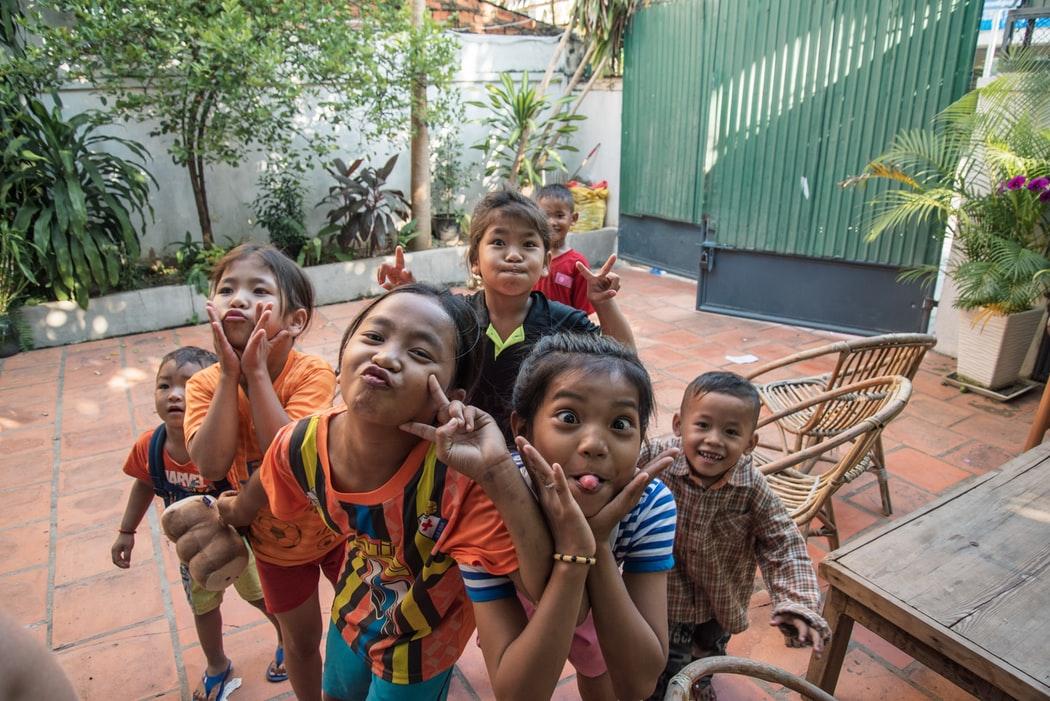
Despite the poor conditions, the children really participated in class enthusiastically and were eager to present but couldn''t.If I had the means, I''d pour in a ton of money, bring them to Korea, feed them better, clothe them, and educate them. These kids are so passionate but can''t progress because their environment doesn''t support them... It''s so sad. They were truly pure and it was amazing that they didn''t get angry or fight among themselves.
Those kids scraped together their pocket money to throw me a surprise party — it was incredibly touching... I only remember what I couldn''t do for them, so I feel even more sorry... I want to get a new job, save up, and send donated goods as soon as possible!!
I''m so sorry I couldn''t be a great teacher, and I''m really grateful they were the best students! On the last day they ran to me and hugged me as soon as they saw me, and I burst into tears. It was a feeling I''d never experienced... We made a vague promise to meet again in a year, and I really want to see them again!

"I''m so sorry I couldn''t be a better teacher, and I''m truly grateful you were the best students! On the last day the kids ran up to me and hugged me the moment they saw me, and I just burst into tears. It was a feeling I had never experienced before.. We made a vague promise to see each other again in a year, and I really want to see them again!"
[Extracurricular/Overseas Volunteer] Volunteering as a childcare teacher in Cambodia! Park Seong-hwa, gap-year participant (27, gap year after resigning) / 8-week gap year
|
# Gap year goals: find the next career path, rest, and reward myself for the hardships of working life
After resigning, I couldn''t decide on my career path, so I got consulting and joined a project recommended by the consultant.My goals for the gap year are to find my next career path, rest, and compensate myself for the hard work I endured in the workplace.
My 2018 gap year, which would become one of the most precious moments of my life, began with two months of volunteer work in Cambodia. When I first arrived at the airport and took a tuk-tuk, I felt really good. Riding the open tuk-tuk with warm wind blowing as we headed to the accommodation, I was excited and nervous to see how my two months would unfold.
But the first week after the gap year began wasn''t entirely pleasant. The first room I was assigned was so cramped and dark, and two cockroaches would come out every day... It was that kind of room. I requested a change from the accommodation manager and was able to move to a clean and comfortable room.
Another problem stemmed from language and culture: I was the only Asian while the others were all from European countries. So the topics we could share were limited, and those kids got along so well that sometimes I felt left out. I was physically ill and had nowhere to emotionally attach, so it felt a bit heartbreaking... My friends in Korea weren''t people who could understand what I was saying or feeling or who might have had similar experiences.
So I cried and felt the weight was more than I could handle alone, and I explained the emotional issues I was feeling in detail to the gap-year coordinator; they gave me warm advice by email.Based on that advice, the next time such a situation happened I didn''t avoid it but faced it. I approached more, asked questions, smiled brightly, and honestly shared my own story first.If I had just struggled alone and avoided it then, it would have become a page in my embarrassing past..
From then on, when new volunteers arrived, since I had been in Phnom Penh longer than they had, I could introduce good places and talk about my volunteering so they could feel comfortable and not intimidated. Watching them, I realized a bit...When people first arrive, since there''s no common topic it''s natural that most go through a similar process of feeling somewhat excluded like I did. I sighed in relief realizing I wasn''t the only one, and because I couldn''t just watch that happen, I approached them more and looked after them.
# Volunteering where I actively voiced my opinions and led because I wanted to help the children
When I thought of childcare volunteering, I expected to be feeding and bathing the kids (like in a daycare center),but my main duty was English teaching. In conclusion, I was more satisfied because I was teaching English.On the first day at the volunteer organization I was assigned to the 4-5 year-old class, but it was hard because neither the kids nor the teachers could communicate in English. The environment was poor so there was no system, and from writing tools to teaching materials there was almost nothing. I wondered what I was doing here... It felt like a waste of my time and energy and that I wasn''t making a positive impact on the children.
So I asked to change classes and was moved to the younger 3-year-old class, but I couldn''t imagine doing that for two months and the first two days were really tough. I gathered the courage to ask to change again and joined the 8–12-year-old class, and finally found a class that suited me; the kids had no major problems communicating in English. Communicating with the teachers was fine too.
There I was an assistant rather than leading classes, and at first I felt ''I''m not really needed here,'' so during the first three weeks I tried to spend more meaningful time with the friends I lived with rather than focusing on volunteering. Then...I felt that if I continued as it was something would be lacking, and above all I wanted to truly help the children, so I actively voiced my opinions to the homeroom teacher and ended up almost leading. Through that I genuinely began to enjoy it and could immerse myself.
The volunteer site is a 20-minute walk from the accommodation. Other friends took tuk-tuks and commuted daily, spending about $4–6 per day on transportation. You can save more by sharing with others.I walked to and from work every day. Lunch break is three hours; although you could eat lunch at the volunteer site, I always returned to the accommodation to eat and rest.
If you eat lunch at the volunteer site, you end up spending nine hours there. In return you can spend time with local teachers and volunteers who live at the organization. During lunch you feed the children, brush their teeth, and put them to sleep. I participated in lunch three times in total; it was a good experience but not something I could do every day.
The toilets at the volunteer site were so poor that I once left early because of them. It''s best to carry your own toilet paper, and I sometimes walked about five minutes to a nearby café to use the facilities. This organization has extremely poor children as well as children from ordinary families. Literally, about half were kids rescued from the streets and the rest were ordinary children. In other words, half pay and the other half attend for free.
Most of them are sociable and really like foreigners. They seem eager to learn from foreigners.
No special instruction other than English takes place at the volunteer organization. After the morning class the children go to local schools, and children who studied at local schools in the morning come in the afternoon. Even in the same class there''s a big age gap and large differences in educational levels. Most of the teachers are from the volunteer organization and have never received proper training. Rather than teaching something new, they keep teaching the same things.
During break the children mainly play games; at first I just used my smartphone and did nothing, but gradually I started playing with them. I taught them the ''369'' game and they loved it. It was a rewarding moment.
Teaching the children proper English pronunciation was a bit difficult. I would teach ten times and they''d forget it the next day... But when I learned simple Italian and French words from the European kids, their pronunciation was really hard and no matter how many times I tried I couldn''t get it right, which made me laugh. Thinking about it from the other side made me realize how hard it must be for the kids. From then on I began to understand them.
# A culture I had never experienced before — living with multinational volunteers who gave me daily culture shocks
I enjoyed experiencing a culture I had never encountered while volunteering in Cambodia.I had always wanted to visit Cambodia but knew nothing besides Angkor Wat. Living there for two months, I was glad to learn that besides Angkor Wat it is such a diverse and fascinating country. Politics, economy, education, environment — everything was so new and shocking... it was amazing.
AndLiving with multinational volunteers, I was really... almost daily culture-shocked. It''s too long and shocking to put into words. But I liked it, it was always fun, and I developed a greater ability to understand others.
During the volunteer period many people joined, and what I remember most is traveling to other regions with friends. My heart ached each time friends left one by one for their next journeys... We said ''see you next time,'' and it wasn''t an empty phrase — I''ll definitely see them again!
My first roommate, 39-year-old Elizabeth, and 52-year-old Chris, an unmarried woman who loves cycling (I mentioned ages to show that age doesn''t matter on a journey like this),
Emilia from Latvia, who fell in love during an exchange program in Spain and ended up marrying, and a young Mexican named Pasto! (He left his career as a lawyer in Mexico City to work at an NGO in Cambodia, and now both of them have jobs at a hotel in Cambodia and are building their lives.)
Shiori, a Japanese friend studying at Yonsei University! Laura, who worked as a pharmacist in Ireland but quit everything to explore the world for over a year before turning 30; Filippo, studying economics in Italy; and Amy from the Netherlands, who lived at a local organization and worked unpaid for about five months with great passion from 7 a.m. to 7 p.m., even on weekends,
Friends from Denmark I briefly met at a pub — I don''t remember their names, but they''re taking a gap year!When I asked, ''What do you do back in your country? Are you a student?'' and heard the answer, ''I am taking a gap year,'' I was really amazed!And even in Denmark there are pros and cons about gap years. Some say it''s a waste of time. Seeing this made me feel that people live the same way everywhere~ You don''t have to go abroad to do something; sometimes people just take time off and do nothing. I personally found that really fascinating.
My charming second roommate Clara from France; Liza, a Chinese friend I met while traveling in Siem Reap; Alex from Italy! (I met Alex in Siem Reap and we met again when he visited Phnom Penh.) And even though we couldn''t communicate verbally, Melissa, a lovely guesthouse staff member who always smiled and communicated perfectly through body language — everyone was so precious and memorable.
EspeciallyFriends from France who live at another guesthouse came over and cooked for about three hours — I was very interested in French cooking, so I watched, followed along, and had fun; that''s what I remember. Also, on a day when the school was closed, we rode the teacher''s scooter around the neighborhood looking for free playgrounds and played soccer and volleyball with the children, and on the way we stopped by the teacher''s home to meet the family and even had some cola.These experiences really let me see how the locals live, and it was one of the most enjoyable experiences.It was.
Through these experiences, comparing myself before and after the gap year, I think I became stronger, more positive, and my own convictions became clearer.
# On the last day, I really burst into tears. It was a feeling I''d never experienced before.
Despite the poor conditions, the children really participated in class enthusiastically and were eager to present but couldn''t.If I had the means, I''d pour in a ton of money, bring them to Korea, feed them better, clothe them, and educate them. These kids are so passionate but can''t progress because their environment doesn''t support them... It''s so sad. They were truly pure and it was amazing that they didn''t get angry or fight among themselves.
Those kids scraped together their pocket money to throw me a surprise party — it was incredibly touching... I only remember what I couldn''t do for them, so I feel even more sorry... I want to get a new job, save up, and send donated goods as soon as possible!!
I''m so sorry I couldn''t be a great teacher, and I''m really grateful they were the best students! On the last day they ran to me and hugged me as soon as they saw me, and I burst into tears. It was a feeling I''d never experienced... We made a vague promise to meet again in a year, and I really want to see them again!
Capturing the growth journeys
of our participants.

 Home
Home


Take a step out of your comfort zone.
Challenge yourself for your own sake.
Feel complete freedom.
Be happy.