|
During the two weeks I spent living in the mountain countryside, I led a life that allowed me to think simply, which helped sort out my heart that had grown tired from working life. Focusing only on simple thoughts like what to eat tomorrow or wanting to drink cool water made me surprisingly happy.
[International Volunteering/Gap Year Review] The vast continent with foreign friends: an Australian environmental conservation volunteer project
Shin Saem — gapper of the gap-year tribe (28 years old, took a gap year after resigning) / 2-week gap year
|
# Quit my dream job and escape city life into the great Australian wilderness!
I''m Shin Saem, who took a gap year after about two years of company work at age 28. I spent more than 12 hours a day at the company on average, and even most weekends at the office, leaving me physically and mentally exhausted. Although I had been working at my dream job since I was young, I kept thinking that dreams alone were no longer enough to continue that life, and worrying whether I would be able to have new dreams if I quit my dream job.
I had the courage to resign, but I couldn''t shake a feeling of emptiness, and my body was also in poor condition, so I wanted to get into nature as soon as possible.At that time I thought, why not take the gap year I couldn''t attempt as a student because of impatience about getting a job? Wanting to escape city life and live in nature, I chose an Australian environmental conservation volunteer program.
Traveling for shopping and taking photos is nice, but living with new people and being able to see Australia''s environment—full of animals and plants you can''t see in the Northern Hemisphere—up close made me certain it was the project I wanted.
After hastily applying for the gap year, I departed for Australia in about a month. It was a three-week schedule that included a two-week project plus 2–5 days of personal travel before and after. It was my first trip alone and I had never done overseas volunteer work, so I worried about everything.
But I didn''t want to just worry before leaving, so I tried to relax and decided to properly prepare a few things. As a pop-music fanatic who even worked at an international record label, I finished my travel preparations by focusing on booking shows available in Australia and packing lightly.
(Tip: Whenever I got tired during the project, I endured the hard times by thinking about the jazz artist performance I''d watch at the Sydney Opera House after completing the project! If you have some time or money, I personally recommend attending a concert or festival that''s unique to that country.)
And the gap-year book and the preparation guide sent by email were very helpful during the preparation process. I was able to pack by checking off the items on the provided packing list one by one.
Australia is a mysterious land in the Southern Hemisphere, so the journey wasn''t easy; during roughly 17 hours including layovers, I kept writing down my mindset in pencil in the book you sent, endlessly reminding myself why I was going to Australia.
After arriving in Australia I spent two days exploring Melbourne and watching a live show for a solo trip, but to avoid overexerting myself or getting into risky situations before the project, I made an effort to get back to my accommodation early and exercise to build up my stamina — which turned out to be a very good choice, since there was a lot of hard work afterward. ^^
# A daily routine in Australia where I could try different roles each day
Now I''ll talk about the project.
- Friday: After orientation at the meeting point, we took transportation to the project site (I took a train of about 3 hours to a town called Warrnambool) / shopped with the team leader at a nearby supermarket for food needed over the weekend.
- First weekend: Stay two nights at the weekend accommodation, a backpackers / use the bought ingredients to prepare breakfast and lunch individually; prepare dinner together and eat / you can tour the area with friends or go alone (I went with others to the nearby beach and park because it was my first weekend).
- First week Monday: After putting on work clothes and packing a lunch box, the environmental group''s staff came to pick us up at 8 and we traveled about 2 hours to the project site -> had about 1–2 hours of safety instructions and demonstrations of the work equipment -> on the way back we shopped for food for several days, arrived at the accommodation -> barbecue party.
- First week Tue–Thu: Depart at 7:30 to begin activities -> 1-hour lunch break -> arrive at the accommodation at 4:00, prepare dinner then free time, or depending on the day, visit the nearby town or observe wildlife.
- Fri: Pack all your luggage and leave the accommodation around 7, visit a famous beach or park near the weekend accommodation and do weekend grocery shopping -> after arriving at the weekend accommodation, free time
** On this day, usually some team members moved to other regions and new members arrived at the accommodation.
From the second weekend onward, the above schedule repeats.
The project I was in charge of was killing pine trees in the Mocamboro forest. This forest had sandy soil and was a rare type of forest, but pine trees were encroaching on the native plants there, so our mission was to find the pines and inject pesticide to kill them safely.
Before the work, the team leader provided a thorough explanation of the tasks, so I could feel a sense of purpose in what I was doing. We worked in two teams of four people each, and roles were divided into four tasks: drilling, pruning, injecting pesticide, and marking trees with paint. It was interesting to be able to try different roles each day.
Friends who had done projects in other cities said that in their previous project they spent a week just pulling weeds, so the pine-removal work was much more fun. There were hot days when the temperature in the forest rose to 40°C and cold rainy days, but the team leader adjusted the activity level as needed so we worked without overexerting ourselves.
# Friends who were different from what I imagined, but unforgettable precious memories under the Milky Way
I''ll leave the project talk here and now talk about the most important people I was with. First, the image I had imagined of the teammates was people in their twenties from various countries in Europe and the United States. I imagined myself conversing in English, improving my English skills, and traveling together.
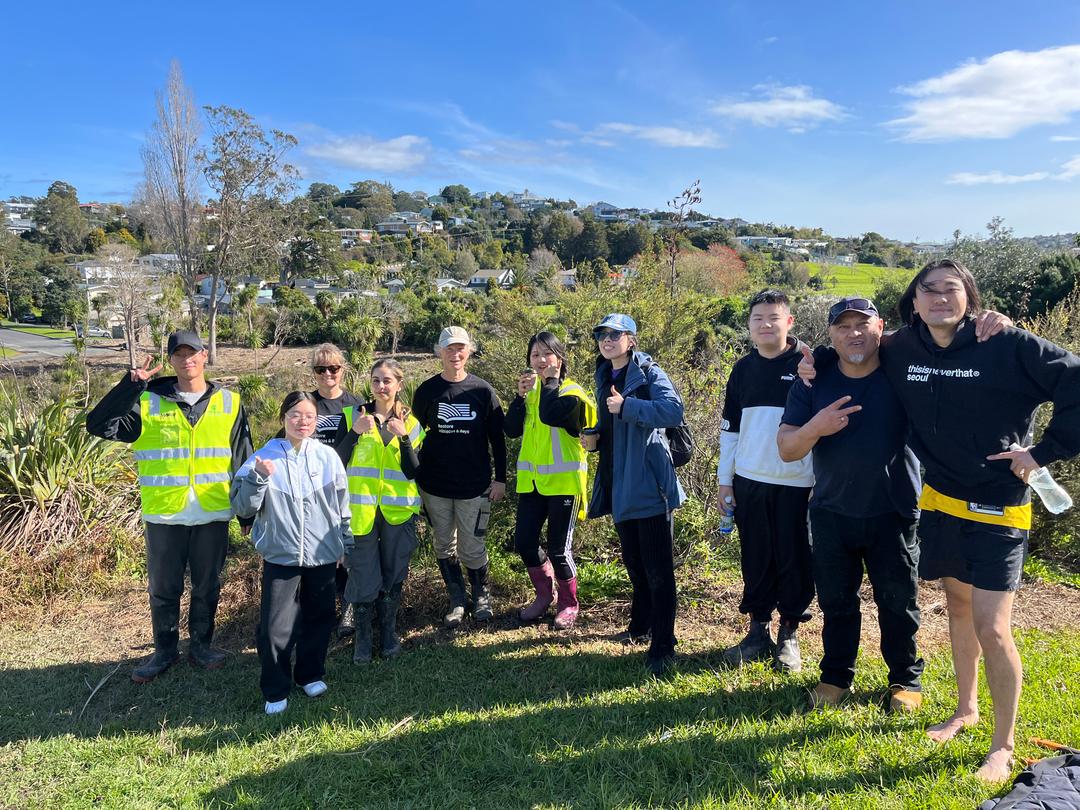
However, because of these specific expectations I was very surprised when I arrived at the Melbourne office and met the teammates. Five Japanese female university students (Risa, Ai, Hina, Misuki, Miho) were in one room, and except for Hina the other four were already close friends from the same university. Including me, there were a total of eight team members, including Quincy from the United States and Emily, a German friend who joined on Sunday.
The five Japanese friends and I stayed together for two weeks, and the other two members rotated. There are advantages to participating with friends, but the fact that four of them were already friends wasn''t necessarily great for the other teammates. It''s true that the effort to get close to others is definitely reduced compared to when you''re alone.
Still, by acting as an interpreter into English for the Japanese friends I was able to get much closer to them and we had many good memories. I also remember times when we played playlists and had dinner while recommending songs to each other.
If I had to pick the most memorable thing,it was the time we spread chairs on the lawn in front of the accommodation, crouched down together and endlessly watched the Milky Way and shooting stars while talking about this and that. Under Australia''s beautiful sky, it was a time when everyone could feel pure.
Weekend free time was really precious. One day while grocery shopping at the supermarket, an Australian lady asked if I was Korean. I said yes and continued the conversation; she told me that two of her nieces/nephews were Korean adoptees and that her relatives were having a dinner party at her house this Saturday and unexpectedly invited me to come and talk about Korea.
I was surprised but she said her sibling and their spouse, who have Korean adoptees, would also come and that the whole family was very interested in Korean culture, so I gladly accepted. I did the grocery shopping and prepared Korean food for the party, and we had really great conversations and shared each other''s food.It was a special experience to meet the cheerful Australians I had only read about in books and to be able to visit their home.
# My time in Australia helped sort out my heart that was tired from working life!
During the two weeks living in the countryside, I led a life where I could think simply, which helped sort out my weary heart from working life. Just thinking simple thoughts like what to eat tomorrow or wanting to drink cool water made me surprisingly happy. There was a spider the size of a face at the accommodation, a cute mouse, dozens of flies, and I took showers with collected rainwater, but I was truly happy.
At night, looking at the stars and writing in my journal at the table with friends while listening to songs, my heart was inexplicably full.Although Seoul, where I am now, is a very different environment, I think I''m maintaining the effort to live simply like I did then. I, who had never done grocery shopping or cooked, am now planning what to eat this week and discovering the joy of cooking, and I don''t feel as disgusted when I see bugs. ^^
To those preparing for a gap year, since everyone''s situation is different it''s hard to give specific advice, but,I can confidently say that throwing yourself into a different environment and among new people gives you more opportunities to reflect on yourself.
And you should avoid having overly high expectations and fantasies if you want to be satisfied with the present. Have courage and get on the plane! Australia is a magnificent continent full of mystery.
P.S. If you go to Melbourne, check out a historic live bar called Tote! The surrounding neighborhood also has a freer atmosphere than central Melbourne, and you''ll meet young Australians who come to see performances.
# My Gap Year Tip
(How to get there)
Since the accommodation was located about two blocks from the Meeting Point, there wasn''t much difficulty getting around. It was an awkward distance for a taxi, so carrying heavy luggage and walking about 10–20 minutes was a personal hardship.
(Language)
Since people from various countries meet, there are many occasions when you need to explain your country to one another. In preparation for this, it will be very helpful if you prepare various information about our country in English in advance!Let''s bring English information that could help foreign friends who know little about Korea—such as South Korea''s population, area, and population density!
(Accommodation)
It''s best to accept the accommodation with the simple mindset that as long as you can sleep, it''s fine.
Depending on the project, it may be a hostel, a scout camp, or camping, so rather than thinking ''it has to be here,'' an open attitude of ''anywhere is fine'' can increase your satisfaction with two weeks of accommodation.
(Meals)
About twice a week you''ll shop together within a set budget; breakfast and lunch are handled individually, and dinner is prepared together. If you bring one or two dishes to share as well as your own meals, you''ll have a happier and more plentiful dinner.
If friends are curious about Korean food, it''s good to try making it; otherwise, making something everyone enjoys—like pasta—is also good. Instant noodles can be bought at local markets, and portable items like gochujang (red pepper paste) brought from Korea can make for a fun tasting session with friends.
Surprisingly, shopping and meal preparation took up a large portion of the two-week activities and were a source of disagreements. After a long hard day of work, everyone seems to become more sensitive about food. ^^
(What to bring)
Mosquito repellent bought in Korea doesn''t work well against Australian mosquitoes, so it''s better to buy it locally. Personally, I recommend bringing a personal water bottle, and I found a sleeping mat and a hair dryer useful and used them well.
The three books I brought to read during free time were only heavy and I didn''t really read them—I brought them back as-is. It''s convenient to travel with as little luggage as possible.
My gap year:
Experience★★★★★
An experience of Australia''s natural environment you can''t see on a regular trip and the pride of doing something helpful within it.
Learning★★★★☆
The roles assigned in the project aren''t particularly difficult, so you don''t gain a great deal of new information.
Environment★★★★★
Australia''s incredible nature is almost unbelievable. It''s a great fortune to encounter kangaroos and rare birds on the way to work every morning!
Safety★★★★☆
We worked with equipment that requires caution—drills, axes, pesticides—so since the team leader can''t always watch over you, you needed to be careful yourself.
Leisure★★★★☆
The project site was about an hour away from the accommodation, so by the time I arrived and had dinner, the evening had already slipped away. Therefore, it was important to plan weekend leisure time in advance and make the most of it.



.JPG "(1).JPG")
.JPG "(8).JPG")
.JPG "(11).JPG")


.JPG "(6).JPG")
.jpg "(18).jpg")
.JPG "(9).JPG")
.jpg "(3).jpg")


.JPG "(14).JPG")


 Home
Home