Projects
|
FAQ
|
Announcements



#A 'why not give it a try' mindset; willingness to take on challenges #Created opportunities; explored new fields #Took time for self-reflection

- Harvard student, leaves for Thailand to brighten the world Yoo Seoyeon, gap year participant/gapper / 12-week gap year
|
#I wanted to create a time to pause for a moment through a gap year.

Hello, I''m 30-year-old Yoo Seoyeon, who wants to live my life bravely and spiritedly. At a time when I wanted to go somewhere, I happened upon a gap year and had a precious experience that was more than just a simple trip.
Continuous work life and personal worries piled up and I needed a break, and when I wanted to make meaningful time rather than just travel, I happened to learn about the gap year.Among the many projects on the gap year website I didn''t know which to choose, so I first took the gap year diagnostic tool.
As a result, the top recommended program was one-on-one consulting, so I applied for 1:1 consulting. At the end of the consultation the consultant recommended several projects, and after discussing we chose one of them. Because I built trust with the consultant during the consultation, I decided on and prepared the project without much worry.
I had traveled abroad a lot, so I wasn''t worried about staying overseas. But it was my first time in Southeast Asia, so I was unsure how and what to prepare. Rather than worrying about adapting to local life, I was more concerned about whether I could accomplish what I wanted to solve or gain through the gap year, and I worried that nothing might change by the time I returned home.
The main goal of this gap year was, above all, a strong desire to rest. I had always been chased by competition, and as a result I constantly felt inadequate and was not satisfied with anything in life.
Of course it was hard and I was exhausted. I wanted to create a time to pause through the gap year.
However, my tendency to always be on guard and competitive and to try to produce results continued even during the gap year, so I couldn''t fully enjoy it with a relaxed mind. The project manager told me to let go and enjoy myself, but it wasn''t easy... It was tough, but I think it was a valuable time to at least think about what it means to let go of oneself.

# My personal gap year tips

(Pro tip)
When you arrive locally you''ll initially find it hard to adapt to the unfamiliar environment. But don''t be too impatient—gradually let yourself settle in. Being impatient doesn''t make you adapt faster. For me it took about 3–4 weeks to adapt.
At first I was filled with the thought that I hated it, it was too uncomfortable, I wanted to go back to Korea, and why was I suffering like this, but after that period passed I became a bit more comfortable and gained the desire to carry out my own project. Everyone may think like I did, and getting used to the environment and bonding with new colleagues takes time, so please don''t be too hard on yourself if you''re not adapting.
I imagine you must have had a lot of 고민 deciding to take a gap year. Since it''s a difficult decision, I hope you''ll see it not as a time to achieve visible results but as a great opportunity to freely pursue what you''ve wanted to try. You don''t have to make the project a success.
In Korea, people tend to prefer being compliant members of society rather than speaking up and demanding things, and society often asks us to follow the safe, established norms it considers right. But the local organization wants you to try anything.
Just coming up with something new, finding ways to make it happen, and making the effort to realize it is enough to make our gap year truly worthwhile.
If you keep in mind these three things—don''t be impatient, relax and enjoy, and actively and proactively try anything—you can create a great gap year for yourself.
(Before going)
The international arrivals gate at Chiang Mai Airport isn''t very large or wide, so meeting the person picking you up wasn''t difficult.I arrived late at night and couldn''t join the group right away, so I stayed one night at a nearby residence hotel.
If you''re following the same schedule as me, it''s a good idea to prepare in Korea the cash for the taxi from the airport to the hotel, the hotel fee, and money for buying necessities or food at nearby convenience stores or supermarkets. (You can use airport ATMs for cash advances, but the first day will be hectic and confusing, so I recommend bringing cash in advance.)
(Language)
You don''t need to be fluent in English, but I wouldn''t recommend this project to people who get tongue-tied even with simple communication. Because of the nature of the local organization, if you''re proactive you won''t waste time and can experience a lot and achieve results.
Therefore, those who can actively challenge themselves in English are expected to have an even better time.
(Accommodation)
The local organization provided two types of accommodation: lodging on the office grounds and Thai-style houses 10–20 minutes away by car. Personally, the on-site accommodation was too scary and uncomfortable for me (bugs you hear at night, the sounds of lizards, having to go outside to use the toilet in the dark at night, etc.; it felt very barren and didn''t feel cozy at all).
I moved to a Thai-style house within 2–3 days. I think a way to lessen the shock is to completely give up expectations about the accommodations and assume in advance that they may be really basic.
(Food)
I had a lot of trouble because the food didn''t suit my taste. If you''re sensitive to the smell of spices or the texture of Southeast Asian rice, you can buy cup noodles, seaweed, gochujang, etc. at supermarkets in Chiang Mai, butyou won''t be able to find Korean instant rice (Hetbahn), so bring plenty of instant rice with you.
(What to bring)
On weekends you can get most daily necessities and food at supermarkets in Chiang Mai, so bring only enough basic supplies to use until you adapt. Bring clothes that are comfortable and easy to wash, and if needed, brands like Uniqlo, Zara, and H&M are in Chiang Mai, so you can buy things there as you go.
Although you might expect Thailand to be hot, the area where you''ll be active is at a relatively high elevation, so evenings or nights can feel chilly—bring one or two long-sleeve shirts or cardigans.
Especially in the dry season the day–night temperature difference is large, so keep that in mind. You should prepare leisure activities for your free time; otherwise you may end up just surfing the internet or feeling bored.
(Precautions)
No matter how much detailed information is provided about the gap year, I think you can''t truly feel it until you experience it yourself. The environment and culture are completely different from Korea, and because it''s volunteer work, conditions are inevitably more basic than in Korea.
# I will pull myself together and move forward in life one step at a time.

Rather than any special events during the gap year, it was the small everyday pleasures that I remember: having dinner at a Korean restaurant on my birthday and a beer at a jazz bar, a dinner with a friend who finished the project and the regular guesthouse owner''s couple, and the dinner with a local friend and a Chinese friend on my project''s last day—these are the memories that remain.
Back in Korea I was always tense, focused on producing results, and quick to be sharp over small things, so the times when I forgot everything and laughed and chatted without thinking were even more precious and special.
When I finished the gap year and returned to Korea I vowed, ''I''ll live bravely with a steel mentality!'' but I''m still fragile and get hurt and hesitate over small things. However, something has definitely changed: I''ve developed a ''might as well give it a try'' attitude.
I always made excuse after excuse to avoid challenges and I hated myself for hesitating. But through the gap year I learned that no one judges my attempts and that people welcome them, that no one can know the results without trying, and that my small attempts can lead to big changes.
Now I''m working in a new field with new people. Before the gap year this would have been unimaginable. I''ve only taken the first step, and I will surely meet many obstacles, get hurt, and hesitate, but I''ll calmly pull myself together and move forward in my life one step at a time.
My gap year was
Experience★★★★★
It was a difficult but new and special experience that I could never have in Korea''s regular elementary/middle/high school and university education or in social (work) life.
Learning★★★☆☆
I think it''s a different kind of learning from the usual. The schedule isn''t tight and there''s a lot of free time. The core of the local program is how an individual decides to make and manage their own schedule.
In other words, the organization doesn''t provide new knowledge or experiences. During that free time you reflect on yourself, think deeply, and feel the emotions of each moment with your whole body, coming to learn the real you—something you would never have known during busy life in Korea.
From the perspective of the kind of learning we normally think of, it can be quite disappointing, but if getting to know yourself can also be considered learning, it can be time well spent.
Environment★★★☆☆
Because it''s a rural village, the scenery is nice. However, frequent burnings (corn stalks, branches, and other agricultural residues) make the air unpleasant. As a rural area in Southeast Asia, there are many ants, mosquitoes, and lizards.
Safety★★★★☆
Chiang Mai and the area where the local organization is located are relatively safe. Chiang Mai is a tourist city, so people are generally friendly and you can do basic communication in English in the city.
You can think of it like a rural village in our country. It can be uncomfortable to be stared at curiously as a foreigner, but there is no excessive attention or physical contact.
However, while living at the local organization you are required to ride a motorbike, and you have to share the roads with cars that often drive quite fast; there are many curves, so you need to be careful.
Leisure★★★★★
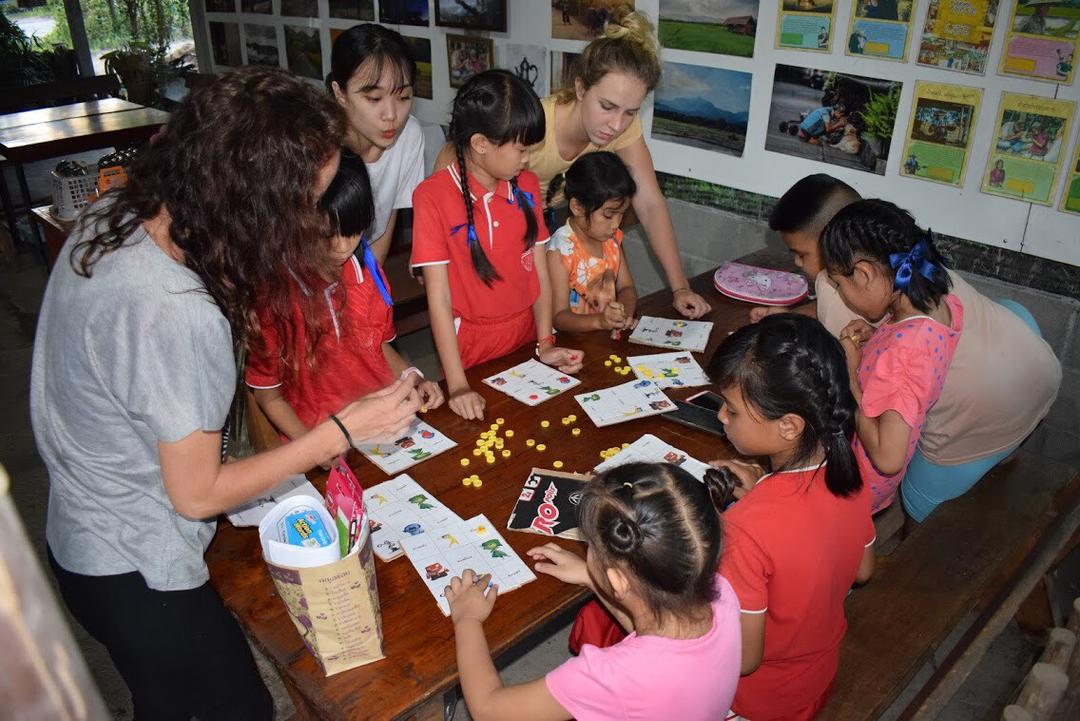
There is plenty of free time. How you spend it is up to the individual. Personally, in the evenings after the day''s work I mainly browsed the internet or read books I brought from Korea. On weekends I mainly shopped for daily necessities, food, and clothes for the coming week, or went to a Korean restaurant or watched a movie.
Some days I just lazed around at the guesthouse. (It was a great comfort just to have a clean and comfortable place with air conditioning compared to the accommodation provided by the local organization.)
Chiang Mai is ideal for people who like sports and activities. There are many activity programs for tourists, so if you want to spend your weekends in a special way, there are plenty of opportunities.

- Harvard student, leaves for Thailand to brighten the world Yoo Seoyeon, gap year participant/gapper / 12-week gap year
|
#I wanted to create a time to pause for a moment through a gap year.
Hello, I''m 30-year-old Yoo Seoyeon, who wants to live my life bravely and spiritedly. At a time when I wanted to go somewhere, I happened upon a gap year and had a precious experience that was more than just a simple trip.
Continuous work life and personal worries piled up and I needed a break, and when I wanted to make meaningful time rather than just travel, I happened to learn about the gap year.Among the many projects on the gap year website I didn''t know which to choose, so I first took the gap year diagnostic tool.
As a result, the top recommended program was one-on-one consulting, so I applied for 1:1 consulting. At the end of the consultation the consultant recommended several projects, and after discussing we chose one of them. Because I built trust with the consultant during the consultation, I decided on and prepared the project without much worry.
I had traveled abroad a lot, so I wasn''t worried about staying overseas. But it was my first time in Southeast Asia, so I was unsure how and what to prepare. Rather than worrying about adapting to local life, I was more concerned about whether I could accomplish what I wanted to solve or gain through the gap year, and I worried that nothing might change by the time I returned home.
The main goal of this gap year was, above all, a strong desire to rest. I had always been chased by competition, and as a result I constantly felt inadequate and was not satisfied with anything in life.
Of course it was hard and I was exhausted. I wanted to create a time to pause through the gap year.
However, my tendency to always be on guard and competitive and to try to produce results continued even during the gap year, so I couldn''t fully enjoy it with a relaxed mind. The project manager told me to let go and enjoy myself, but it wasn''t easy... It was tough, but I think it was a valuable time to at least think about what it means to let go of oneself.
# My personal gap year tips
(Pro tip)
When you arrive locally you''ll initially find it hard to adapt to the unfamiliar environment. But don''t be too impatient—gradually let yourself settle in. Being impatient doesn''t make you adapt faster. For me it took about 3–4 weeks to adapt.
At first I was filled with the thought that I hated it, it was too uncomfortable, I wanted to go back to Korea, and why was I suffering like this, but after that period passed I became a bit more comfortable and gained the desire to carry out my own project. Everyone may think like I did, and getting used to the environment and bonding with new colleagues takes time, so please don''t be too hard on yourself if you''re not adapting.
I imagine you must have had a lot of 고민 deciding to take a gap year. Since it''s a difficult decision, I hope you''ll see it not as a time to achieve visible results but as a great opportunity to freely pursue what you''ve wanted to try. You don''t have to make the project a success.
In Korea, people tend to prefer being compliant members of society rather than speaking up and demanding things, and society often asks us to follow the safe, established norms it considers right. But the local organization wants you to try anything.
Just coming up with something new, finding ways to make it happen, and making the effort to realize it is enough to make our gap year truly worthwhile.
If you keep in mind these three things—don''t be impatient, relax and enjoy, and actively and proactively try anything—you can create a great gap year for yourself.
(Before going)
The international arrivals gate at Chiang Mai Airport isn''t very large or wide, so meeting the person picking you up wasn''t difficult.I arrived late at night and couldn''t join the group right away, so I stayed one night at a nearby residence hotel.
If you''re following the same schedule as me, it''s a good idea to prepare in Korea the cash for the taxi from the airport to the hotel, the hotel fee, and money for buying necessities or food at nearby convenience stores or supermarkets. (You can use airport ATMs for cash advances, but the first day will be hectic and confusing, so I recommend bringing cash in advance.)
(Language)
You don''t need to be fluent in English, but I wouldn''t recommend this project to people who get tongue-tied even with simple communication. Because of the nature of the local organization, if you''re proactive you won''t waste time and can experience a lot and achieve results.
Therefore, those who can actively challenge themselves in English are expected to have an even better time.
(Accommodation)
The local organization provided two types of accommodation: lodging on the office grounds and Thai-style houses 10–20 minutes away by car. Personally, the on-site accommodation was too scary and uncomfortable for me (bugs you hear at night, the sounds of lizards, having to go outside to use the toilet in the dark at night, etc.; it felt very barren and didn''t feel cozy at all).
I moved to a Thai-style house within 2–3 days. I think a way to lessen the shock is to completely give up expectations about the accommodations and assume in advance that they may be really basic.
(Food)
I had a lot of trouble because the food didn''t suit my taste. If you''re sensitive to the smell of spices or the texture of Southeast Asian rice, you can buy cup noodles, seaweed, gochujang, etc. at supermarkets in Chiang Mai, butyou won''t be able to find Korean instant rice (Hetbahn), so bring plenty of instant rice with you.
(What to bring)
On weekends you can get most daily necessities and food at supermarkets in Chiang Mai, so bring only enough basic supplies to use until you adapt. Bring clothes that are comfortable and easy to wash, and if needed, brands like Uniqlo, Zara, and H&M are in Chiang Mai, so you can buy things there as you go.
Although you might expect Thailand to be hot, the area where you''ll be active is at a relatively high elevation, so evenings or nights can feel chilly—bring one or two long-sleeve shirts or cardigans.
Especially in the dry season the day–night temperature difference is large, so keep that in mind. You should prepare leisure activities for your free time; otherwise you may end up just surfing the internet or feeling bored.
(Precautions)
No matter how much detailed information is provided about the gap year, I think you can''t truly feel it until you experience it yourself. The environment and culture are completely different from Korea, and because it''s volunteer work, conditions are inevitably more basic than in Korea.
# I will pull myself together and move forward in life one step at a time.
Rather than any special events during the gap year, it was the small everyday pleasures that I remember: having dinner at a Korean restaurant on my birthday and a beer at a jazz bar, a dinner with a friend who finished the project and the regular guesthouse owner''s couple, and the dinner with a local friend and a Chinese friend on my project''s last day—these are the memories that remain.
Back in Korea I was always tense, focused on producing results, and quick to be sharp over small things, so the times when I forgot everything and laughed and chatted without thinking were even more precious and special.
When I finished the gap year and returned to Korea I vowed, ''I''ll live bravely with a steel mentality!'' but I''m still fragile and get hurt and hesitate over small things. However, something has definitely changed: I''ve developed a ''might as well give it a try'' attitude.
I always made excuse after excuse to avoid challenges and I hated myself for hesitating. But through the gap year I learned that no one judges my attempts and that people welcome them, that no one can know the results without trying, and that my small attempts can lead to big changes.
Now I''m working in a new field with new people. Before the gap year this would have been unimaginable. I''ve only taken the first step, and I will surely meet many obstacles, get hurt, and hesitate, but I''ll calmly pull myself together and move forward in my life one step at a time.
My gap year was
Experience★★★★★
It was a difficult but new and special experience that I could never have in Korea''s regular elementary/middle/high school and university education or in social (work) life.
Learning★★★☆☆
I think it''s a different kind of learning from the usual. The schedule isn''t tight and there''s a lot of free time. The core of the local program is how an individual decides to make and manage their own schedule.
In other words, the organization doesn''t provide new knowledge or experiences. During that free time you reflect on yourself, think deeply, and feel the emotions of each moment with your whole body, coming to learn the real you—something you would never have known during busy life in Korea.
From the perspective of the kind of learning we normally think of, it can be quite disappointing, but if getting to know yourself can also be considered learning, it can be time well spent.
Environment★★★☆☆
Because it''s a rural village, the scenery is nice. However, frequent burnings (corn stalks, branches, and other agricultural residues) make the air unpleasant. As a rural area in Southeast Asia, there are many ants, mosquitoes, and lizards.
Safety★★★★☆
Chiang Mai and the area where the local organization is located are relatively safe. Chiang Mai is a tourist city, so people are generally friendly and you can do basic communication in English in the city.
You can think of it like a rural village in our country. It can be uncomfortable to be stared at curiously as a foreigner, but there is no excessive attention or physical contact.
However, while living at the local organization you are required to ride a motorbike, and you have to share the roads with cars that often drive quite fast; there are many curves, so you need to be careful.
Leisure★★★★★
There is plenty of free time. How you spend it is up to the individual. Personally, in the evenings after the day''s work I mainly browsed the internet or read books I brought from Korea. On weekends I mainly shopped for daily necessities, food, and clothes for the coming week, or went to a Korean restaurant or watched a movie.
Some days I just lazed around at the guesthouse. (It was a great comfort just to have a clean and comfortable place with air conditioning compared to the accommodation provided by the local organization.)
Chiang Mai is ideal for people who like sports and activities. There are many activity programs for tourists, so if you want to spend your weekends in a special way, there are plenty of opportunities.
Capturing the growth journeys
of our participants.

 Home
Home


Take a step out of your comfort zone.
Challenge yourself for your own sake.
Feel complete freedom.
Be happy.