Projects
|
FAQ
|
Announcements



#Change in mindset, broadened perspective #Wisdom, improved English skills #Felt the joy of looking toward distant places

The biggest change has been my mindset. For me, Korea was a place with a harsh reality and foreign countries seemed like ideal places removed from reality. Before taking a gap year, I thought that after graduation, if I couldn''t get into the place I wanted, a job that paid a lot, or a position recognized by others, my life would be a failure. That was what I believed before my gap year. But after going through the gap year, I now look farther ahead and am enjoying myself.
-Harvard student, leaves for Thailand to brighten the world / Lee Dayeon — gap-year participant (gapper) |
Language
My English level before participating was:Everyday conversation: OK
During participation:No problem
My language tip!
Usually,I use Englishmainly. Except for business English needed for work, having only conversational-level English is perfectly sufficient to get by. The staff and children at the institution and most Thai people are not very fluent in English, so if you study basic Thai before going, you can more easily get close to the children or villagers.
Meals
Meal arrangement:Used provided meals
My tip about meals!
For the first few weeks I ate at the workplace cafeteria. After that I occasionally bought food at restaurants not far from work. You can also buy bread, jam, and butter at the supermarket and make toast.
What to bring / Packing
Items that were a burden to have:I brought running shoes planning to exercise, but it was so hot that exercising was unthinkable. In the end I never wore the running shoes and came back with them.
Items that were convenient to have:I broughta digital cameraand took a lot of photos with it. Not only on outings, but capturing everyday moments at work became great memories.
Tips about what to bring!
You can get Thai-style pants and t-shirts cheaply at the local weekend market. Don''t pack lots of heavy clothes—it''s better to buy them there.
Not only clothes, but most daily necessities like shampoo and conditioner can be purchased in Thailand.
Q.Please give a brief self-introduction.
Hello. I''m Lee Dayeon, who spent a gap year in Chiang Mai, Thailand. High self-esteem and a bright appearance are my charms, and I enjoy spreading positive thinking and happy energy.
Q.What was the reason you chose the gap year program you participated in?
Before taking a gap year, I wanted to work in the United States. I struggled with my language skills and my parents'' objections; during that conflict I met Director An Si-jun, and through ongoing consultations he recommended a volunteer-internship program in Thailand. At first I wanted to join another gap year program, but because the director knew my personality and disposition, he strongly recommended this one!!Chiang Mai, ThailandI went there.
Q.Did you have any concerns about staying abroad for an extended period?
Since I had wanted to live abroad long-term from a young age, rather than worry...excitementIt was greater. Also, the 12-week period felt short to me, so I actually wanted to stay a little longer.
Q.What preparations did you make before leaving the country?
Aside from obtaining the visa, there wasn''t much I had to specially prepare. I packed clothes, basic medicines, and essential toiletries.
Q.How was the structure and organization of the program you participated in?
The pre-departure orientation held at the Korea Gap Year office was a great help in carrying out the gap year program. Because I went with an understanding of the project and some ideas, it was a bit less difficult to start the work and I was able to begin happily.
Q.Can you tell us about your daily routine?
08:00-09:00 Arrive at work
09:00-12:00 Prepare the drawing activities to be done with the children in the afternoon and come up with ideas for drawing themes.
12:00-13:00 Lunch break
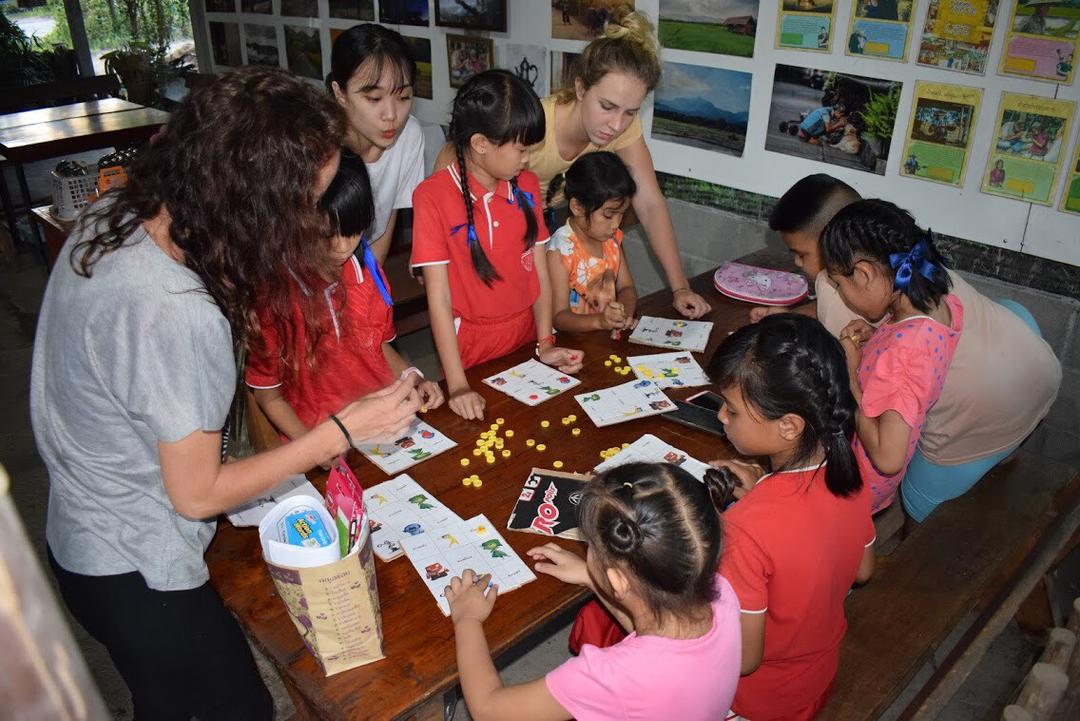
13:00-16:00Participate in other volunteers'' programs together (public health, art therapy, visiting community people).
16:00-18:00 Drawing with the children, Korean lessons (Korean classes are twice a week).
From 18:00 onwards Finish work and free time
Q.About the gap year program I participated in: what I liked and what moved me, what I learned, what I realized, etc.
I loved simply spending time in an unfamiliar environment with not a single Korean around. Although I was just one Korean staying for a short time, on my last day at the workplace I was touched by children who blocked my way so I couldn''t leave. During the working period there were many times I worried whether I was doing things properly, but the founder, Michael Schaefer, treated me so well and told me he believed I could do anything when I returned to Korea, which moved me to tears.
I learned basic Thai, and because I was with volunteers of various nationalities my English conversational skills improved a lot.
Q.Please tell us about someone you met during the gap year who left an impression.
During my gap year working in Thailand I met foreign volunteer interns. There were interns from the U.S., the U.K., Canada, Peru, France, and China! Since they were all foreigners...cultureas well,languagewere different, so I thought it would be hard to become close. But everyone had great personalities and treated me kindly and we got along well. Among them, I became especially close with Americans Eric and Mary.
Q.What advice would you give to future participants of the gap year program?
It will be difficult at first, but after a short time you''ll enjoy it a lot. And after that, don''t lose that joy and passion—try to keep them going. Starting about 2–3 weeks before returning to Korea you might feel distracted and unable to concentrate on work, so...manage your mindsetwell. Fight on!
Q.If you compare before and after participating in the gap year program?
The biggest change is mymindset. For me, I used to think Korea was a place with harsh realities and foreign countries were ideal, unreal places. I believed that after graduation, if I didn''t get into the place I wanted, a high-paying job, or a job that others recognized, my life would be a failure. That was my thinking before taking a gap year. But after going through the gap year, I now spend my time happily with a perspective that looks further ahead.
Q.Tell us your personal travel routes you discovered during the gap year.
I didn''t travel much during the gap year. On weekends when I had time I visited places near Chiang Mai like Chiang Rai and Pai. Since the workplace is located in northern Thailand, it''s probably best to start traveling in the nearby northern areas.
Q.My personal gap year story in Thailand
Originally I wanted to go to the United States to work. But realistically my language skills were lacking and I wasn''t confident I''d be doing the job I wanted. On top of that, my parents opposed it, so I had many worries. Then I met CEO An Si-jun, and after studying English in the Philippines for three months, I decided to spend my gap year working as an intern at a local Thai NGO.
When I arrived in Thailand I was very taken aback. What I saw before my eyes were grass and trees, mosquitoes and many insects. I didn''t expect a great working environment, but in the hot Thai weather there wasn''t even an air conditioner, and the first impression of my workplace, surrounded by nature, was shocking.

Early on at work,a relaxed work environmentThis was unfamiliar. Unlike the passive way work is handled in Korea, no one instructed me or asked me what I should do. Flexible start and end times, and being able to leave your desk when you had work outside, also surprised me. But after adapting, I felt that working in that way was actually more efficient. Before leaving the country, I...Postcard Project’ and planned and carried it out during my gap year. It was a project in which children''s own drawings were put on postcards to sell or to give as gifts to donors.It meant connecting children who are hard to meet in person with donors through postcards.It had that meaning. To carry out the project, I used to draw pictures with the children on the postcards, and thanks to that I became much closer to them.
One memorable moment during my gap year was when the children cared for by the organization I worked for called mynamewhen they called it. When I first met the children, they even tried not to make eye contact with me, but they called my name when they finished work and went home, when we painted together, and when we spent time on weekends. In a relationship where we couldn''t communicate fluently by language, them calling my name was a great source of emotion and reward for me.
I learned a lot in a place where there wasn''t a single Korean — my colleagues were American, French, Peruvian, and Chinese. Being with native speakers 24/7 improved my English, and I had deep conversations about their cultures and values. I used to think that Americans would all be ''cool'' because of American culture, but my gap year changed that view a lot. While there are cultural differences between countries and ethnicities, the fact that individuals'' personalities and characters differ is the same everywhere.There are conservative people in open cultures and open-minded people in conservative cultures. Some aren''t endlessly ''cool'' and hold grudges, while others move on so cleanly it''s admirable. The variety of personalities you can see in our country wasn''t any different abroad.

TravelI also traveled a bit. I visited Pai, Chiang Rai, and Chiang Mai in the northern region, and on my birthday I traveled alone to Bangkok and ran a project to receive birthday wishes from foreigners, even producing a video. As time went on, going out in Chiang Mai felt less like traveling and more like taking a walk around the neighborhood, giving me a feeling of being not a tourist but alocalI also felt like a local. But being able to go abroad as if roaming around a familiar neighborhood was a new and special experience.
There is one person I met during my gap year who remains memorable. From the moment I decided to take a gap year, anxiety always existed in my heart. I was a student at a regional university who realized reality too late, and the things I wanted to do only slowly began to appear, so I was someone who had done things but hadn''t properly left anything behind or built anything. Because of that, I lived as if chased, and I thought that if I didn''t get a so-called good job after graduation, my life would be unhappy. But while spending my gap year I met a really cool woman among the colleagues I worked with, and things changed.
Shespeaks four languages, has traveled to over 20 countries, was CEO of a restaurant-cafe, and later worked in HR at a well-known company whose name everyone would recognize. I assumed such a woman must have been exceptional from the start. While spending time with her I heard an astonishing story: the salary at her first job was1,000,000 wonThat''s what it was. What she said next surprised me even more.She said that even if she received a lower salary, she would have worked at that company; a company with much to learn from is worth going to—even if you have to pay to learn.
At that moment I felt as if I''d been struck hard on the head with a hammer. If I need ten years for what I want to do, I shouldn''t complain that ten years is far away but...fill it tightly with experience and knowledge.—her words. I learned her wisdom that even if the present isn''t entirely satisfying, you must do your best to prepare for the future. I met many people and had many conversations, but this was the moment when my worries were most clearly resolved.
The biggest change has been my mindset. For me, Korea was a place with a harsh reality and foreign countries seemed like ideal places removed from reality. Before taking a gap year, I thought that after graduation, if I couldn''t get into the place I wanted, a job that paid a lot, or a position recognized by others, my life would be a failure. That was what I believed before my gap year. But after going through the gap year, I now look farther ahead and am enjoying myself.
-Harvard student, leaves for Thailand to brighten the world / Lee Dayeon — gap-year participant (gapper) |
Language
My English level before participating was:Everyday conversation: OK
During participation:No problem
My language tip!
Usually,I use Englishmainly. Except for business English needed for work, having only conversational-level English is perfectly sufficient to get by. The staff and children at the institution and most Thai people are not very fluent in English, so if you study basic Thai before going, you can more easily get close to the children or villagers.
Meals
Meal arrangement:Used provided meals
My tip about meals!
For the first few weeks I ate at the workplace cafeteria. After that I occasionally bought food at restaurants not far from work. You can also buy bread, jam, and butter at the supermarket and make toast.
What to bring / Packing
Items that were a burden to have:I brought running shoes planning to exercise, but it was so hot that exercising was unthinkable. In the end I never wore the running shoes and came back with them.
Items that were convenient to have:I broughta digital cameraand took a lot of photos with it. Not only on outings, but capturing everyday moments at work became great memories.
Tips about what to bring!
You can get Thai-style pants and t-shirts cheaply at the local weekend market. Don''t pack lots of heavy clothes—it''s better to buy them there.
Not only clothes, but most daily necessities like shampoo and conditioner can be purchased in Thailand.
Q.Please give a brief self-introduction.
Hello. I''m Lee Dayeon, who spent a gap year in Chiang Mai, Thailand. High self-esteem and a bright appearance are my charms, and I enjoy spreading positive thinking and happy energy.
Q.What was the reason you chose the gap year program you participated in?
Before taking a gap year, I wanted to work in the United States. I struggled with my language skills and my parents'' objections; during that conflict I met Director An Si-jun, and through ongoing consultations he recommended a volunteer-internship program in Thailand. At first I wanted to join another gap year program, but because the director knew my personality and disposition, he strongly recommended this one!!Chiang Mai, ThailandI went there.
Q.Did you have any concerns about staying abroad for an extended period?
Since I had wanted to live abroad long-term from a young age, rather than worry...excitementIt was greater. Also, the 12-week period felt short to me, so I actually wanted to stay a little longer.
Q.What preparations did you make before leaving the country?
Aside from obtaining the visa, there wasn''t much I had to specially prepare. I packed clothes, basic medicines, and essential toiletries.
Q.How was the structure and organization of the program you participated in?
The pre-departure orientation held at the Korea Gap Year office was a great help in carrying out the gap year program. Because I went with an understanding of the project and some ideas, it was a bit less difficult to start the work and I was able to begin happily.
Q.Can you tell us about your daily routine?
08:00-09:00 Arrive at work
09:00-12:00 Prepare the drawing activities to be done with the children in the afternoon and come up with ideas for drawing themes.
12:00-13:00 Lunch break
13:00-16:00Participate in other volunteers'' programs together (public health, art therapy, visiting community people).
16:00-18:00 Drawing with the children, Korean lessons (Korean classes are twice a week).
From 18:00 onwards Finish work and free time
Q.About the gap year program I participated in: what I liked and what moved me, what I learned, what I realized, etc.
I loved simply spending time in an unfamiliar environment with not a single Korean around. Although I was just one Korean staying for a short time, on my last day at the workplace I was touched by children who blocked my way so I couldn''t leave. During the working period there were many times I worried whether I was doing things properly, but the founder, Michael Schaefer, treated me so well and told me he believed I could do anything when I returned to Korea, which moved me to tears.
I learned basic Thai, and because I was with volunteers of various nationalities my English conversational skills improved a lot.
Q.Please tell us about someone you met during the gap year who left an impression.
During my gap year working in Thailand I met foreign volunteer interns. There were interns from the U.S., the U.K., Canada, Peru, France, and China! Since they were all foreigners...cultureas well,languagewere different, so I thought it would be hard to become close. But everyone had great personalities and treated me kindly and we got along well. Among them, I became especially close with Americans Eric and Mary.
Q.What advice would you give to future participants of the gap year program?
It will be difficult at first, but after a short time you''ll enjoy it a lot. And after that, don''t lose that joy and passion—try to keep them going. Starting about 2–3 weeks before returning to Korea you might feel distracted and unable to concentrate on work, so...manage your mindsetwell. Fight on!
Q.If you compare before and after participating in the gap year program?
The biggest change is mymindset. For me, I used to think Korea was a place with harsh realities and foreign countries were ideal, unreal places. I believed that after graduation, if I didn''t get into the place I wanted, a high-paying job, or a job that others recognized, my life would be a failure. That was my thinking before taking a gap year. But after going through the gap year, I now spend my time happily with a perspective that looks further ahead.
Q.Tell us your personal travel routes you discovered during the gap year.
I didn''t travel much during the gap year. On weekends when I had time I visited places near Chiang Mai like Chiang Rai and Pai. Since the workplace is located in northern Thailand, it''s probably best to start traveling in the nearby northern areas.
Q.My personal gap year story in Thailand
Originally I wanted to go to the United States to work. But realistically my language skills were lacking and I wasn''t confident I''d be doing the job I wanted. On top of that, my parents opposed it, so I had many worries. Then I met CEO An Si-jun, and after studying English in the Philippines for three months, I decided to spend my gap year working as an intern at a local Thai NGO.
When I arrived in Thailand I was very taken aback. What I saw before my eyes were grass and trees, mosquitoes and many insects. I didn''t expect a great working environment, but in the hot Thai weather there wasn''t even an air conditioner, and the first impression of my workplace, surrounded by nature, was shocking.
Early on at work,a relaxed work environmentThis was unfamiliar. Unlike the passive way work is handled in Korea, no one instructed me or asked me what I should do. Flexible start and end times, and being able to leave your desk when you had work outside, also surprised me. But after adapting, I felt that working in that way was actually more efficient. Before leaving the country, I...Postcard Project’ and planned and carried it out during my gap year. It was a project in which children''s own drawings were put on postcards to sell or to give as gifts to donors.It meant connecting children who are hard to meet in person with donors through postcards.It had that meaning. To carry out the project, I used to draw pictures with the children on the postcards, and thanks to that I became much closer to them.
One memorable moment during my gap year was when the children cared for by the organization I worked for called mynamewhen they called it. When I first met the children, they even tried not to make eye contact with me, but they called my name when they finished work and went home, when we painted together, and when we spent time on weekends. In a relationship where we couldn''t communicate fluently by language, them calling my name was a great source of emotion and reward for me.
I learned a lot in a place where there wasn''t a single Korean — my colleagues were American, French, Peruvian, and Chinese. Being with native speakers 24/7 improved my English, and I had deep conversations about their cultures and values. I used to think that Americans would all be ''cool'' because of American culture, but my gap year changed that view a lot. While there are cultural differences between countries and ethnicities, the fact that individuals'' personalities and characters differ is the same everywhere.There are conservative people in open cultures and open-minded people in conservative cultures. Some aren''t endlessly ''cool'' and hold grudges, while others move on so cleanly it''s admirable. The variety of personalities you can see in our country wasn''t any different abroad.
TravelI also traveled a bit. I visited Pai, Chiang Rai, and Chiang Mai in the northern region, and on my birthday I traveled alone to Bangkok and ran a project to receive birthday wishes from foreigners, even producing a video. As time went on, going out in Chiang Mai felt less like traveling and more like taking a walk around the neighborhood, giving me a feeling of being not a tourist but alocalI also felt like a local. But being able to go abroad as if roaming around a familiar neighborhood was a new and special experience.
There is one person I met during my gap year who remains memorable. From the moment I decided to take a gap year, anxiety always existed in my heart. I was a student at a regional university who realized reality too late, and the things I wanted to do only slowly began to appear, so I was someone who had done things but hadn''t properly left anything behind or built anything. Because of that, I lived as if chased, and I thought that if I didn''t get a so-called good job after graduation, my life would be unhappy. But while spending my gap year I met a really cool woman among the colleagues I worked with, and things changed.
Shespeaks four languages, has traveled to over 20 countries, was CEO of a restaurant-cafe, and later worked in HR at a well-known company whose name everyone would recognize. I assumed such a woman must have been exceptional from the start. While spending time with her I heard an astonishing story: the salary at her first job was1,000,000 wonThat''s what it was. What she said next surprised me even more.She said that even if she received a lower salary, she would have worked at that company; a company with much to learn from is worth going to—even if you have to pay to learn.
At that moment I felt as if I''d been struck hard on the head with a hammer. If I need ten years for what I want to do, I shouldn''t complain that ten years is far away but...fill it tightly with experience and knowledge.—her words. I learned her wisdom that even if the present isn''t entirely satisfying, you must do your best to prepare for the future. I met many people and had many conversations, but this was the moment when my worries were most clearly resolved.
Capturing the growth journeys
of our participants.

 Home
Home


Take a step out of your comfort zone.
Challenge yourself for your own sake.
Feel complete freedom.
Be happy.