Projects
|
FAQ
|
Announcements



#Expanded perspective, regained confidence #Friends of various nationalities, the fulfillment of volunteering #Bonding with the children, deep gratitude

The children didn’t know any Korean, but they asked me to teach them Korean first, and when they later spoke to me using the Korean I had taught them I felt very rewarded. There was also a child who didn’t want to get close to me and was very shy. But at one moment when they opened up to me and smiled, I felt great satisfaction as well.
- Cambodia English education volunteer work that plants the seeds of learning in children / Kim Dan-bi, Gapyear Tribe Gapper |
Q.Please give a brief self-introduction :)
Hello, I completed the Statistics program at Sookmyung Women’s University and I’m a student who is just beginning to prepare for employment.
Q.What prompted you to decide on this gap year program?
Before going to Cambodia for my gap year, I had never been abroad.
I decided because I wanted to gain overseas experience, do something meaningful, and meet friends from other countries through this opportunity.
Q.Were you originally interested in volunteer work?
I wasn’t especially passionate about volunteering, but opportunities kept coming up so I continued doing it.
In university I was active in a medical volunteer club for about a year and a half, and I also volunteered at a wheelchair marathon for people with disabilities.

ⓒKorea Gapyear
Q.What is the difference between the volunteering you did before and this gap year program?
In the medical volunteering I measured blood pressure at a hospital. So it felt more like handling tasks than volunteering, and I wondered whether it was true volunteering.
However, the volunteering I did this time was about helping people in need up close. So at first it was a bit difficult. Previously I only measured blood pressure and did set tasks, but in Cambodia...I had to interact directly with the children, encounter a different culture, and adapt..
Q.Then how did you overcome those difficulties?
From the start I went with the mindset of accepting every situation I would experience there. So naturally...a positive attitudeI carried out activities with a positive attitude, and I began to be gradually accepted by the children.
Q.It was your first time going abroad — weren’t you worried?
I worried: I’m not good at English, will I be able to adapt? Also, I haven’t experienced much hardship, so will I be able to live well there?
Q.What was the most difficult thing you actually faced on site?
Most of the foreign friends I worked with were French. So because of language issues, it was difficult to communicate smoothly.It would have been better if there had been more friends from English-speaking countries, but when I went, many were from European countries.
Q.Were there any difficulties while doing the volunteer work?
I''m not really the type to like children (laughs). So I was surprised when the kids clung to me and hugged me even though I was a stranger. But as they opened up and approached me, I tried to accept them and gradually felt more at ease, and rather...I was grateful to the children.

ⓒKorea Gapyear
Q.You said you''re not usually fond of children; didn''t that bother you before you went?
Strangely, I didn''t have that worry. I only thought about how I could adapt and become close quickly once I got there.
In fact, I was able to adapt faster thanks to the children. They kept showing me affection and expressing themselves to me.
Q.I''d like to know about the structure and organization of the program you participated in.
Volunteerswhen there are manyand when there are few, it''s different.
When I went, there were as many as 30 volunteers — a lot.
In those cases, they make a schedule so that some people work in the morning, others in the afternoon, and they divide roles like that.
Even making such schedules was done through meetings among volunteers, who voluntarily divided the roles and then carried them out.
Surprisingly, it ran smoothly without conflicts. For example, if someone voluntarily decided to take on a project, they supported it and the organization even provided the support necessary to carry out the project.
Q. Danbi, what kind of project did you do?
Idid a project teaching KoreanI did. But I was the only one who could teach Korean, so it was hard to get support.
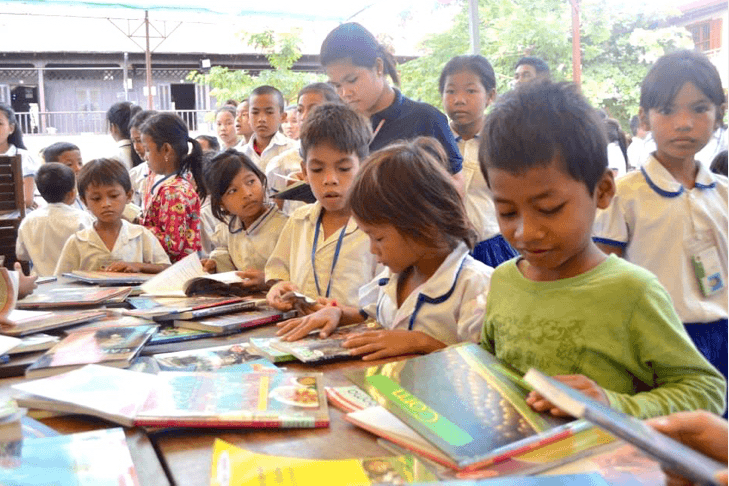
Rather than that, I did a lot of work supporting other volunteers'' projects, like repairing the library.
And when volunteersare fewthere are about 5–6 people.
In that case the schedule split into morning and afternoon disappears, and volunteers who can teach give lessons in the morning and in the afternoon they take care of and play with the children, or they work on their own personal projects.
Q.How is English education for the children conducted?
Classes are divided by level. The lesson content differs by class: lower-level classes teach English vocabulary, while higher-level classes teach grammar, etc.
Q.Please tell me about a typical day there.
I get up around 7 a.m. and go to the institution which is five minutes away. We do morning assembly and I play with the children as they get ready for school,
From 10 to 11, I teach a class, conducting an English lesson for about 50 minutes.
At lunchtime we eat and rest, and in the afternoon I prepare for the next class or handle simple administrative tasks. I also teach the children Korean or work on personal projects, and in my free time I make bracelets with the kids or do outdoor activities.

ⓒKorea Gapyear
Q.Do those activities require professional expertise?
It''s not difficult at all!The willingness to help the childrenIf you have that, you can carry out all activities without difficulty.
Q.Please tell us about a volunteer you remember from those you worked with.
I remember my Belgian roommate, a French friend who helped me a lot, and the administrator Antony.
My roommate was very talkative and kept starting conversations; we talked a lot. At first I could only understand a little English and could only say basic things, but thanks to this friend I improved a lot. And because I didn''t like being alone, whenever there was a gathering or time to hang out with friends they always took me along.
The French friend interpreted for me during meetings when I couldn''t understand French and tried to help resolve the difficulties I faced in daily life. I''m still in touch with that friend.
The administrator Antony was actually hard to see because he had so many things to take care of and was very busy.
But one day I was sick with homesickness; he brought me food and, when I was depressed and alone, talked to me and took care of me so I could return to Korea feeling better.
Q.How did you spend your free time?
I went to the market with my roommate or hung out with friends. My roommate had come to volunteer with friends, so we sometimes went to a nearby hotel to go swimming with them.
I also hadn''t planned to travel originally, but my French friends were going to Angkor Wat and invited me along, so I went on an unplanned trip.Angkor Wat3 days,BattambangWe traveled for 2 days like that.
At Angkor Wat we saw the temples, then went to Battambang, which was truly like a treasure. We saw a bat cave and went to a crocodile farm where we saw and even touched baby crocodiles, and there is a lake called Tonle Sap where you can take a boat. The lake is really beautiful. If you''re a participant coming next time, be sure to bring a camera. There are so many beautiful scenes.
Q.If it''s five days, I''d have to take time off work — is that possible?
You can go as long as you tell us a week in advance.
Q.When did you feel the most rewarded during the activities?
The children didn''t know any Korean at all,KoreanThey asked me to teach them Korean first, and when they used the Korean I taught to speak to me the next time, I felt greatly rewarded.Also, there was a child who didn''t want to get close to me and was very shy. But at some point they opened their heart to me and smiled, and I felt a lot of fulfillment then as well.

ⓒKorea Gapyear
Q.What are the advantages and disadvantages of this program?
AdvantagesThe advantage is that you can meet many friends from various nationalities and thereby experience diverse cultures, and that you can live in Cambodia long-term at an affordable price and experience the culture.
Also, since it''s still not fully developed, there are many opportunities to try different things.
DisadvantagesThe disadvantage is that there can be some inconveniences due to cultural differences.
When friends from different countries get together, it can be subtly stressful if, for example, someone doesn''t wash regularly.
Q.Who would you recommend this gap year program to!?
Open-minded people!Actually, not being able to speak English can be a bit inconvenient, but it''s not very important. On the contrary, there were times when speaking very precise English meant others couldn''t understand me.
Also, someone who wants to enjoy time alone while at the same time trying activities and having fun with various people.
Q.What has changed after the two-month gap year period?
Icurrentlybecame grateful for the environment I''m living in. Things like air conditioning on the subway, a house without mosquitoes, etc. (laughs)
Q.Please tell us your future plans.
I''m going to prepare for getting a job.
However, after taking a gap year I also began to consider working abroad. This toois a change that came after taking a gap yearis one of them.

ⓒKorea Gapyear
Q. Lastly, what does a gap year mean to Danbi?
Given to me before getting a jobthe final gift.
Because I had never traveled abroad, and I had never lived outside Korea or thought beyond it, this opportunity broadened my perspective on life.
The children didn’t know any Korean, but they asked me to teach them Korean first, and when they later spoke to me using the Korean I had taught them I felt very rewarded. There was also a child who didn’t want to get close to me and was very shy. But at one moment when they opened up to me and smiled, I felt great satisfaction as well.
- Cambodia English education volunteer work that plants the seeds of learning in children / Kim Dan-bi, Gapyear Tribe Gapper |
Q.Please give a brief self-introduction :)
Hello, I completed the Statistics program at Sookmyung Women’s University and I’m a student who is just beginning to prepare for employment.
Q.What prompted you to decide on this gap year program?
Before going to Cambodia for my gap year, I had never been abroad.
I decided because I wanted to gain overseas experience, do something meaningful, and meet friends from other countries through this opportunity.
Q.Were you originally interested in volunteer work?
I wasn’t especially passionate about volunteering, but opportunities kept coming up so I continued doing it.
In university I was active in a medical volunteer club for about a year and a half, and I also volunteered at a wheelchair marathon for people with disabilities.
ⓒKorea Gapyear
Q.What is the difference between the volunteering you did before and this gap year program?
In the medical volunteering I measured blood pressure at a hospital. So it felt more like handling tasks than volunteering, and I wondered whether it was true volunteering.
However, the volunteering I did this time was about helping people in need up close. So at first it was a bit difficult. Previously I only measured blood pressure and did set tasks, but in Cambodia...I had to interact directly with the children, encounter a different culture, and adapt..
Q.Then how did you overcome those difficulties?
From the start I went with the mindset of accepting every situation I would experience there. So naturally...a positive attitudeI carried out activities with a positive attitude, and I began to be gradually accepted by the children.
Q.It was your first time going abroad — weren’t you worried?
I worried: I’m not good at English, will I be able to adapt? Also, I haven’t experienced much hardship, so will I be able to live well there?
Q.What was the most difficult thing you actually faced on site?
Most of the foreign friends I worked with were French. So because of language issues, it was difficult to communicate smoothly.It would have been better if there had been more friends from English-speaking countries, but when I went, many were from European countries.
Q.Were there any difficulties while doing the volunteer work?
I''m not really the type to like children (laughs). So I was surprised when the kids clung to me and hugged me even though I was a stranger. But as they opened up and approached me, I tried to accept them and gradually felt more at ease, and rather...I was grateful to the children.
ⓒKorea Gapyear
Q.You said you''re not usually fond of children; didn''t that bother you before you went?
Strangely, I didn''t have that worry. I only thought about how I could adapt and become close quickly once I got there.
In fact, I was able to adapt faster thanks to the children. They kept showing me affection and expressing themselves to me.
Q.I''d like to know about the structure and organization of the program you participated in.
Volunteerswhen there are manyand when there are few, it''s different.
When I went, there were as many as 30 volunteers — a lot.
In those cases, they make a schedule so that some people work in the morning, others in the afternoon, and they divide roles like that.
Even making such schedules was done through meetings among volunteers, who voluntarily divided the roles and then carried them out.
Surprisingly, it ran smoothly without conflicts. For example, if someone voluntarily decided to take on a project, they supported it and the organization even provided the support necessary to carry out the project.
Q. Danbi, what kind of project did you do?
Idid a project teaching KoreanI did. But I was the only one who could teach Korean, so it was hard to get support.
Rather than that, I did a lot of work supporting other volunteers'' projects, like repairing the library.
And when volunteersare fewthere are about 5–6 people.
In that case the schedule split into morning and afternoon disappears, and volunteers who can teach give lessons in the morning and in the afternoon they take care of and play with the children, or they work on their own personal projects.
Q.How is English education for the children conducted?
Classes are divided by level. The lesson content differs by class: lower-level classes teach English vocabulary, while higher-level classes teach grammar, etc.
Q.Please tell me about a typical day there.
I get up around 7 a.m. and go to the institution which is five minutes away. We do morning assembly and I play with the children as they get ready for school,
From 10 to 11, I teach a class, conducting an English lesson for about 50 minutes.
At lunchtime we eat and rest, and in the afternoon I prepare for the next class or handle simple administrative tasks. I also teach the children Korean or work on personal projects, and in my free time I make bracelets with the kids or do outdoor activities.
ⓒKorea Gapyear
Q.Do those activities require professional expertise?
It''s not difficult at all!The willingness to help the childrenIf you have that, you can carry out all activities without difficulty.
Q.Please tell us about a volunteer you remember from those you worked with.
I remember my Belgian roommate, a French friend who helped me a lot, and the administrator Antony.
My roommate was very talkative and kept starting conversations; we talked a lot. At first I could only understand a little English and could only say basic things, but thanks to this friend I improved a lot. And because I didn''t like being alone, whenever there was a gathering or time to hang out with friends they always took me along.
The French friend interpreted for me during meetings when I couldn''t understand French and tried to help resolve the difficulties I faced in daily life. I''m still in touch with that friend.
The administrator Antony was actually hard to see because he had so many things to take care of and was very busy.
But one day I was sick with homesickness; he brought me food and, when I was depressed and alone, talked to me and took care of me so I could return to Korea feeling better.
Q.How did you spend your free time?
I went to the market with my roommate or hung out with friends. My roommate had come to volunteer with friends, so we sometimes went to a nearby hotel to go swimming with them.
I also hadn''t planned to travel originally, but my French friends were going to Angkor Wat and invited me along, so I went on an unplanned trip.Angkor Wat3 days,BattambangWe traveled for 2 days like that.
At Angkor Wat we saw the temples, then went to Battambang, which was truly like a treasure. We saw a bat cave and went to a crocodile farm where we saw and even touched baby crocodiles, and there is a lake called Tonle Sap where you can take a boat. The lake is really beautiful. If you''re a participant coming next time, be sure to bring a camera. There are so many beautiful scenes.
Q.If it''s five days, I''d have to take time off work — is that possible?
You can go as long as you tell us a week in advance.
Q.When did you feel the most rewarded during the activities?
The children didn''t know any Korean at all,KoreanThey asked me to teach them Korean first, and when they used the Korean I taught to speak to me the next time, I felt greatly rewarded.Also, there was a child who didn''t want to get close to me and was very shy. But at some point they opened their heart to me and smiled, and I felt a lot of fulfillment then as well.
ⓒKorea Gapyear
Q.What are the advantages and disadvantages of this program?
AdvantagesThe advantage is that you can meet many friends from various nationalities and thereby experience diverse cultures, and that you can live in Cambodia long-term at an affordable price and experience the culture.
Also, since it''s still not fully developed, there are many opportunities to try different things.
DisadvantagesThe disadvantage is that there can be some inconveniences due to cultural differences.
When friends from different countries get together, it can be subtly stressful if, for example, someone doesn''t wash regularly.
Q.Who would you recommend this gap year program to!?
Open-minded people!Actually, not being able to speak English can be a bit inconvenient, but it''s not very important. On the contrary, there were times when speaking very precise English meant others couldn''t understand me.
Also, someone who wants to enjoy time alone while at the same time trying activities and having fun with various people.
Q.What has changed after the two-month gap year period?
Icurrentlybecame grateful for the environment I''m living in. Things like air conditioning on the subway, a house without mosquitoes, etc. (laughs)
Q.Please tell us your future plans.
I''m going to prepare for getting a job.
However, after taking a gap year I also began to consider working abroad. This toois a change that came after taking a gap yearis one of them.
ⓒKorea Gapyear
Q. Lastly, what does a gap year mean to Danbi?
Given to me before getting a jobthe final gift.
Because I had never traveled abroad, and I had never lived outside Korea or thought beyond it, this opportunity broadened my perspective on life.
Capturing the growth journeys
of our participants.

 Home
Home


Take a step out of your comfort zone.
Challenge yourself for your own sake.
Feel complete freedom.
Be happy.